5 Growth Marketing Predictions for 2022

Growth Marketing in 2022: Predictions and Trends
The landscape of growth marketing has experienced significant upheaval in the past year. Factors such as the rapid growth of TikTok, substantial changes to iOS privacy settings, and a massive influx of capital – totaling $240 billion invested in U.S. startups by September 30 – have all contributed to this dynamic shift.
This increased funding has translated into greater investment in growth marketing strategies throughout 2021. These heightened investments have been made amidst considerable uncertainty, as companies seek effective methods for tracking iOS conversions and capitalizing on TikTok as a viable marketing channel.
Reflecting on 2021 Predictions
Previously, a forecast was made regarding the trends expected in 2021. This prior analysis highlighted the importance of creativity, the anticipated rise in attribution challenges stemming from privacy modifications, and the potential of influencer marketing.
Despite the evolution of the market over the last twelve months, a notable consistency exists between those earlier predictions and the outlook for growth marketing in 2022.
Key Predictions for 2022
Further exploration will be conducted on concepts like incrementality testing and the ongoing surge in video engagement. Additionally, a new prediction concerning the future trajectory of advertising platforms will be introduced.
- Incrementality Testing: A deeper focus will be placed on accurately measuring the true impact of marketing efforts.
- Video Engagement: Continued growth in the consumption and effectiveness of video content is anticipated.
- Ad Platform Evolution: Changes in the structure and functionality of ad platforms are expected to significantly impact marketing strategies.
These areas represent critical opportunities and challenges for growth marketers navigating the evolving digital landscape.
Incrementality 2.0
With a widespread decline in data quality observed across the industry, marketers are increasingly required to embrace incrementality testing. This involves employing controlled experiments to accurately gauge the effectiveness of various growth marketing initiatives.
For instance, to evaluate the impact of Facebook advertising, one could temporarily halt campaigns and then analyze the resulting differences in conversion rates.
This represents incrementality testing on a broad scale. However, contemporary advertising demands a more refined approach. I refer to this as the next generation – incrementality testing 2.0 – which promises greater precision and a deeper understanding of growth performance.
TechCrunch is seeking recommendations for top growth marketers to assist startups.
Share your suggestions through this brief survey, and the aggregated findings will be made public.
The following illustrates the level of granularity achievable:
Granular Test Parameters
- Marketing Channel.
- Geographic Location.
- Advertisement Type.
- Advertisement Format.
Rather than solely assessing the incrementality of a channel, like Facebook, consider testing the incrementality of specific states or countries. Furthermore, evaluate different ad types, such as Facebook Feed versus Instagram Stories, or ad formats like Static Images, Videos, or Reels.
Discovering that Facebook Feed ads are 20% more incremental than Instagram Stories ads, for example, would directly influence budget allocation decisions.
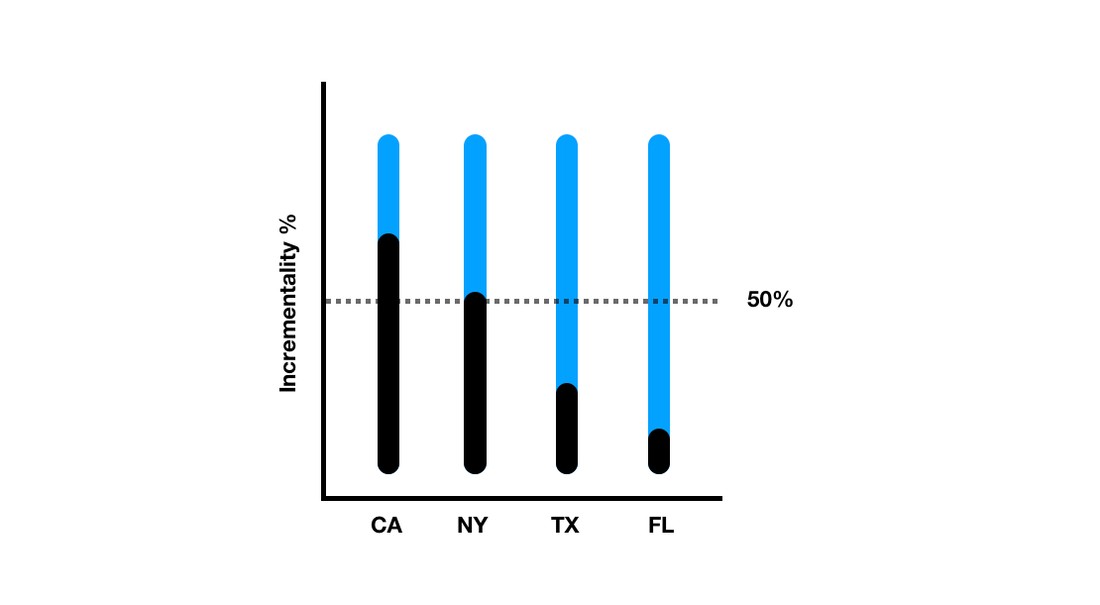 Consider the Facebook incrementality test example presented above. California demonstrates a 60% incremental impact, while Florida shows only 10%. This data suggests that 90% of conversions originating from Florida would likely have occurred even without active Facebook campaigns.
In such a scenario, pausing campaigns in Florida might be a strategic move – unless maintaining market share is a primary objective.
A Pivotal Moment for Influencer Marketing
Influencer marketing has garnered significant attention in recent years, yet it appears we are only at the beginning of its evolution, potentially reaching a critical inflection point. Several platforms, notably TikTok, are actively developing marketplaces designed to facilitate connections between advertisers and content creators.
Furthermore, substantial financial resources are being allocated by these social media networks – exemplified by YouTube’s Shorts Fund – to incentivize content creation. These actions demonstrate a clear strategy by platforms to bolster their creator ecosystems.
The primary objective is to enhance user engagement and simultaneously sustain revenue generation through advertising.
Strategic Implementation for Startups
For nascent startups focused on achieving product-market-fit, prioritizing influencer marketing may not represent the most effective initial strategy. However, as growth initiatives gain momentum, incorporating influencers into the marketing mix becomes increasingly valuable.
Successful implementation doesn't necessarily demand substantial financial outlays, such as expensive sponsorships or large-scale YouTube takeovers. More cost-effective approaches are readily available.
Consider focusing on micro-influencers – those with a following under 50,000 – as a means of achieving significant returns on investment.
Future Growth Prospects
Continued investment by social channels in their content creators over the coming year will undoubtedly unlock further growth opportunities for startups. This evolving landscape presents a favorable environment for businesses seeking to leverage the power of influencer collaborations.
The increasing support for creators will likely lead to a more robust and dynamic influencer marketing ecosystem.
The Expanding Reach of Video Advertising
Increased user engagement with video content is being observed on platforms like TikTok, Instagram Reels, and YouTube Shorts. Data from App Annie indicates that a typical TikTok user dedicates approximately 24 hours monthly to the platform.
This trend suggests that growth marketers should prioritize the development and creative execution of video assets, allocating more resources accordingly.
The Rise of User-Generated Content
User-generated videos have proven to be a particularly successful video theme throughout the last year. Strategies like “white-labeling” on Facebook and Instagram – directing advertising expenditure through an influencer’s account – have enhanced the native appearance of video testimonial advertisements.
In 2022, major corporations are expected to increasingly incorporate user-generated videos into their marketing materials.
Blurring Lines Between UGC and Brand Content
The distinction between user-generated content (UGC) and traditional brand assets is becoming less defined. Companies are moving towards advertising approaches that feel more authentic and organic.
While concerns exist regarding undisclosed sponsorships, this shift presents an opportunity for creators to monetize their product endorsements.
This allows individuals to support items they genuinely appreciate while receiving compensation.
Looking Ahead
The trend of leveraging authentic, user-created video content is poised to continue its growth trajectory. This approach offers a compelling method for brands to connect with audiences in a more relatable and trustworthy manner.
The Evolving Landscape of Digital Channels
The previous year can best be described as a period of significant adaptation for paid channels, such as Facebook. These platforms are currently addressing new challenges stemming from diminished data availability.
This reduction in data is being driven by increased privacy protections, including Apple’s privacy-focused updates and evolving governmental regulations restricting data sharing practices.
Consequently, paid channels are prioritizing strategies to maintain user activity within their ecosystems, enabling continued conversion tracking.
The Shift Towards First-Party Data
It is anticipated that platforms like Facebook and other social media networks will substantially invest in initiatives designed to retain users on their sites. This is crucial for preserving access to valuable first-party data.
Consider the emergence of in-channel shopping features and deeper integrations with e-commerce platforms like Shopify, allowing users to complete transactions directly within the social media environment.
By fostering this self-contained ecosystem, channels aim to recapture the user-level insights that have been lost due to privacy changes.
Implications for Growth Marketers
This strategic shift will ultimately benefit growth marketers by restoring the precise targeting and detailed reporting functionalities they previously relied upon.
The ability to leverage first-party data will be essential for optimizing campaign performance and achieving desired marketing outcomes in the evolving digital landscape.
Adtech and the Rise of Artificial Intelligence
Significant capital injections into the adtech sector over the past year demonstrate the strong belief among venture capitalists in its crucial role for future growth marketing strategies.
Data from Luma indicates a substantial increase in adtech deals, with a 174% rise observed in the second quarter of 2021 compared to the same period the previous year.
Among the emerging platforms, those leveraging artificial intelligence (AI) are particularly noteworthy due to the potential for substantial time savings for growth marketers.
Several examples have recently come to our attention, including CopyAI, which automates the generation of marketing content, and Marpipe, designed to facilitate the creation of numerous creative iterations for A/B testing.
Further development is anticipated, with more platforms expected to emerge that accelerate the processes of testing and experimentation.
Artificial intelligence has already delivered benefits across numerous industries, and its integration into growth marketing is now gaining momentum.
Key Benefits of AI in Adtech
- Automation of Copywriting: Tools like CopyAI streamline content creation.
- Accelerated A/B Testing: Platforms such as Marpipe enable rapid testing of ad variations.
- Increased Efficiency: AI-powered solutions save growth marketers valuable time.
The trend suggests a future where AI plays an increasingly integral role in optimizing marketing campaigns and driving growth.
Looking Ahead
Throughout this discussion, the topics of the metaverse and web3 have been intentionally avoided, a deliberate choice I found quite interesting. It is my strong conviction that future forecasts will increasingly address these evolving areas.
These emerging complexities are, in effect, driving the development of innovative growth marketing approaches. They are simultaneously establishing a distinct advantage for practitioners who successfully navigate them.
The Rise of New Strategies
The challenges presented by the current landscape necessitate a re-evaluation of traditional marketing tactics. This demand for adaptation is fostering a more sophisticated and specialized field.
Those who can effectively respond to these shifts will find themselves positioned within a uniquely rewarding and competitive environment.
A Space for Innovation
The evolving digital world is creating opportunities for marketers to distinguish themselves. A dedicated focus on new strategies is proving to be a key differentiator.
Successfully implementing these strategies will result in a higher level of performance and recognition within the industry.
Related Posts

Peripheral Labs: Self-Driving Car Sensors Enhance Sports Fan Experience
YouTube Disputes Billboard Music Charts Data Usage
Oscars to Stream Exclusively on YouTube Starting in 2029

Warner Bros. Discovery Rejects Paramount Bid, Calls Offer 'Illusory'

WikiFlix: Netflix as it Might Have Been in 1923