Australia Passes News Bargaining Code with Facebook
Australia's Landmark News Bargaining Code
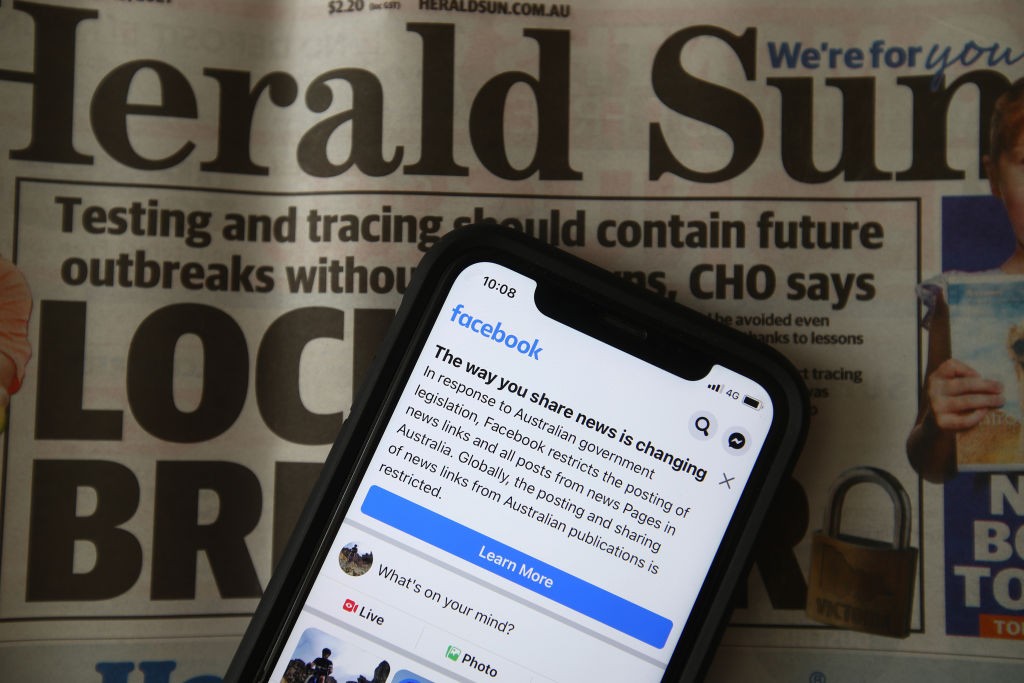
Following Facebook’s global blocking of news publishers and cessation of news-sharing in Australia, the nation’s parliament has enacted legislation mandating negotiations between platform giants, including Facebook and Google, and local news publishers. This aims to ensure fair remuneration for content shared on their platforms.
Addressing the Power Imbalance
The News Media and Digital Platforms Mandatory Bargaining Code was created in collaboration with the Australian Competition and Consumer Commission (ACCC). Its primary goal is to rectify the existing disparity in power between digital platforms and news organizations.
Both Facebook and Google actively campaigned against the legislation. Google initially threatened to withdraw its search engine from Australia, but later reversed course, swiftly negotiating deals with local publishers to demonstrate an alternative approach.
Legislative Success
Despite the tech giants’ efforts, the legislative process remained unaffected.
Treasury Minister Josh Frydenberg and Communications Minister Paul Fletcher jointly stated that the Code will guarantee appropriate compensation for news media businesses’ content, thereby supporting public interest journalism within Australia.
They further explained that the Code establishes a framework for constructive negotiations and a fair arbitration process to resolve any remaining disagreements.
Ongoing Review and Amendments
The government will review the Code’s operation within one year to confirm it aligns with its intended policy objectives.
On Tuesday, Facebook reversed its broad news ban after the government agreed to amendments, including a two-month mediation period for platforms and publishers to reach agreements before arbitration.
The government also committed to considering existing deals between platforms and publishers before applying the Code and providing one month’s notice before a final decision.
Facebook's Response
Facebook expressed satisfaction with these adjustments, as it was concerned that independently negotiated commercial agreements wouldn't be acknowledged.
In a blog post, Facebook’s Nick Clegg, formerly the U.K.’s deputy prime minister, argued that the original draft of the law could have compelled the company to pay “potentially unlimited amounts of money” to media conglomerates under a flawed arbitration system.
Clegg added that the revised changes encourage fair negotiations without the threat of “heavy-handed and unpredictable arbitration.”
Who Emerged Victorious?
The ultimate outcome of this confrontation between a national government and two major tech companies remains uncertain. However, Facebook and Google failed to prevent the law’s enactment.
Concerns About Fairness
While the Australian government asserts that public interest journalism has benefited, concerns have been raised that the law may disproportionately favor large media outlets over smaller publishers. Google has primarily focused on striking deals with larger publishers.
It remains unclear how much of the adtech duopoly’s funds will reach smaller publishers and promote media diversity in Australia. Some suspect the situation represents a shakedown of big tech by big media, facilitated by government support.
Potential Risks
There is also a risk that directly linking the funding of public interest journalism to tech giants like Facebook and Google could reinforce their monopolistic positions.
Calls to break up Google could be framed as detrimental to democracy by reducing funding for “public interest journalism,” providing favorable public relations opportunities for Facebook and its peers.
The Power of Platforms
These platform giants already wield significant influence over the public information landscape, as demonstrated by Facebook’s ability to restrict traffic to valuable information and expose users to disinformation.
Their dominance has been linked to democratic challenges worldwide, as their ad-funded models prioritize profiling and content amplification for profit, lacking a public service commitment.
A Costly Solution?
If the tech giants sought a way to mitigate antitrust risks, paying billions to regional publishers—potentially reducing critical rhetoric—may seem acceptable.
Facebook announced plans to invest at least $1 billion in “supporting” news media over the next three years. Google has also established a $1 billion fund for news licensing fees.
These pledges are not new discoveries of journalism’s value but are a direct result of mandatory payment requirements imposed by lawmakers. Similar legislation in the EU has also prompted Google to negotiate licensing deals with publishers in Europe.
Gains for Publishers
News publishers are undoubtedly benefiting from gaining revenue previously unavailable to them. However, the broader implications—if this mechanism strengthens anti-democratic monopolists—remain a concern.
Transparency Concerns
The lack of transparency surrounding commercial deals between platforms and publishers is problematic. This raises the risk of favoring larger publishers while disadvantaging smaller ones with a stronger public interest focus.
Australia's Global Impact
Australia has garnered international attention for confronting tech giants through legislative action.
Its targeted approach to Facebook and Google—creating a framework to address their market power—has attracted the attention of policymakers and competition regulators globally.
International Interest
Andrea Coscelli, chief of the U.K.’s Competition and Markets Authority, stated that he is closely monitoring the media code as the U.K. government develops a pro-competition regulator to rein in big tech. He described Australia’s approach of mandatory arbitration as “a sensible one.”
“We are definitely following what’s happening in Australia,” he told the BBC. “We think they are dealing with problems we have in the U.K. as well and they are coming up with possible solutions to that.”
Coscelli indicated a cautious openness to adopting a similar approach in the U.K., stating that the government and parliament are interested in Australia’s experience and considering potential parallels.
Related Posts

Peripheral Labs: Self-Driving Car Sensors Enhance Sports Fan Experience

YouTube Disputes Billboard Music Charts Data Usage

Oscars to Stream Exclusively on YouTube Starting in 2029

Warner Bros. Discovery Rejects Paramount Bid, Calls Offer 'Illusory'

WikiFlix: Netflix as it Might Have Been in 1923