Apple Returns to No. 1 in Smartphone Shipments Despite Supply Chain Issues

Smartphone Shipments Experience Slow Growth Amidst Supply Chain Disruptions
Recent data released by Canalys reveals that supply chain issues continue to significantly affect smartphone manufacturers. Global shipments only increased by 1% year over year during the final quarter of 2021.
These figures follow Q3 reports, which indicated a 6% overall decline, with similar component supply problems being cited as the primary cause.
Impact of COVID-19 and Component Shortages
The resurgence of the COVID-19 virus, specifically the omicron variant, is also contributing to the challenges. This has led to localized shutdowns, mirroring conditions seen in the early stages of the pandemic approximately two years ago.
Canalys highlights that smaller manufacturers are experiencing the most substantial impact, struggling to identify alternative suppliers.
Nicole Peng, VP of Mobility at Canalys, stated that while component manufacturers are maximizing production, substantial increases in chip capacity from major foundries will require several years.
Manufacturer Responses to Supply Constraints
Smartphone brands are actively adapting to these circumstances. They are implementing strategies such as adjusting device specifications based on material availability.
- Approaching new chipmakers to diversify IC sources.
- Concentrating product lines on top-selling models.
- Staggering the release of new products.
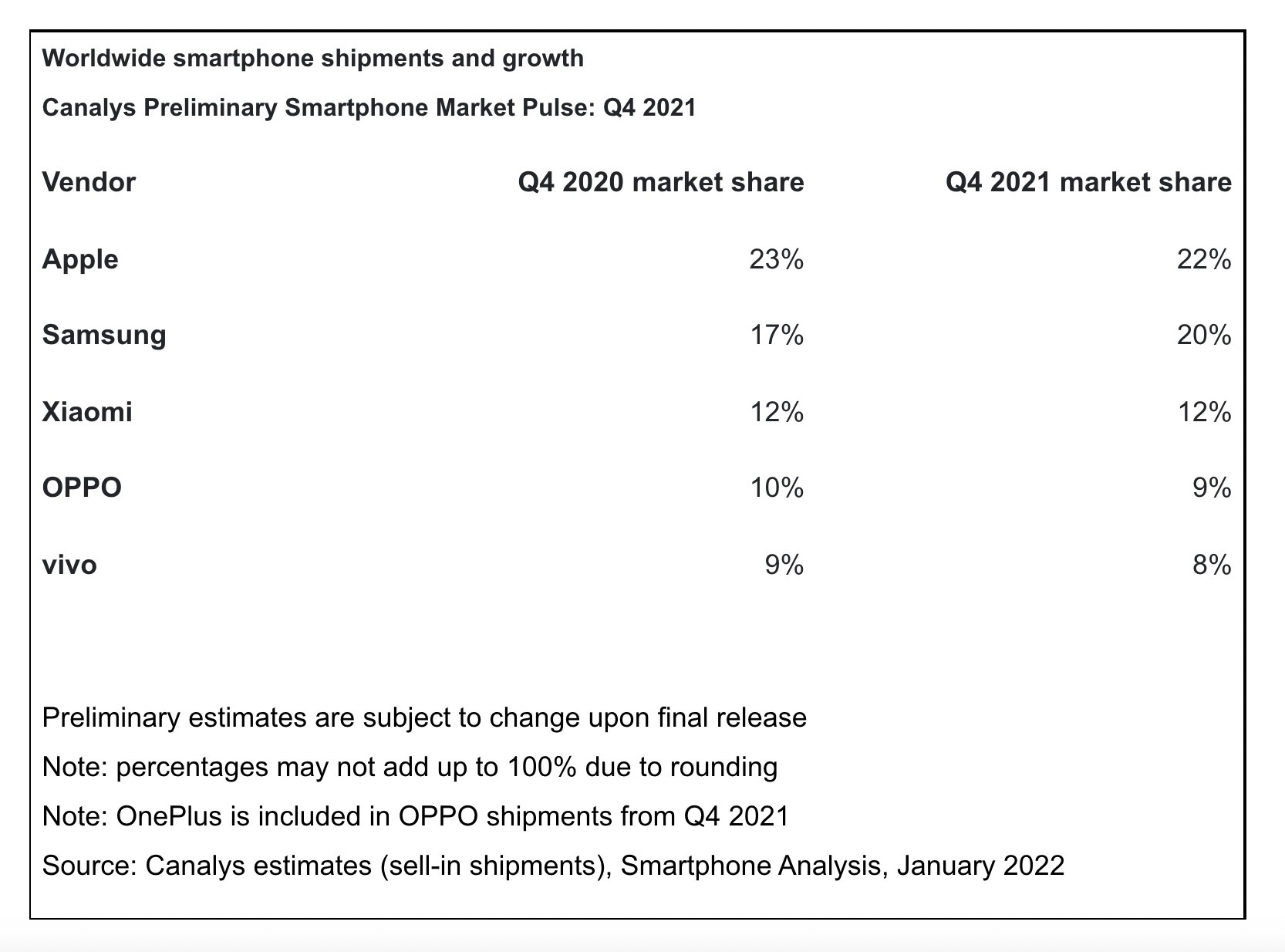 Apple Regains Market Leadership
Despite the broader challenges, larger companies are proving more resilient to shortages and bottlenecks. Apple has reclaimed the top position in the global smartphone market after a three-quarter absence.
This success is largely attributed to the strong performance of the iPhone 13 and a particularly robust showing in Mainland China, the world’s largest smartphone market.
Apple’s market share increased from 12% to 23% compared to the previous quarter. The prior decrease was partly due to difficulties in meeting demand across various regions.
Analyst Sanyam Chaurasia notes that while Apple’s supply chain is improving, production cuts were still necessary in Q4 due to component shortages, limiting their ability to fully satisfy demand.
Delivery times were maintained in prioritized markets, but customers in some regions experienced delays in obtaining the latest iPhones.
Market Share Shifts
Samsung experienced a decline, falling from 23% to 20% of the total market. The top five manufacturers for Q4 were completed by Xiaomi, Oppo, and Vivo.
Related Posts

Peripheral Labs: Self-Driving Car Sensors Enhance Sports Fan Experience

YouTube Disputes Billboard Music Charts Data Usage

Oscars to Stream Exclusively on YouTube Starting in 2029

Warner Bros. Discovery Rejects Paramount Bid, Calls Offer 'Illusory'

WikiFlix: Netflix as it Might Have Been in 1923