Arrival's Denis Sverdlov on the Future of Car Manufacturing

Arrival's Disruptive Approach to Electric Vehicle Manufacturing
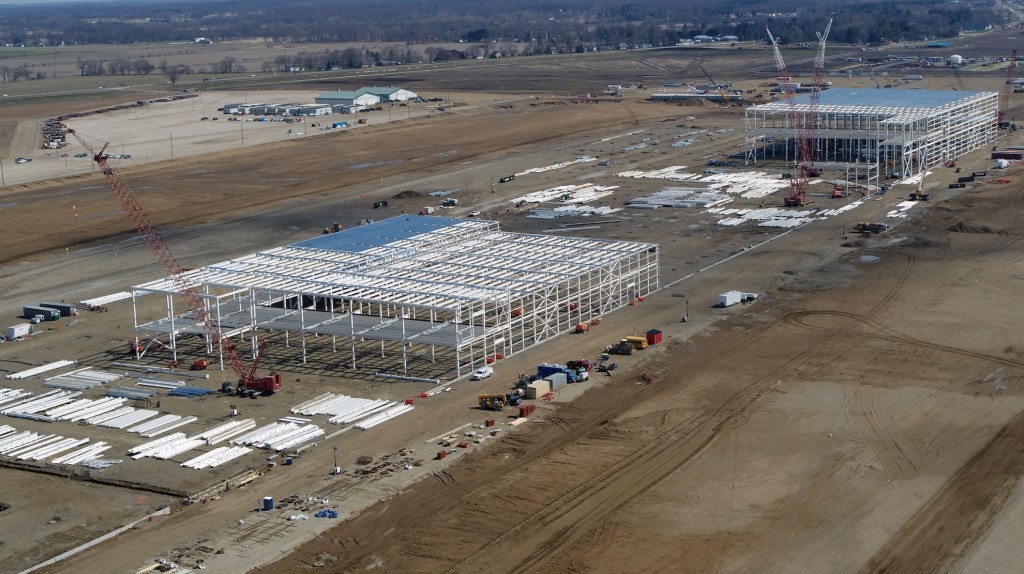
Electric vehicle innovator Arrival is challenging conventional automotive production methods. Rather than relying on a single, large-scale factory and traditional assembly lines, Arrival is implementing a network of smaller, regionally-based microfactories for the robotic construction of its commercial electric vans, buses, and cars. The company aims to establish 31 of these facilities by the close of 2024.
From Startup to Public Company
Founded in 2015 and headquartered in London, Arrival transitioned to a publicly traded company through a merger with CIIG Merger Corp., a special purpose acquisition company (SPAC), in March. Significant pre-orders have already been secured, including an order for 10,000 vans from UPS. Furthermore, a recent agreement with Uber will facilitate the creation of electric vehicles specifically designed for ride-hailing services.
Denis Sverdlov: A History of Innovation
Arrival’s founder, Denis Sverdlov, possesses a proven track record of merging technological advancements with societal needs. Born in Georgia, Sverdlov launched his first venture at the age of 22, providing IT consulting software to large enterprises.
He subsequently founded and successfully exited multiple companies, most notably Yota Group. Established in 2007, coinciding with the debut of the iPhone, Yota developed a 4G network across Russia, complemented by an HTC smartphone optimized for network usage. Sverdlov sold the company in 2012 for $1.5 billion.
Following this, he briefly served as the Russian deputy communications and mass media minister before initiating Arrival. Additionally, in 2015, he founded Roborace, an electric autonomous car racing series.
Anticipating the Electric Vehicle Revolution
Drawing parallels to the transformative impact of fast mobile internet and large screens on the telecommunications sector in 2007, Sverdlov foresaw a confluence of factors poised to revolutionize the EV industry. In 2015, he established Arrival in anticipation of the widespread adoption of electric vehicles, coupled with advancements in materials science and robotics research and development.
He believes this convergence will have a more profound effect on the automotive industry than 4G had on telecommunications.
TechCrunch Interview Excerpts
TechCrunch: Denis, given your background in telecommunications and Roborace, and now your efforts to reshape automotive manufacturing with Arrival, would you describe yourself as a serial entrepreneur constantly seeking the next challenge, or are you deeply committed to this current venture?
Dennis Sverdlov: I am very involved with Arrival, and I anticipate numerous new technologies emerging from this journey. Our robotic technologies, for instance, developed for our microfactories, have potential applications across various industries, extending beyond automotive.
However, our primary focus must remain on achieving our current objectives. Nevertheless, I would identify as a serial entrepreneur, having engaged in this process for over two decades.
How have your past business experiences shaped your strategy at Arrival?
I firmly believe that technology is integral to all successful businesses today. A lack of a technological component suggests a limited future. My experience has taught me that radical change requires the application of “deep tech” – complex, high-level computational algorithms not typically found in consumer products. While companies like Spotify and Netflix demonstrate impressive technology, it operates on a surface level.
The Power of "Deep Tech"
What is an example of your “deep tech” that you believe is a game-changer for Arrival?
Our computer vision system, used to identify car parts in our factories, is a prime example. Traditional computer vision algorithms with machine learning have limitations regarding the geometries of parts and require extensive training for new designs.
If we introduce a new part, conventional systems demand significant resources to train the neural network to recognize it under varying conditions. We’ve developed a novel vision algorithm utilizing geometric features, enabling faster and more reliable part identification regardless of the environment, thereby boosting production rates.
Furthermore, our algorithm for multiagent optimization of factory operations is crucial. A factory comprises numerous assets – robot arms, mobile robotics, and human workers. Efficiently scheduling all activities to maximize output requires complex mathematical algorithms not readily available on the market.
Reimagining the Manufacturing Process
Why does Arrival’s strategy of building commercial EVs in multiple microfactories differ from constructing a single large factory or utilizing a contract manufacturer? Why deviate from the norm?
Traditional large factories are designed around the unibody construction method, where the metal body serves as both the structure and the exterior. This process necessitates heavy metal stamping, requiring expensive tooling and substantial investment.
To recoup these costs, manufacturers must produce hundreds of thousands, even millions, of vehicles. Regardless of production volume, a large number of robots are still required due to the inherent nature of unibody construction.
Moreover, assembly lines typically rely heavily on manual labor for component installation, as the pre-defined body offers limited robotic access.
Another key issue is the lack of integration between Tier 1 component suppliers. Components often exhibit complex shapes due to independent design processes, hindering robotic assembly. Our components are designed on a modular grid system, simplifying robotic recognition and assembly.
I often draw an analogy to the shift from mainframes to the horizontally scalable architecture of cloud computing. Mainframes are becoming obsolete due to their inherent limitations.
The Benefits of Microfactories
What are the tangible effects of this change in production methodology?
Our microfactories are approximately half the cost of traditional factories. Critically, we have eliminated the need for metal stamping, welding, and paint shops from the outset. This has allowed us to fundamentally redefine the vehicle’s form.
This approach increases the level of robotic automation, as we are not constrained by complex components or existing architectural limitations. It also provides the flexibility to produce multiple models within a single factory, offering a significant economic advantage.
Building a conventional factory requires at least three years, and introducing a new model necessitates halting production for refitting, followed by a decade-long production run. Our microfactories can produce up to ten models simultaneously, and new models can be introduced without interrupting existing production. This represents a substantial advancement for the industry.
Ultimately, my vision is to achieve next-day delivery of vehicles, rather than waiting months. This method will enable a new economic model that I believe will become widely adopted. I envision a future where producing vehicles in New York using microfactories is more cost-effective than producing them in China using current methods. Technology can unlock new business possibilities.
Funding and Future Outlook
Regarding your funding strategy, Arrival secured substantial funding and partnerships early on. What drove the decision to pursue a SPAC?
We have invested around $600 million over the past five years, a fraction of the investment made by competitors like Tesla, Rivian, and Lucid. However, we are developing four vehicle models compared to their single models. Therefore, our investment approach differs from conventional market standards.
We needed capital to scale our operations, specifically to build 31 microfactories by the end of 2025. The timing was ideal to enter the market with a strong product.
From my perspective, the difference between a SPAC and a traditional IPO is minimal. The due diligence and preparation required are comparable. The key benefit of our SPAC is the involvement of Peter Cuneo, the former CEO of Marvel, who brings extensive experience in turning around businesses. He now serves as our chairman, providing both funding and valuable expertise.
The Future of SPACs
Do you anticipate a continued surge in SPAC activity, particularly within the EV sector? Do you believe this pace is sustainable?
It’s essential to evaluate each company individually, rather than generalizing about SPACs. Arrival is unique, and I am confident in our capabilities. We are the only company utilizing a grid-based architecture for components. I believe discerning investors will recognize this differentiation.
The quality of assets varies, and good assets will thrive regardless of the acquisition method. What truly matters are the company’s fundamentals.
Concerns have been raised about a potential bubble forming around SPACs. What is your perspective?
As a technology entrepreneur, I am hesitant to comment on financial markets. However, SPACs offer investors certain advantages, such as the escrow of funds, ensuring their security. Investors have the option to withdraw their funds if they disapprove of a proposed merger, providing a unique level of protection.
Looking Ahead
Arrival’s stock experienced a decline in its initial weeks as a publicly traded company. What is your risk tolerance?
We prioritize the interests of our shareholders and will take all necessary actions to drive share growth. I believe our technologies, assets, and management team provide a solid foundation for this growth. Short-term stock fluctuations have minimal impact, as we have sufficient funding to realize our vision.
While our shares decreased by 30%, nothing has changed within the company since our deal announcement. Our business plan and system performance remain consistent. The market reaction is largely unrelated to our fundamental performance.
What has surprised you most during the founding of Arrival? What lessons have you learned?
I am continually amazed by the power of technology. You create something groundbreaking, and then discover even deeper layers of potential. Like exploring the vastness of space, there is no limit to technological advancement.
Looking forward one year, where do you envision Arrival being?
Our business plan clearly outlines our goals. We plan to commence production at our first microfactories this year. Therefore, the answer is straightforward: our factories will be producing vehicles.
This article was updated to correct the year Arrival intends to have 31 microfactories built.
Related Posts

Rivian Launches Universal Hands-Free Driving Feature

Rad Power Bikes Files for Bankruptcy, Seeking Sale
Tesla Deceptive Marketing: Autopilot and Full Self-Driving Ruling

Luminar's Volvo Deal and Bankruptcy: A Timeline
Slate EV Truck Reservations Top 150,000 Amidst Declining Interest