Automakers Secure Battery Supply Chain | Addressing Battery Anxiety
The Rise of Automaker Battery Joint Ventures
Battery joint ventures have rapidly become essential agreements for automotive manufacturers. These companies have established significant objectives for the delivery of millions of electric vehicles in the coming years.
Securing a consistent cell supply is no longer the sole focus. The increasing number of partnerships and joint ventures demonstrates a proactive shift by automakers. They are now actively participating in the development and even the production of battery cells.
Recent Developments and Strategic Plans
The pace of these deals shows no sign of diminishing. This week, Mercedes-Benz unveiled a $47 billion initiative to transition to an exclusively electric vehicle manufacturer by 2030. A crucial component of this plan involves securing its battery supply chain.
This will be achieved through the expansion of current partnerships and the establishment of new collaborations. These will focus on the joint development and production of both battery cells and modules.
Focus on Advanced Battery Technology
Similar to other automakers, Mercedes-Benz is prioritizing the advancement and implementation of cutting-edge battery technologies. Alongside the construction of eight new battery plants to support its future EV production, the company is collaborating with Sila Nano.
Sila Nano, a Silicon Valley-based battery chemistry startup with prior Mercedes-Benz investment, aims to enhance energy density. This improvement should lead to increased vehicle range and reduced charging durations.
Automaker Control and Supply Chain Security
“This reflects a trend we’ve observed, where automakers are recognizing the critical importance of the battery,” stated Gene Berdichevsky, CEO of Sila Nano, in a recent interview. “They are seeking greater control over cell production to guarantee their supply.”
He further explained, “For a company like Volkswagen, committing to 50% electric vehicle sales by a specific year becomes meaningless if the necessary batteries are unavailable. The sheer scale of their operations means even promised deliveries from cell partners are viewed with apprehension.”
Early Adopters and Long-Term Partnerships
Tesla, BMW, and Volkswagen were among the first to embrace the battery joint-venture strategy. In 2014, Tesla and Panasonic formalized an agreement to construct a large-scale battery manufacturing facility – now commonly referred to as a gigafactory – within the United States. Their collaboration continues to this day.
BMW initiated work with Solid Power in 2017, focusing on the creation of solid-state batteries for high-performance EVs. These batteries have the potential to reduce costs by minimizing the need for extensive safety features compared to traditional lithium-ion batteries.
Expanding Resource Access
In addition to its partnership with Northvolt, Volkswagen is currently engaged in discussions with suppliers. The goal is to secure more direct access to essential materials such as semiconductors and lithium. This will ensure its existing production facilities can operate at maximum capacity.
A Shift Towards Collaborative Manufacturing
The broader industry is now adopting a model of working with battery companies. This involves sharing expertise, pooling resources, and ultimately becoming actively involved in the manufacturing process.
Regional Security in Automotive Battery Production
Automotive manufacturers are actively pursuing agreements to guarantee a stable battery supply. Beyond simply securing these crucial components, these companies are focused on establishing or preserving regional supply networks.
This strategic approach aims to minimize dependence on distant sources for essential materials and production capabilities.
Mercedes-Benz's Battery Strategy
Mercedes-Benz’s approach to battery sourcing exemplifies these concerns. The automaker projects a need for over 200 gigawatt hours of battery capacity to support its electric vehicle production.
To fulfill this demand, Mercedes announced plans this week to construct eight additional battery plants, supplementing the nine previously planned facilities dedicated to battery system assembly.
These new battery plants, developed in collaboration with both new and existing partners, will be strategically located near Mercedes’ automotive assembly sites.
Four of these newly announced plants will be situated in Europe, reinforcing the region’s position as a central hub for the automotive industry.
The Logistics of Battery Manufacturing
Berdichevsky highlights a key characteristic of batteries: their substantial weight relative to their value. Air freight is deemed unsafe, and lengthy overseas shipping poses risks to capital and inventory.
Consequently, battery factories are expected to emerge on every continent where electric vehicles are manufactured.
The location of these facilities, rather than their origin, is becoming increasingly significant. A battery factory established by a Chinese company within the U.S. remains within U.S. territory, even amidst geopolitical tensions.
Government Support and National Security
National security considerations are demonstrably influencing these developments, evidenced by increasing governmental financial support.
The German government has provided financial backing for both the VW-Northvolt plant and Mercedes-Benz’s initiatives to construct EV battery factories.
South Korea intends to invest more than $35 billion in battery production over the coming decade, as reported by Bloomberg.
China has consistently invested in the processing of raw materials essential for EV batteries, while the Biden administration is committed to establishing the U.S. as a global leader in lithium-ion production.
Key Investment Areas
- Germany: Supporting VW-Northvolt and Mercedes-Benz battery plants.
- South Korea: Planned investment exceeding $35 billion over 10 years.
- United States: Aiming for leadership in lithium-ion production.
Batteries 101
Gaining insight into battery production processes can illuminate the increasing prevalence of collaborative ventures within the industry.
Consider the battery pack utilized in an electric vehicle. Contemporary vehicle battery packs are constructed from lithium-ion cells. These cells feature a negative electrode, known as the anode, and a positive electrode, termed the cathode.
An electrolyte is positioned between these electrodes, facilitating the movement of ions during both charging and discharging cycles. (Berdichevsky often illustrates this with a pyramid analogy, placing the vehicle at the apex, followed by the pack, cells, and ultimately, the underlying chemistry – select the visualization that resonates most effectively.)
Traditionally, automotive manufacturers have handled battery pack assembly in-house. However, a shift is occurring.
They are now forging partnerships with cell producers such as Panasonic, LG Chem, and SK Innovation. Alternatively, some are establishing their own battery cell manufacturing facilities to exert greater control over the entire production chain.
Firms like Sila Nano and BASF – recently designated as Porsche’s exclusive material supplier for its advanced batteries – concentrate on the fundamental chemical composition.
The innovations within their anode and cathode designs are pivotal.
These advancements directly influence the cost-effectiveness of cell and battery production, alongside factors like charging speed and achievable driving range.
Key Components and Processes
The efficiency and performance of a battery are intrinsically linked to the materials used and the manufacturing techniques employed.
Lithium-ion cells are the current standard for electric vehicle batteries due to their high energy density.
The anode and cathode materials determine the battery’s capacity and voltage.
The electrolyte plays a crucial role in ion transport, impacting charging and discharging rates.
The Evolving Landscape
The battery industry is witnessing a vertical integration trend.
Automakers are seeking to secure their supply chains and gain a competitive edge by controlling more aspects of battery production.
This is driving investment in both cell manufacturing and materials science.
- Joint ventures allow companies to share costs and expertise.
- Internal production provides greater control over quality and innovation.
- Material advancements are key to improving battery performance.
Ultimately, advancements in battery technology will be crucial for the widespread adoption of electric vehicles.
Battery Joint Ventures: An Overview
Porsche, Customcells and BASF
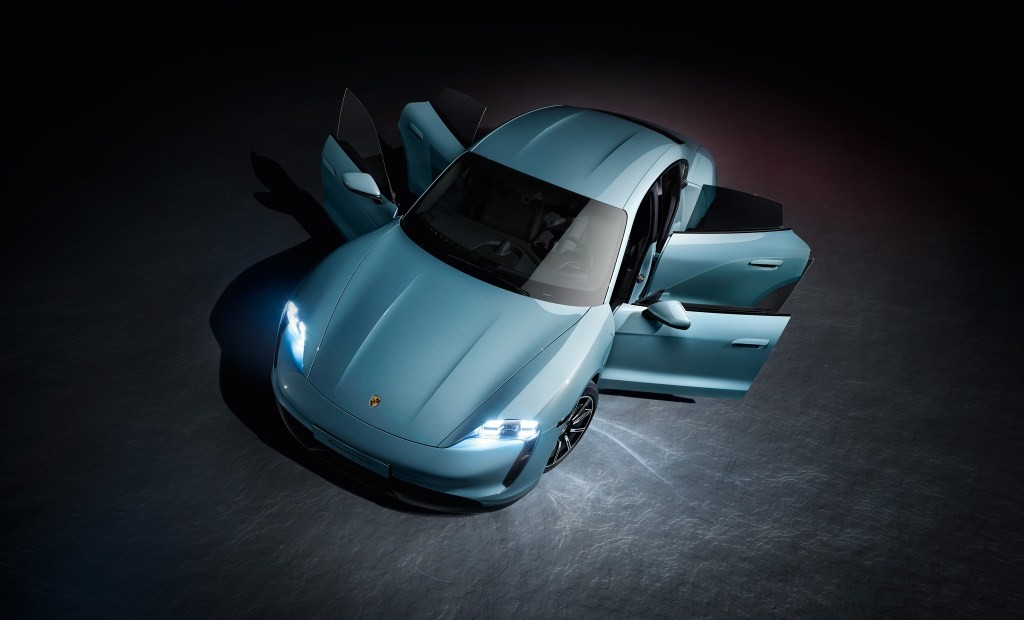
Porsche revealed in June its intentions to establish a facility dedicated to the production of high-performance battery cells, achieved through a collaborative venture with lithium-ion battery specialist Customcells. This joint initiative, known as Cellforce Group GmbH, is not geared towards supplying cells for Porsche’s primary electric vehicle, the Taycan, or its related models.
The facility’s funding comes from Porsche, alongside a €60 million ($71.4 million) contribution from the German government and the state of Baden-Württemberg, and will focus on creating specialized cells intended for motorsports applications and high-performance automobiles.
BASF SE has been chosen as the provider of the necessary cathode materials for these cells.
Toyota and Panasonic
The two Japanese corporations have collaborated through a joint venture, Prime Planet Energy & Solutions (PPES), since 2019. Initially, their objective was to introduce a new production line within Panasonic’s existing Tokushima factory, capable of manufacturing batteries for 500,000 hybrid vehicles annually.
Recently, Toyota and Panasonic unveiled a strategy to reduce the expenses associated with battery production materials, including cobalt, lithium, and graphite. PPES, under the leadership of former Toyota executive Hiroaki Koda, is aiming for a cost reduction of up to 50% for prismatic lithium-ion batteries by 2022, and 65% to 75% by 2025. Reports indicate that approximately 60% of these costs are linked to raw materials, with the remaining portion attributed to development, production, and investments.
The company anticipates a fourfold increase in its EV sales, reaching 8 million units by 2030, and plans to introduce two new electric car models and one hybrid vehicle this year.
Ford and SK Innovation
In May, Ford Motor Company and SK Innovation, a petroleum company headquartered in Seoul, signed a memorandum of understanding to create a joint venture for domestic battery cell manufacturing for electric vehicles. This venture, named BlueOvalSK, intends to achieve an annual production capacity of 60 GWh for Ford and Lincoln vehicles, starting in 2025, through two plants located within the U.S.
Ford simultaneously announced an increase in its electrification investment from $22 billion to $30 billion, allocating some of these funds to establish Ford Ion Park, a battery research and development center in Michigan. Ion Park will employ 150 battery specialists to formulate a strategy for the next generation of lithium-ion chemistries and Ford’s advanced, energy-dense battery technology, with the goal of extending battery range and lowering costs.
Ford projects that 40% of its global vehicle sales will be fully electric by 2030, and its entire passenger vehicle lineup in Europe will be zero-emission by the same year. The company also plans to begin delivering electric transit commercial vans later this year.
Renault, Envision AESC and Verkor
Renault Group announced in June two partnerships designed to accelerate its electric vehicle battery production capabilities. A strategic collaboration with Envision AESC, a lithium-ion battery manufacturer, involves a €2 billion investment from the battery division of the green technology firm Envision Group.
Furthermore, the French automaker is partnering with Verkor, a battery cell startup that recently secured €100 million to develop EV batteries within France. This funding round was jointly led by EQT Ventures and Renault Group, with contributions from the French Government and the Auvergne-Rhône-Alpes Region. Verkor is scheduled to begin construction on its first gigafactory in 2023 and, as per a memorandum of understanding, will dedicate 10 GWh of its initial 16 GWh production capacity to Renault.
Verkor aims for an annual capacity of 50 GWh by 2030, with 20 GWh allocated to Renault. Renault has set an ambitious EV strategy, targeting 65% of its sales to be electrified by 2025 and 90% fully electric by 2030, and plans to launch 10 new electric models by 2025.
GM, SolidEnergy Systems and LG Chem
In April, GM and LG Energy Solution, a subsidiary of LG Chem, revealed plans to construct a second U.S. battery cell factory in Tennessee, providing the automaker with the cells needed to support the launch of its 30 planned EV models by 2025. This joint venture, Ultium Cells, aims for a production capacity exceeding 70 GWh.
GM’s proprietary Ultium platform and batteries are central to the automaker’s transition to EVs. These batteries utilize fewer rare-earth materials like cobalt and feature a standardized cell design, resulting in a more energy-dense battery within a compact space.
The relationship between these companies dates back to 2009, when LG Chem began supplying batteries and electronics to GM. This partnership expanded with the launch of the Chevy Bolt EV, and the initial joint venture for large-scale battery cell production commenced in 2019.
In March, GM announced a collaboration with solid-state battery startup SolidEnergy Systems to enhance the energy density of its batteries. The two companies intend to establish a prototyping facility in Woburn, Massachusetts, focused on developing high-capacity, anode-free lithium metal batteries, with a target for pre-production batteries by 2023.
Hyundai and LG Energy Solution
Hyundai Motor Co. and LG Energy Solution are planning a joint venture to establish an EV battery plant in Indonesia, a nation rich in lithium resources and a key market in Southeast Asia. The two Korean companies will invest between $870 million and $1.1 billion (1 trillion to 1.3 trillion won) in the plant, aiming for an annual production capacity of 10 GWh. Construction is anticipated to begin this year, with mass production scheduled for 2023.
This venture aligns with Hyundai’s plans to build a car factory in Indonesia this year, intending to mass-produce specific EVs for the ASEAN market starting next year. The automaker’s goal is to sell 1 million EVs by 2025, having already electrified its Kona and Ioniq models and launched the fully electric Ioniq 5 SUV.
Stellantis and Total
In 2020, Stellantis and Total formed a joint venture, Automotive Cells Company (ACC), to develop battery cells. Earlier this month, Stellantis announced its intention to secure over 260 GWh of battery capacity by 2030 through five gigafactories in Europe and North America.
The company is targeting over 70% of sales in Europe and 40% in the U.S. to be low-emission by 2030, with all 14 of its brands committed to offering fully electric vehicles. Stellantis also revealed that it has signed memorandums of understanding with two companies specializing in lithium geothermal brine processing in North America and Europe to ensure a stable lithium supply.
Rivian and Samsung SDI
Rivian announced in April a partnership with Samsung SDI to serve as its battery cell supplier. The EV manufacturer stated that its anticipated R1T pickup and R1S SUV require a battery module and pack capable of withstanding extreme temperatures and demanding usage conditions.
Rivian confirmed on Thursday its plans to construct a second U.S.-based vehicle manufacturing plant, which will incorporate battery cell production, suggesting the potential for further joint ventures in the future for the emerging EV company.
Related Posts

Trump Media to Merge with Fusion Power Company TAE Technologies

Radiant Nuclear Secures $300M Funding for 1MW Reactor

Whole Foods to Implement Smart Waste Bins from Mill | 2027
Last Energy Raises $100M for Steel-Encased Micro Reactor

Everbloom AI Transforms Chicken Feathers into Cashmere