Bilibili Invests $123 Million in TapTap - Gaming News
Increased Competition in China's Gaming Sector
The competitive landscape within China’s gaming industry is intensifying. Major technology companies are actively seeking acquisitions and making investments to bolster their gaming capabilities, encompassing both content and distribution networks.
Bilibili's Investment in X.D. Network
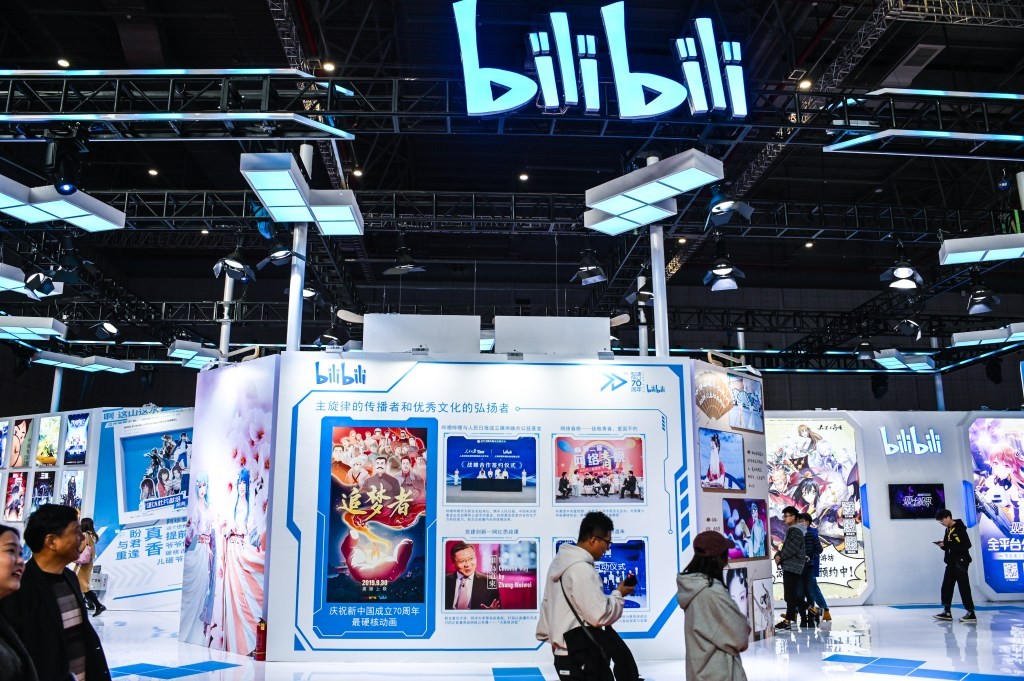
Bilibili, a leading video streaming platform favored by young Chinese audiences, has recently finalized a significant gaming deal. The company has committed to investing HK$960 million (approximately $123 million) into X.D. Network, the operator of the widely-used game distribution platform, TapTap, within China.
Listed on both the Hong Kong and New York stock exchanges, Bilibili will acquire 22,660,000 shares of X.D.’s common stock at a price of HK$42.38 per share. This transaction will result in Bilibili holding a 4.72% equity stake in X.D. Network.
Strategic Collaboration Plans
The two companies plan to initiate a series of “deep collaborations” focusing on X.D.’s game portfolio and the TapTap platform. Specific details regarding these collaborations have not yet been disclosed.
Bilibili's Revenue Diversification
While renowned for its extensive video content created by both amateur and professional users, Bilibili generates a substantial portion of its revenue from mobile games. In 2020, mobile games accounted for 40% of the company’s total revenues.
This percentage represents a decline from 71% in 2018 and 53% in 2019, indicating Bilibili’s efforts to diversify its income streams beyond game distribution.
Tencent's Dominance and X.D.'s Alternative Approach
Tencent has consistently relied on gaming to drive revenue growth for many years. As the operator of WeChat, Tencent currently dominates the Chinese gaming market through its original game titles and a vast investment portfolio, which it actively operates and promotes.
X.D. Network not only develops games but has also positioned itself as an alternative to traditional game distributors, such as the Android app stores managed by smartphone manufacturers. Their strategy involves bypassing the substantial commission fees imposed by companies like Huawei and Xiaomi, opting instead to monetize through advertising.
This approach has attracted investment from a growing number of gaming companies, including Lilith Games, miHoYo, Alibaba, and ByteDance, which has rapidly built a 3,000-person gaming team in just six years.
Strengthening X.D.'s Investor Base and Emerging Rivalries
Bilibili’s investment further solidifies X.D.’s network of prominent gaming investors. Notably, Tencent is absent from this group, but it is well-known that ByteDance has emerged as a key competitor to Alibaba.
Recent reports from Reuters indicate that ByteDance recently surpassed Tencent in the acquisition of Moonton, a gaming studio gaining prominence in Southeast Asia. Furthermore, Douyin, the Chinese version of TikTok, is actively competing with WeChat for user engagement and content viewership.
Related Posts

Peripheral Labs: Self-Driving Car Sensors Enhance Sports Fan Experience

YouTube Disputes Billboard Music Charts Data Usage

Oscars to Stream Exclusively on YouTube Starting in 2029
Warner Bros. Discovery Rejects Paramount Bid, Calls Offer 'Illusory'

WikiFlix: Netflix as it Might Have Been in 1923