Boston Dynamics Rehires Former CEO to Accelerate Atlas Robot Learning
Boston Dynamics Enhances Atlas Robot with Advanced Reinforcement Learning
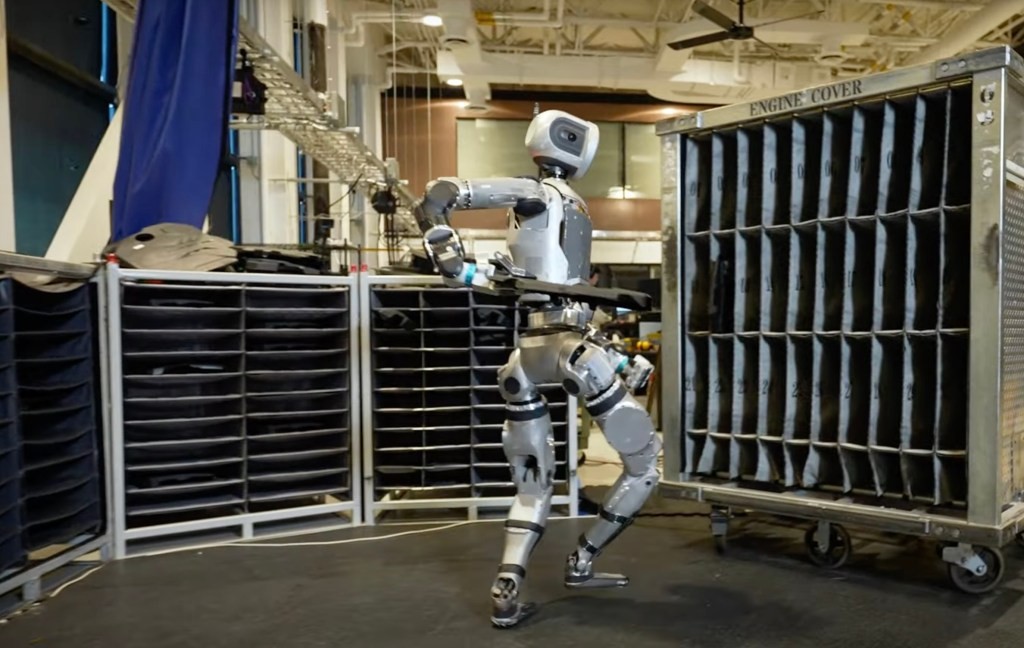
Boston Dynamics revealed a new collaboration on Wednesday aimed at bolstering the reinforcement learning capabilities of its electric Atlas humanoid robot. This partnership involves the Robotics & AI Institute (RAI Institute), formerly known as The Boston Dynamics AI Institute.
Shared Origins and Funding
Both organizations share a common founder in Marc Raibert, a former MIT professor and long-time CEO of Boston Dynamics. The Institute, established in 2022, allows Raibert to continue pivotal research that underpinned the development of Boston Dynamics’ robots.
A significant connection exists with Hyundai. The Korean automotive manufacturer acquired Boston Dynamics in 2021 and also provides funding to the Institute. This financial support grants Raibert the freedom to investigate cutting-edge technologies beyond the constraints of a commercial enterprise.
Strategic Partnerships for Humanoid Advancement
This collaboration complements a similar partnership announced in October between Boston Dynamics and Toyota’s TRI (Toyota Research Institute), focusing on the application of large behavior models (LBMs).
These dual partnerships are strategically designed to refine the learning process for Boston Dynamics’ electric Atlas humanoid. The RAI Institute deal specifically centers on reinforcement learning, a technique that mimics human and animal learning through trial and error.
Accelerating Learning Through Simulation
Traditionally, reinforcement learning has been a lengthy process. However, advancements in simulation technology now enable numerous processes to be conducted concurrently in a virtual environment, significantly accelerating development.
The joint effort between Boston Dynamics and the RAI Institute commenced earlier this month in Massachusetts. It builds upon previous collaborations, including a shared project to create a reinforcement learning research kit for Boston Dynamics’ quadrupedal Spot robot.
Focus on Real-World Application
The current work concentrates on transferring learning from simulations to real-world scenarios and improving Atlas’s ability to navigate and interact with physical environments.
Boston Dynamics highlights “dynamic running and full-body manipulation of heavy objects” as key areas of focus. These actions demand precise coordination between the robot’s legs and arms.
The humanoid’s bipedal design introduces unique challenges – and opportunities – compared to the quadrupedal Spot. Every movement is influenced by a complex interplay of forces, including balance, force, resistance, and motion.
Raibert’s Vision for Intelligent Machines
According to Raibert, “Our aim at RAI is to develop technology that enables future generations of intelligent machines. Working on Atlas with Boston Dynamics enables us to make advances in reinforcement learning on arguably the most sophisticated humanoid robot available.”
He further emphasizes that this work will be instrumental in enhancing humanoid capabilities, both by expanding its skillset and by streamlining the skill acquisition process.
Industry Trends: In-House AI Development
This announcement follows a recent decision by Figure AI to discontinue its partnership with OpenAI, opting instead to develop its own in-house AI models.
Brett Adcock, Figure AI’s CEO, explained that solving embodied AI at scale requires vertical integration of both robot hardware and AI software. He stated, “We can’t outsource AI for the same reason we can’t outsource our hardware.”
The Importance of Bespoke AI Models
Figure AI concluded that AI models tailored specifically to its robots yield the best results. OpenAI’s focus on embodied intelligence has been comparatively limited given its broader scope and the success of ChatGPT.
Rumors also suggest that OpenAI is exploring the development of its own humanoid robots.
Most companies in the humanoid robotics field are pursuing the development of their own specialized AI models. Boston Dynamics, with its extensive experience in robotics software, is no exception. The close relationship between Boston Dynamics and the RAI Institute – sharing a parent company, founder, and common objectives – further reinforces this trend.
Related Posts

ChatGPT Launches App Store for Developers

Pickle Robot Appoints Tesla Veteran as First CFO

Peripheral Labs: Self-Driving Car Sensors Enhance Sports Fan Experience

Luma AI: Generate Videos from Start and End Frames
Alexa+ Adds AI to Ring Doorbells - Amazon's New Feature