
8 Ubuntu Derivatives: Explore Different Desktop Environments
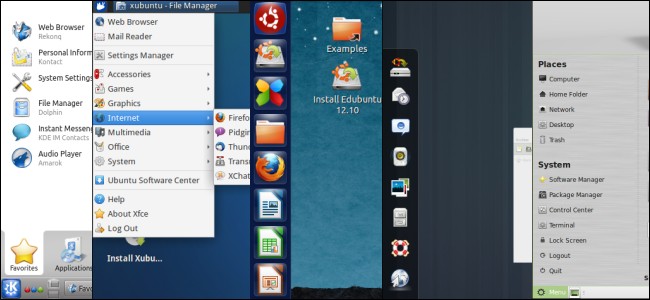
Exploring the Landscape of Ubuntu Derivatives
A diverse range of Linux distributions exists, and this extends to numerous distributions built upon existing ones. The standard Ubuntu release, featuring the Unity desktop environment, represents just one configuration option available to users.
A significant number of these Ubuntu-based derivatives receive official support from the Ubuntu project itself. However, some popular options, such as Ubuntu GNOME Remix and Linux Mint, operate independently.
Key Differences Among Derivatives
Each derivative distinguishes itself through the inclusion of varying desktop environments and pre-installed software packages. Despite these differences, the underlying system architecture remains consistent across most, with Linux Mint being a notable exception.
The core functionality and system components are largely shared, ensuring a familiar experience for users transitioning between derivatives.
Testing and Evaluation
Evaluating these alternatives is straightforward. You can download the appropriate live CD image for each derivative.
Burning the image to a disc allows you to boot directly into the operating system without requiring installation. This provides a risk-free environment for testing different desktop environments.
This method is arguably the most effective way to determine which desktop environment best suits your individual preferences and workflow. Experimentation is encouraged to discover the optimal user experience.
Further Considerations
- Ubuntu GNOME Remix offers a pure GNOME desktop experience.
- Linux Mint provides a more traditional desktop environment and includes additional codecs and tools out-of-the-box.
- Exploring various derivatives can significantly enhance your Ubuntu experience.
Kubuntu
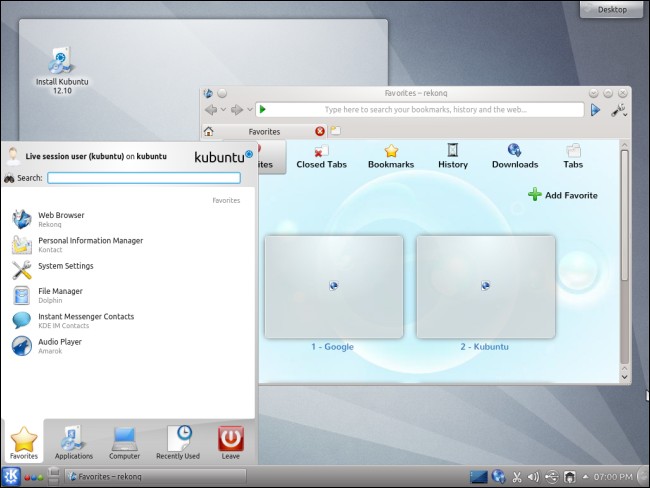
Kubuntu is a Linux distribution built upon the foundation of Ubuntu, but utilizes the KDE desktop environment in place of Unity.
While Ubuntu initially adopted GNOME as its primary desktop, Kubuntu’s development commenced with KDE. Throughout its history, KDE has consistently ranked as the second most widely used desktop environment within the Linux ecosystem.
Software and Compatibility
A key distinction of Kubuntu lies in its inclusion of software developed using the QT toolkit, rather than GTK. This choice aligns seamlessly with the KDE desktop’s design principles.
Applications designed for Kubuntu can generally be executed on Ubuntu, and vice versa. However, visual consistency may be slightly compromised, as the applications may appear somewhat incongruous with the host environment’s native look and feel.
Rekonq serves as the default web browser in Kubuntu. Nevertheless, popular alternatives such as Firefox or Chromium can be readily installed to suit user preferences.
Xubuntu
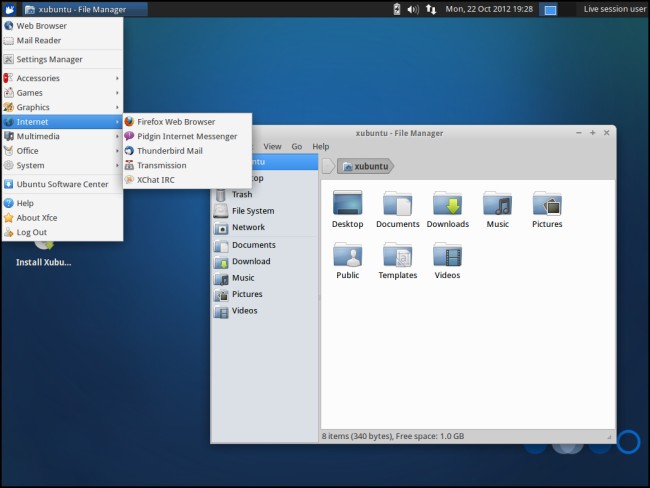
Xubuntu leverages the XFCE desktop environment, which is engineered for reduced system resource consumption.
Similar to Ubuntu’s Unity and GNOME interfaces, it also utilizes the GTK toolkit, resulting in compatibility with a wide range of applications found within the standard Ubuntu distribution.
Desktop Environment Preference
The XFCE desktop has garnered favor from some users, including Linux’s originator, Linus Torvalds.
This preference stems from its provision of a more conventional desktop paradigm, eschewing the full-screen application launchers characteristic of GNOME and Unity.
It offers a familiar experience for those accustomed to traditional desktop layouts.
The following are key benefits of Xubuntu:
- Lightweight resource usage.
- Traditional desktop experience.
- GTK application compatibility.
Xubuntu aims to provide a balance between usability and performance, making it suitable for older hardware or users seeking a streamlined computing experience.
The choice of desktop environment significantly impacts the overall user experience and system demands.
 Lubuntu
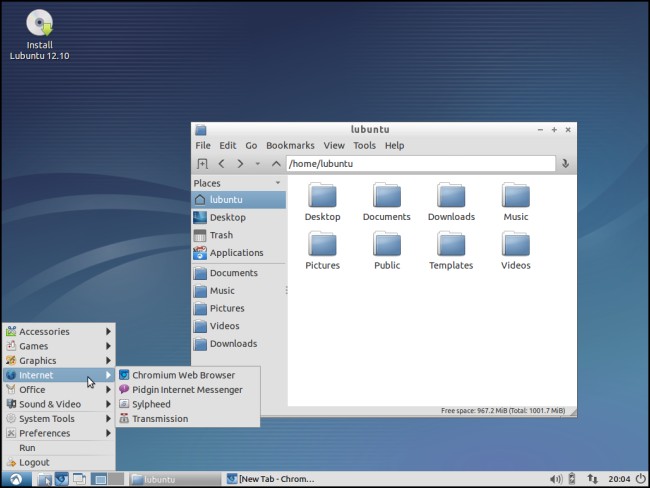
Lubuntu leverages the LXDE desktop environment, noted for being even more resource-efficient than the XFCE desktop found in Xubuntu.
The core design principle of Lubuntu centers around providing a swift and lightweight operating system experience.
This is achieved through a minimal desktop interface and the inclusion of applications that demand fewer system resources.
Ideal Use Cases
Lubuntu is particularly well-suited for older computer hardware that may struggle to perform optimally with more demanding Linux desktop environments.
It offers a viable solution for breathing new life into aging systems, allowing them to remain functional and productive.
The lightweight nature of Lubuntu ensures responsiveness even on machines with limited processing power or memory.
Consequently, it’s a popular choice for users seeking to maximize the utility of their existing hardware.
LXDE’s efficiency is a key factor in Lubuntu’s ability to deliver a smooth user experience on less powerful computers.
This makes it an excellent option for those prioritizing speed and resource conservation.
 Mythbuntu
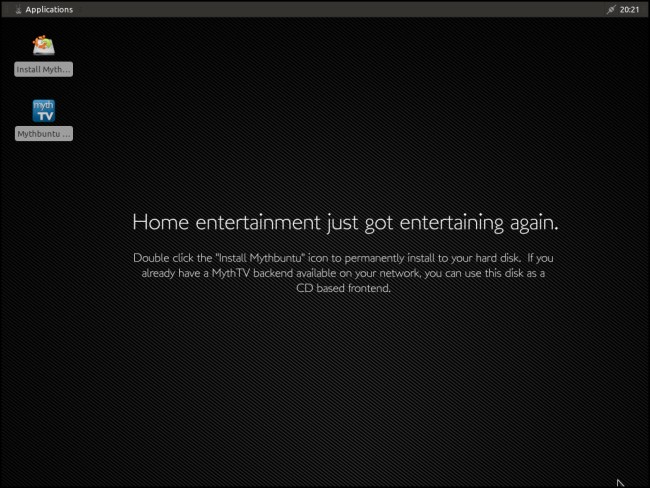
Mythbuntu is specifically designed not as a general-purpose Linux distribution for typical desktop or laptop use. Instead, it functions as an Ubuntu-based system tailored for establishing MythTV-powered personal video recorder (PVR) setups within a home theater environment.
The XFCE desktop environment is utilized, however, common desktop applications such as LibreOffice are not included in the default installation.
Fundamentally, Mythbuntu remains built upon Ubuntu, granting users the flexibility to install any additional software they require.
Key Features
- Designed for MythTV PVR systems.
- Based on the Ubuntu operating system.
- Employs the lightweight XFCE desktop.
- Minimal pre-installed desktop applications.
- Full compatibility with Ubuntu software repositories.
This focused approach allows Mythbuntu to deliver an optimized experience for media center applications, prioritizing performance and functionality relevant to home entertainment.
Users seeking a dedicated PVR solution with the stability and extensive software availability of Ubuntu will find Mythbuntu to be a suitable choice.
Despite its specialized nature, the underlying Ubuntu foundation ensures a familiar and versatile platform for customization and expansion.
 Ubuntu Studio
Ubuntu Studio is positioned as a versatile and accessible platform, offered without cost, designed to empower creatives in their artistic endeavors.
The operating system leverages the XFCE desktop environment, known for its efficiency and customizability.
Key Features and Advantages
A defining characteristic of Ubuntu Studio is its pre-configured suite of applications. These tools cater to a broad spectrum of creative tasks, including audio production, graphics editing, photography, video production, and desktop publishing.
Furthermore, users benefit from complete access to the extensive Ubuntu software repositories. This provides a significant advantage over some other specialized Linux distributions that may have limited software availability.
This access to the Ubuntu repositories enhances convenience, allowing users to easily install a wider range of software beyond the pre-installed applications.
The combination of pre-installed creative tools and broad software compatibility makes Ubuntu Studio a compelling choice for artists and content creators.
Edubuntu
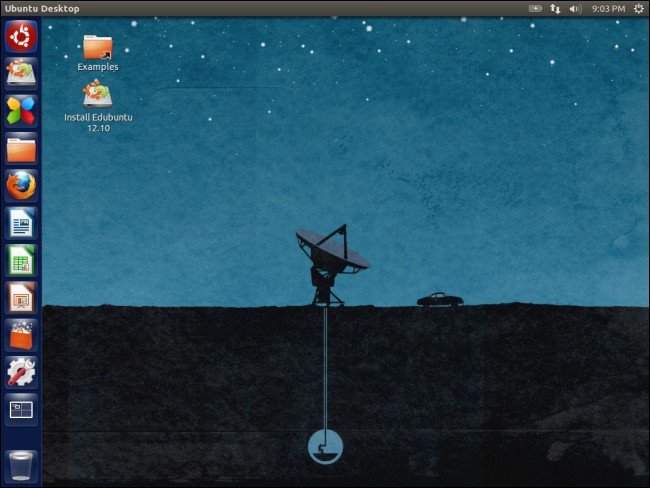
Initially known as "Ubuntu Education Edition," Edubuntu represents a specialized version of the Ubuntu operating system. It was specifically developed to cater to the needs of educational environments and young learners.
The system leverages the Unity desktop environment and incorporates the Linux Terminal Server Project (LTSP). This allows Edubuntu machines to function effectively as thin clients, accessing applications hosted on central servers.
Key Features
Edubuntu is pre-loaded with a comprehensive suite of educational programs. These tools are intended to enhance the learning experience and provide students with valuable resources.
The inclusion of LTSP enables efficient resource utilization within a school or classroom setting. It minimizes the hardware requirements for individual student workstations.
By utilizing server-based applications, Edubuntu simplifies software management and updates. This reduces the administrative burden on IT staff.
The design prioritizes ease of use and accessibility for students of varying ages and technical skill levels.
Edubuntu aims to provide a cost-effective and robust computing solution for educational institutions.
It offers a platform for collaborative learning and exploration of digital resources.
 Ubuntu GNOME Remix
Historically, Ubuntu’s official versions featured the GNOME 2 desktop environment. Following the introduction of GNOME 3, Ubuntu transitioned to utilizing its proprietary Unity desktop as the default.
Despite this change, a significant portion of the foundational software continued to originate from the GNOME project.
A GNOME-Focused Ubuntu Experience
Ubuntu GNOME Remix is an independently developed derivative of Ubuntu. It distinguishes itself by employing the GNOME Shell as its primary desktop interface, diverging from Unity.
Furthermore, it incorporates a suite of additional GNOME applications as standard installations.
Key Application Differences
For instance, Epiphany is included as the default web browser, representing a departure from the more commonly used Firefox.
The project is specifically tailored for users who desire to utilize the most recent GNOME desktop environment within the Ubuntu ecosystem.
Designed for GNOME Enthusiasts
Essentially, Ubuntu GNOME Remix provides a pathway for experiencing a pure GNOME desktop experience built upon the robust foundation of Ubuntu.
It caters to those who prefer the GNOME Shell’s features and workflow over alternatives like Unity.
Linux Mint
Initially conceived as a derivative of Ubuntu, Linux Mint has matured into a unique and independently recognized Linux distribution. Despite this evolution, it retains its foundation in Ubuntu, with a Debian-based edition – Linux Mint Debian Edition – also available.
While not formally endorsed by Ubuntu, Linux Mint has experienced significant growth in user adoption and popularity within the Linux community.
The operating system provides users with a selection of desktop environments. These include MATE, a continuation of the classic GNOME 2 interface, and Cinnamon, a GNOME 3-based environment designed to emulate a more conventional desktop experience.
Further Exploration
For a more detailed comparison, consider reading: HTG Explains: What's the Difference Between Ubuntu & Linux Mint?
It's worth noting that many of these desktop environments can be installed directly on Ubuntu, allowing for experimentation.
However, installing multiple environments on a single system can lead to a more complex and potentially cluttered application menu.
- LXDE can be installed on Ubuntu, resulting in Lubuntu.
- XFCE is available for installation on Ubuntu Linux, creating Xubuntu.
- KDE can be added to Ubuntu, forming Kubuntu.
- The Cinnamon desktop environment from Linux Mint can be installed on Ubuntu.
- The MATE desktop can be installed on Ubuntu, effectively restoring the GNOME 2 experience.
Are you a user of another Ubuntu-based distribution? Share your preferred choice in the comments below!