Vaccine Passport Apps: Ethical Challenges for Companies
The Challenge of Digital COVID-19 Vaccination Records in the U.S.
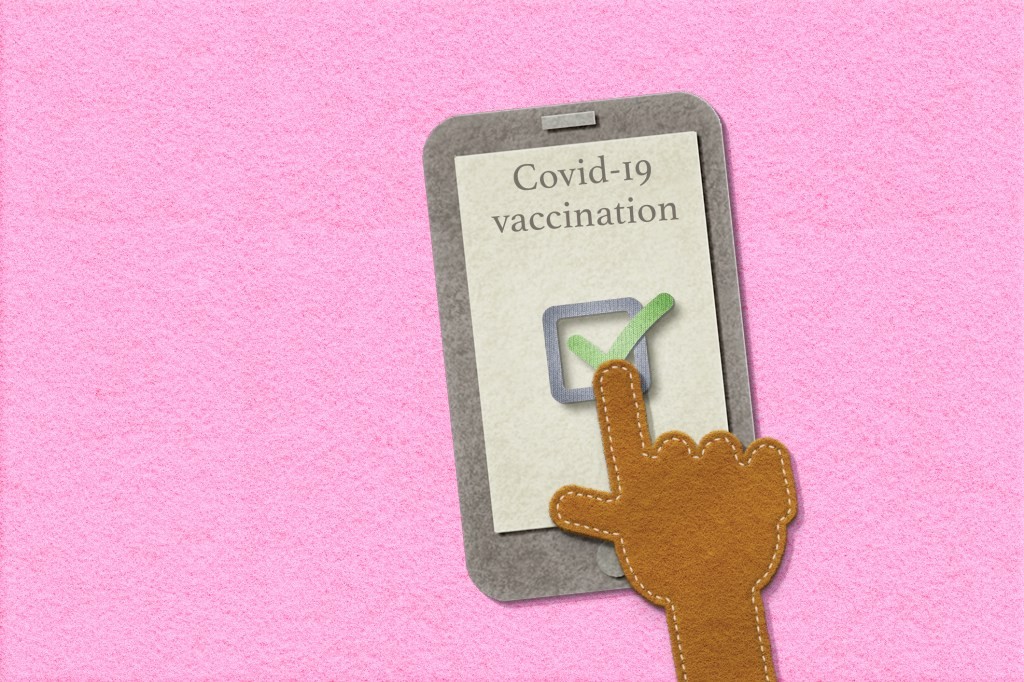
Following COVID-19 vaccination in the United States, individuals receive a paper card from the CDC serving as primary verification of immunization. This card, while straightforward, is susceptible to loss and has spurred debate regarding the transition to digital proof of vaccination.
The Rise of Digital Vaccine Proof
Numerous organizations are actively working to develop digital solutions, often referred to as vaccine passports. Essentially, these systems aim to provide a smartphone-accessible record of vaccination status, replacing the physical card.
Concerns and Opposition
The implementation of digital vaccination records has faced significant resistance. Concerns regarding privacy have been voiced, alongside arguments centered on civil liberties.
Furthermore, issues of equity have been raised, specifically concerning unequal access to the necessary technology and internet connectivity.
State-Level Regulations
The absence of national agreement, coupled with these ethical considerations, has resulted in varied state-level responses. States like Florida and Georgia have enacted prohibitions against the mandatory use of electronic vaccination records for state business or the establishment of centralized databases.
Iowa’s governor recently signed legislation preventing businesses and the state from requiring any form of vaccination proof, regardless of whether it’s a physical card or a digital record.
A Patchwork of Laws
These examples illustrate the complex legal landscape confronting companies attempting to create digital vaccination solutions. However, not all states oppose digital records.
California recently launched a system for requesting digital vaccination records, and New York unveiled a similar system earlier in the year, allowing users to download proof of vaccination directly to their smartphones. Further details on these initiatives will be explored later.
Seeking Expert Insights
To better understand the feasibility of transitioning to digital vaccine cards despite existing obstacles, we consulted with several experts in the field. Their perspectives offer valuable insight into navigating this complex issue.
Challenges in Implementing Vaccine Verification
Dr. Shira I. Doron, an expert in infectious diseases and hospital epidemiology at Tufts Medical Center in Boston, highlights that establishing a reliable vaccine verification system is more complex than it appears.
She points out a significant issue: inconsistent record-keeping across states. Vaccinations have been administered in diverse locations – schools, pharmacies, and stadiums – and it remains uncertain whether these records have been successfully communicated to individuals’ primary care doctors, if they have one.
Dr. Doron suggests that a centralized record-keeping system, implemented from the beginning of the vaccination rollout on December 15th, would have been necessary for vaccine passports to function effectively. Retroactively creating such proof of vaccination presents challenges, and raises ethical concerns for some.
Her perspective centers on the trajectory of infection rates. A decline in cases, driven by increased vaccination coverage, could diminish the necessity for any verification process. This is because a sufficiently low infection rate – ideally below 10% – would inherently create a safer environment.
Ultimately, she believes a scenario where infection rates and the rate of vaccination are both sufficiently high would eliminate the need to verify vaccination status for entry into buildings.
Blockchain Solutions for Vaccination Verification
Should vaccination rates fail to reach optimal levels, or if institutions like colleges mandate vaccination, how can verifiable proof of vaccination be provided beyond the traditional paper card? The blockchain is being proposed as a solution, though this approach is not without its critics.
New York State has implemented a blockchain-based proof of vaccination system, Excelsior Pass, developed by IBM. However, concerns have been raised by privacy advocates regarding the potential exposure of sensitive personal medical data.
The IBM system functions by allowing individuals to access their vaccination records through their healthcare provider’s portal or a partner organization. This portal then generates a QR code, which can be saved to a smartphone’s digital wallet.
Upon arrival at a venue, the QR code is presented and scanned using a dedicated application, confirming vaccination status or a recent negative test result. The venue is also expected to verify the individual’s identity with a separate photo ID, such as a driver’s license.
Justification for Blockchain Implementation
The core question is the necessity of utilizing blockchain technology in this context. Eric Piscini, IBM Global VP of Payer and Emerging Business Networks, outlines three key benefits. “Firstly, the immutability of the blockchain is crucial, and a primary driver for its adoption,” he states.
“Secondly, the decentralization of the platform is vital, ensuring that vaccination data isn’t concentrated in a single location. It’s distributed and managed collaboratively by multiple parties.”
“Finally, the system provides a comprehensive audit trail, beneficial not only for individuals but also for entities verifying vaccination status,” Piscini added.
Critiques of the Blockchain Approach
Despite these perceived advantages, the use of blockchain for vaccination verification is facing scrutiny. Steve Wilson, a privacy analyst at Constellation Research, believes blockchain is an unsuitable technology for this application.
“I fail to see any added value that blockchain brings to the digitization of COVID-19 vaccinations or test results,” Wilson argues. “Blockchain’s primary function is to establish consensus on the sequence of events and record that sequence in a shared ledger. What specific challenge within vaccination management does this address?”
- The immutability of blockchain ensures data cannot be altered.
- Decentralization distributes data, reducing single points of failure.
- An audit trail provides transparency and verification capabilities.
A Collaborative, Open-Source Solution for Digital Vaccination Records
California’s recent launch of a digital vaccination record application distinguished itself by utilizing an open-source framework known as the Smart Health Cards Framework. This framework was created through the efforts of The Commons Project (TCP) in collaboration with a diverse group of health and technology organizations, including major players like Oracle, Microsoft, Salesforce, and Epic.
JP Pollak, holding positions as co-founder of The Commons Project, Senior Researcher-in-Residence at Cornell Tech, and Assistant Professor at Weill Cornell Medicine, highlights the challenges inherent in creating digital records. He notes the government’s decision against a centralized vaccine database, coupled with the fragmented nature of vaccine administration systems, complicates the process.
“The Vaccination Credential Initiative (VCI), a steering group within The Commons Project, is focused on designing and promoting a specification – potentially a future standard – that enables all vaccine providers to issue consistent, signed, and portable vaccine records,” Pollak explained.
This effort manifests as a Smart Health Card app developed by VCI. “We’ve added a layer that transforms your vaccine information into a Smart Health Card. This credential encompasses all details found on your CDC card – name, date of birth, vaccine type, dose dates, lot numbers, and administration location. The issuer then digitally signs this packaged information,” he stated.
Beyond California, Louisiana has also implemented The Commons Project’s solution. Furthermore, Walmart announced that individuals vaccinated through their services can now download a digital version of their record via the CommonHealth app (Android) or CommonPass app (iOS and Android). The company indicated that other vaccine providers will soon offer similar digital access through these same applications.
While this approach doesn’t resolve all concerns regarding equitable technology access, privacy, or the ethics of vaccine verification, it does offer a transparent method for delivering digital records to those who desire them.
Any method chosen by a state, or indeed if a state chooses to implement a method at all, will inevitably present advantages and disadvantages. As Wilson observes, the traditional paper CDC card mirrors the internationally recognized “Yellow Card” vaccination record, which has proven functional for decades.
However, considering that roughly half of the global population possesses a smartphone and two-thirds have access to some form of mobile phone in 2021, providing a digital record option appears logical. Companies and startups aiming to address this need must not only devise innovative solutions but also persuade individuals, businesses, and governments of the value of offering such an approach – a potentially significant obstacle.
Related Posts

LatAm Doctor Communication: Ex-Uber Eats Exec Raises $14M Seed

Chai Discovery Raises $130M Series B - AI Biotech Funding
Inito AI Antibodies: Expanding At-Home Fertility Testing

Brain Fitbit: Startup Tackles Chronic Stress with Wearable Tech

Max Hodak's New Venture: Beyond Neuralink