Artemis Moon Landing Delayed to 2025 | NASA Update
NASA's Artemis Program Update: Delays and Challenges
Recent developments, including the dismissal of Blue Origin’s lawsuit against NASA regarding the Human Landing System (HLS) contract and advancements in China’s space program, were central to discussions during a NASA briefing on the Artemis program this Tuesday.
Lawsuit Impact and Schedule Adjustments
NASA Administrator Bill Nelson expressed concern over the legal challenge, stating that the agency experienced a loss of approximately seven months due to the litigation surrounding the HLS contract. This has resulted in postponements for upcoming missions.
Specifically, the Artemis-2 mission is now scheduled for May 2024. Furthermore, Artemis-3, intended to land the first woman and person of color on the moon, is delayed to no earlier than 2025.
The initial uncrewed mission, Artemis-1, utilizing the Space Launch System and Orion capsule, remains on track for launch in early 2022.
Understanding the Artemis Program and HLS
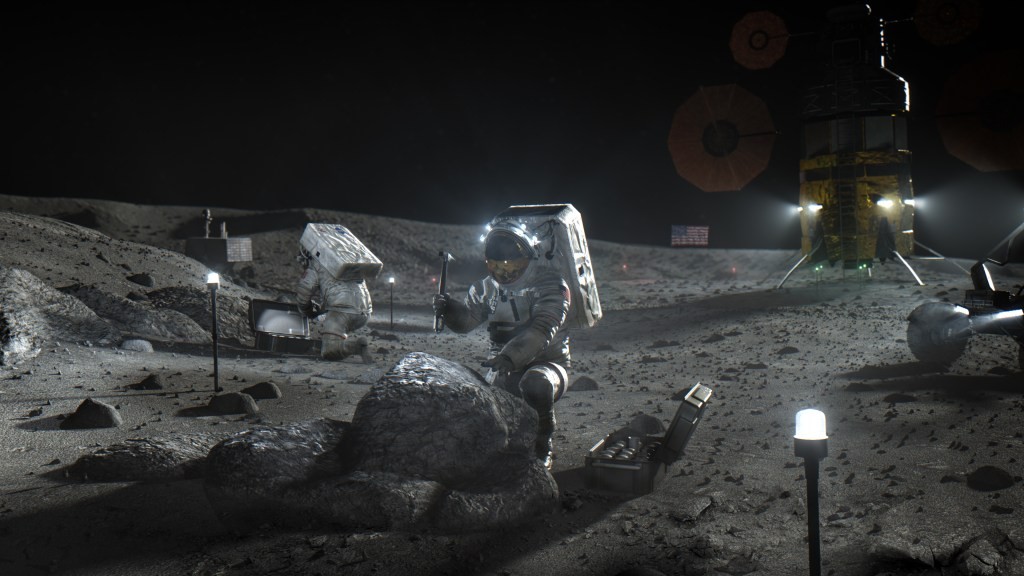
The Artemis program represents NASA’s ambitious plan to return humans to the moon, building upon the legacy of the Apollo program. The Human Landing System is a crucial component, designed to be the final spacecraft for transporting astronauts to the lunar surface.
Blue Origin's Legal Challenge
Blue Origin initiated legal action against NASA in August, following an unsuccessful appeal to the Government Accountability Office concerning NASA’s decision to award the HLS contract to SpaceX.
Blue Origin contended that NASA’s evaluation process was “unlawful and improper,” and previously argued that awarding a single contract was detrimental to competition.
Factors Contributing to Delays
While the lawsuit with Blue Origin contributed to the delays, it may not be the sole cause. Nelson indicated that the previous administration’s 2024 target for the third mission lacked “technical feasibility.”
Insufficient funding allocated by Congress to support the development of multiple human landing systems also played a role.
Budgetary Considerations and Program Evaluation
The Senate budget committee has expressed a desire for NASA to select two developers for the HLS program, but only provided an additional $100 million towards this goal.
Nelson stated that a thorough review over the past six months revealed the need for “serious changes” to ensure the program’s long-term viability.
Additional Challenges
The ongoing COVID-19 pandemic has also presented obstacles, causing disruptions to supply chains and impacting the available workforce.
China’s Space Program Poses a Significant Challenge, According to NASA Administrator
NASA Administrator Bill Nelson has expressed concern regarding the accelerating development of China’s space capabilities. He highlighted the nation’s growing proficiency in areas such as lunar landings.
Nelson affirmed NASA’s commitment to maintaining a leading position in space exploration. The agency intends to pursue its objectives with both speed and caution, aiming to achieve a crewed lunar landing before China.
Rapid Advancements in China’s Space Initiatives
Over recent years, the Chinese space program has demonstrated remarkable progress. This includes the successful launch of the core module for its independently developed space station earlier in the year.
This launch represented the third in a series of eleven planned missions for 2022, all dedicated to the full operationalization of the station.
Furthermore, China has successfully deployed a rover on Mars, becoming only the second country globally to accomplish this feat.
Plans are also underway for a sophisticated sample-return mission to Mars before the end of this decade.
Concerns Regarding China’s Intentions
Nelson indicated that pronouncements originating from the Chinese space program, including elements associated with the Chinese military, suggest a highly competitive approach.
He stated that these statements provide evidence of an intent to be “very aggressive” in their space endeavors.
NASA is responding by prioritizing a swift, yet safe, return of astronauts to the moon.
Related Posts

Jared Isaacman Named Next NASA Administrator

Space-Based Solar Power: Beaming Energy to Earth

OSHA Investigates SpaceX Starbase Crane Accident
SpaceX IPO: Reportedly Planning 2026 Launch with $1.5T Valuation
SpaceX Valuation: Reportedly in Talks for $800B Sale