f3 App Raises $3.9M - Q&A for Gen Z
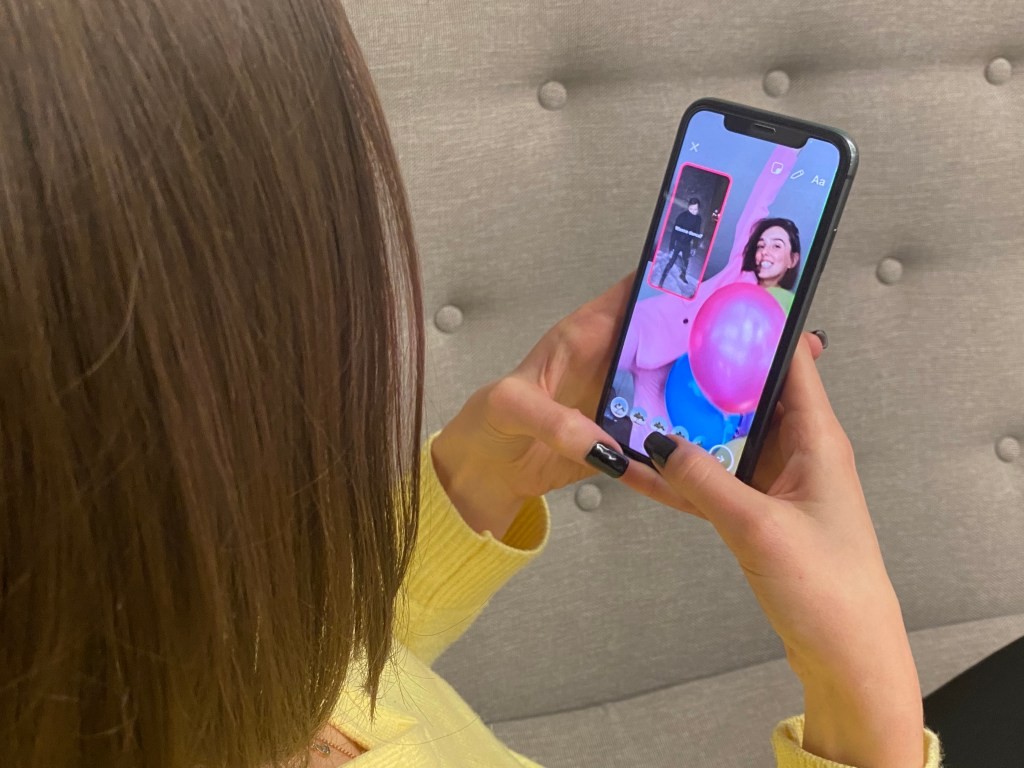
F3, a question-and-answer application designed for Generation Z, incorporates a gamified friend-finding system similar to Tinder, rich media responses akin to Stories features, and a subscription-based “Plus” version that unlocks the ability to view who is interested in connecting – has secured $3.9M in seed funding, with plans for expansion into the United States market.
The team originating from Latvia is experienced in the realm of viral teen applications, having previously developed Ask.fm, an anonymous Q&A platform that encountered significant controversy in 2013 due to concerns surrounding bullying and safety, following connections to user suicides resulting from abusive messages. Despite this past experience, they are continuing to pursue opportunities within the teen app market.
The seed funding for F3 comes from investors associated with the Russian dating network Mamba, including Mail.ru Group, alongside a venture capital firm named AdFirst, which specializes in marketing investments.
Alex Hofmann, formerly president of musical.ly, and Marat Kichikov, a General Partner at Bitfury Capital, are also reported to have participated in the funding round as angel investors.
Since its launch in 2018, F3 has amassed 25 million registered users, with 85% of them being under the age of 25.
The app’s user base primarily consists of teenagers, with a demographic breakdown of 65% female, 60% located in Europe, 20% in Latin America, and 20% across the rest of the world. While specific active user numbers are not disclosed, the company claims that 80% of users have remained active on the platform for over three months.
Regarding safety measures, F3 employs a combination of automated systems and human moderators to oversee content. The founders state they have applied lessons learned from their previous work on Ask.fm, which was acquired by IAC’s Ask.com in 2014, providing resources for F3’s ongoing development.
According to the founding team, including CEO Ilja Terebin, “We addressed the issue of inappropriate content in our previous company (Ask.fm), and at F3, we’ve integrated all of our knowledge in solving this problem from the very beginning. Our automated tools include text analysis in multiple languages, utilizing a database of over 250,000 patterns that is continually updated, as well as AI-powered image recognition algorithms to identify violating content in photos and videos.”
“Our 24/7 content moderation team – comprised of 8 in-house safety specialists and more than 30 outsourced contractors – manually reviews user reports and content flagged by the automated systems,” they further explain.
However, user feedback on the app has included reports of harassment from individuals allegedly soliciting explicit images, leading to concerns that claims of a fully “solved” safety issue may be overstated.
The F3 team explains the need for another social discovery application by stating that the app was specifically designed with the preferences of Gen Z in mind – “focusing on their desire to socialize and connect with new friends online, through concise content like photos and short videos, which is authentic and personal.”
“Authentic and genuine” is another key aspect of their product-market fit proposition.
F3 provides users with a unique URL that can be shared on other social media platforms to invite questions from their network, which can be submitted anonymously or openly. (Users also have the option to decline anonymous questions.)
Rather than responding with simple text, users create photo or video replies, incorporating filters, fonts, and backgrounds, mirroring the rich-media “Stories” format prevalent across various social networks, including Twitter’s “Fleets.”
These rich media responses are publicly visible on the user’s feed, meaning that answering a question also contributes to the broader community experience (although users can choose not to respond, as questions remain private until addressed).
When asked about F3’s competitive advantage in a crowded social media landscape, the team emphasizes the app’s unique focus on photo and video-based Q&A – “making the format familiar and similar to other social networks (‘stories’ or ‘snaps’) but within a question-and-answer exchange,” as they describe it, adding that their Gen Z audience found traditional text-based Q&A to be “too boring.”
“We are competing for the attention of Gen Z alongside platforms like Snapchat, TikTok, and Instagram. Our primary strength lies in the Q&A format, which facilitates making new friends and building genuine connections through ‘raw and real’ content – something that isn’t a central focus on those other platforms,” they assert.
Regarding comparable competitors, they acknowledge Yolo’s “some traction” and recognize the existence of other Q&A applications. However, they argue that F3 offers a more comprehensive feature set – positioning the Q&A functionality as a viral entry point to a broader social community.
“[F3] is a complete social platform centered around visual communication – users have a content feed to view posts from those they follow, tools to create photo/video content within the app, direct messaging capabilities, and features for following users and discovering content. Therefore, for us, the anonymous messaging/Q&A format is simply a way to attract users quickly and bring them onto our platform, where they can then form new connections and engage within their unique social circles, establishing F3 as a sustainable, independent social network.”
Nevertheless, user reviews offer a different perspective, with frequent complaints about the limited value of the free version of the app (while F3 Plus is priced at $3.99 for 7 days, $8.99 for 1 month, or $19.99 for 3 months), questions regarding the authenticity of anonymous questions, and concerns that potential connections are geographically distant or do not share a common language. Some users also find the Q&A format itself to be unoriginal. Others have expressed concerns about data collection practices. (The F3 ‘privacy policy’ provides extensive details regarding user tracking for those who choose to review it.)
“This app is essentially a copy of all the other apps out there. Just another pay-to-play platform,” reads a review from July 2020. “Don’t download.”
Related Posts

Peripheral Labs: Self-Driving Car Sensors Enhance Sports Fan Experience

YouTube Disputes Billboard Music Charts Data Usage

Oscars to Stream Exclusively on YouTube Starting in 2029

Warner Bros. Discovery Rejects Paramount Bid, Calls Offer 'Illusory'

WikiFlix: Netflix as it Might Have Been in 1923