Trump Suspension Review: Facebook Oversight Board to Decide
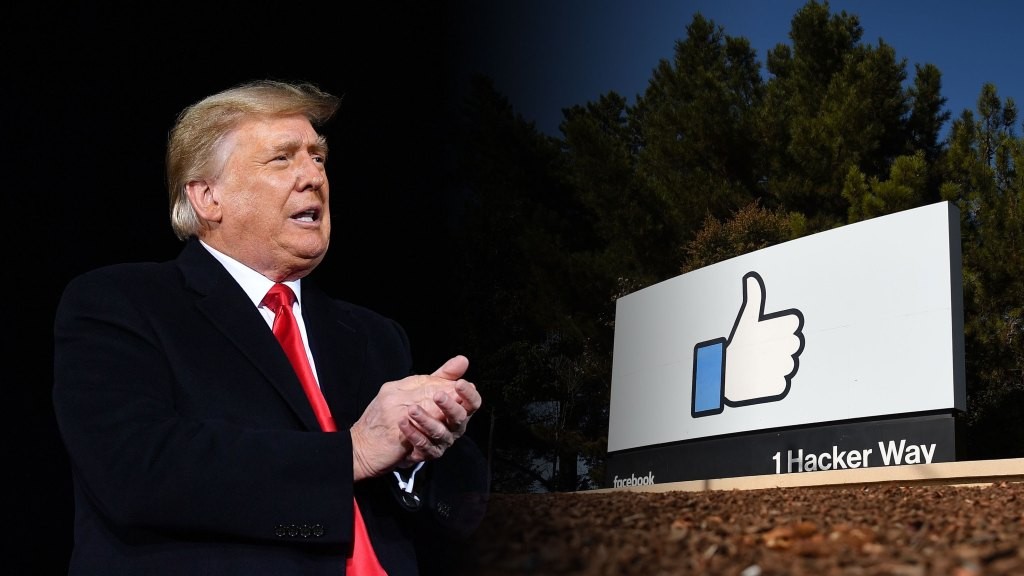
Facebook declared on Thursday that its recently formed independent policy review group will address a significant company action: the choice to suspend the account of former President Trump.
Trump’s account was indefinitely suspended by Facebook on January 7th. This action followed events of the previous day, when his conduct encouraged a violent crowd to attack the U.S. Capitol building, placing American democracy in a precarious position and further destabilizing an already troubled nation.
Nick Clegg, Facebook’s Vice President of Global Affairs and Communications, characterized the situation surrounding Trump’s suspension as “an unprecedented set of events which called for unprecedented action” and clarified the reason for referring the case to the Oversight Board.
“The decision to suspend then-President Trump’s access was made under extraordinary circumstances: a U.S. president actively encouraging a violent uprising intended to obstruct the peaceful transfer of power; five fatalities; and lawmakers forced to evacuate the center of our government,” Clegg stated in a company blog post.
“This situation is unlike any we have encountered before — and we trust it will not be repeated.”
The Oversight Board, in its own announcement regarding the case, explained that a panel of five members will soon evaluate the matter, with a decision expected within 90 days. After this smaller group determines the appropriate course of action regarding Trump’s Facebook status—and potentially, similar cases involving global leaders—the decision will require the approval of a majority of the board’s members. Following this, Facebook will have one week to put the board’s final ruling into effect.
Facebook emphasizes the board’s independence, but despite its authority to make “binding” decisions on individual cases, the board originated within Facebook itself. The company initially appointed the board’s four co-chairs, who subsequently expanded the group to its current size of 20 members.
As has been previously noted, the board’s structure tends to prioritize reviewing content that Facebook has removed—rather than content that remains online, which often presents more substantial challenges for both the company and society. Facebook has acknowledged this criticism, stating that while the board may initially concentrate on reviewing removals, content still present on the platform will be included in the project’s scope “as quickly as possible.”
Considering the scrutiny surrounding the group, the Trump case represents a crucial test of the board’s ultimate influence. Should the board reverse Facebook’s decision, it would likely generate renewed attention to Trump’s Facebook account, even as the former president’s public profile diminishes.
A particularly noteworthy aspect of the process is that it will allow administrators of the former president’s account to appeal the suspension. If they choose to do so, the board will consider a “user statement” outlining the reasons why Trump’s account should be restored.
Facebook intends for this external decision-making body to function as a sort of “supreme court” for its own policy decisions. It does not operate with speed or immediacy, but rather aims to establish precedents that can provide guidance for future policy cases. While the decisions made in each case are binding, the extent to which the broader precedents it sets will affect Facebook’s future policy choices remains to be seen.
Related Posts

Peripheral Labs: Self-Driving Car Sensors Enhance Sports Fan Experience

YouTube Disputes Billboard Music Charts Data Usage

Oscars to Stream Exclusively on YouTube Starting in 2029

Warner Bros. Discovery Rejects Paramount Bid, Calls Offer 'Illusory'

WikiFlix: Netflix as it Might Have Been in 1923