
Fisker Ocean Launch Date: Electric SUV Coming November 2022
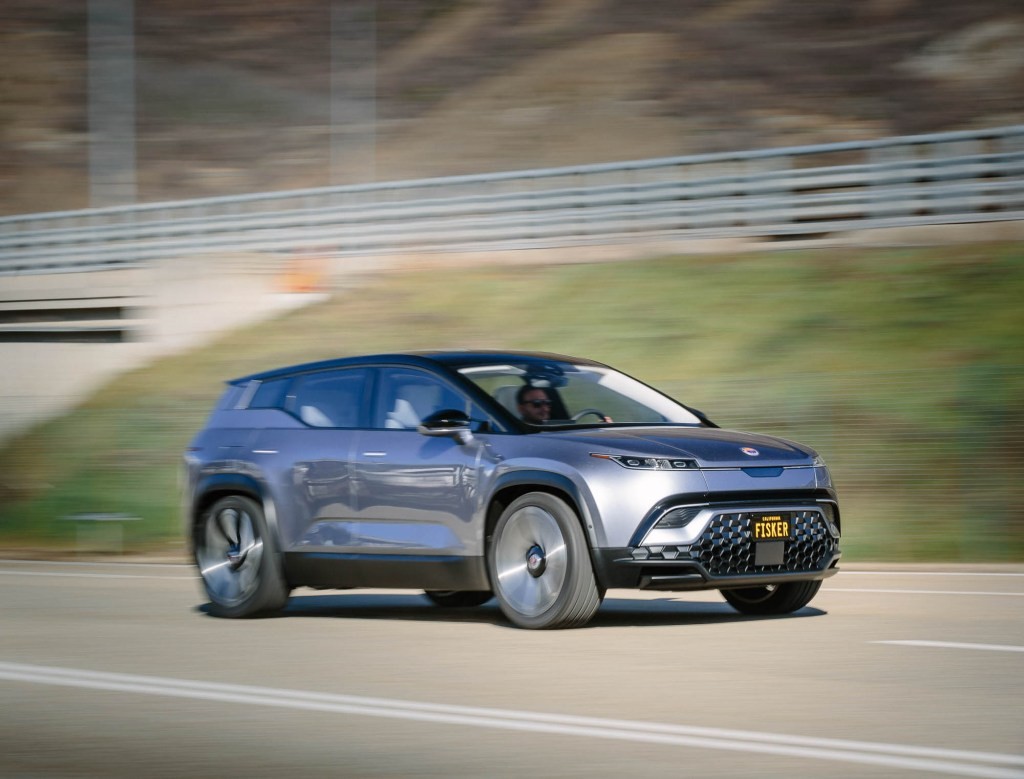
Fisker's Positive Outlook on EV Production
During Wednesday’s third-quarter earnings conference call, Fisker shared a promising projection regarding the scaling of its electric vehicle manufacturing operations.
Key to this outlook is the company’s manufacturing collaboration with Foxconn.
Furthermore, a battery supply agreement with CATL, the prominent Chinese battery manufacturer, has been finalized.
Fisker also affirmed that production of its inaugural model, the Ocean SUV, remains on schedule.
Ocean SUV Production Timeline
The company has officially confirmed that Ocean production will commence in November 2022.
This production will be undertaken in conjunction with Magna Steyr, a well-established automotive contract manufacturer.
CEO Henrik Fisker stated during Wednesday’s investor call that the initial production rate will be two vehicles per day by the first quarter of the following year.
Deliveries to customers in both the U.S. and European markets are anticipated to begin in late 2022.
Increased Investment in Research and Development
To successfully meet these production milestones, Fisker is accelerating its expenditure.
General and administrative expenses experienced a moderate increase, rising to $10.3 million in the latest quarter, compared to $7.9 million in the quarter ending June 30, 2021.
However, other expenses saw a more substantial surge.
Research and development expenses more than doubled, increasing from $45.3 million in Q2 2021 to $99.3 million in the most recent quarter.
This significant increase is attributed to workforce expansion and heightened spending on prototype development, as explained by company executives.
Cash Reserves and Future Funding
The considerable rise in R&D expenditure accounts for the recent bolstering of Fisker’s cash reserves.
A substantial amount of capital is required to bring its vehicles to market and ultimately deliver them to customers.
Fisker and CATL Battery Partnership
A significant development has emerged regarding Fisker's collaboration with CATL. The Chinese firm will initially provide over 5 gigawatt-hours of battery capacity annually through 2025, with provisions for potential volume increases.
The Fisker Ocean will be equipped with two distinct battery pack options, slated for integration into prototypes in the coming year. One pack will utilize lithium iron phosphate (LFP) chemistry, offering a more economical solution but with reduced energy density.
The second battery will employ nickel-manganese-cobalt (NMC) technology. This will deliver enhanced energy density and extended range, though at a corresponding increase in cost.
According to Fisker, this strategic sourcing “enables us to achieve the greatest range within our vehicle segment and price point.” Further specifics concerning the range capabilities of both battery packs are scheduled to be unveiled at the Los Angeles Auto Show next week.
The Rise of LFP Batteries
LFP battery chemistry, while established, has experienced a resurgence in popularity as a cost-effective alternative. Several manufacturers, including Tesla, have adopted this chemistry for select models, such as all standard Model 3 vehicles globally.
Fisker emphasized the company’s proactive approach to technology selection. “Our technology choices were finalized this year, ensuring that Fisker Ocean customers will receive the most cutting-edge advancements available in 12 months.”
He further stated that vehicles purchased from competitors next year are likely to incorporate technology chosen several years prior.
Expanding into the Chinese Market
Currently, Fisker is establishing a Chinese subsidiary to facilitate reservation acceptance from customers within China. Completion of this entity is anticipated by the start of the next year.
Approximately 80-85% of Fisker’s existing reservations originate from the United States.
- Key Partnership: Fisker and CATL are collaborating on battery supply.
- Battery Options: The Fisker Ocean will offer LFP and NMC battery packs.
- Market Focus: A significant portion of reservations are currently from the U.S., with expansion planned for China.
Fisker's Financial Performance
Let's examine Fisker’s latest earnings report. As a company that has not yet generated substantial revenue, the key metrics differ from traditional financial analyses. Following the announcement of its third-quarter results, Fisker’s stock experienced a modest increase of just over 1% in after-hours trading.
The company’s revenues fell short of expectations, and a net loss was reported. Market forecasts predicted a loss of $0.35 per share, but Fisker recorded a loss of $0.37 per share.
This translated to a net loss of approximately $109.8 million. Revenue generated during the quarter was minimal, totaling only $15,000, resulting in a net loss of $1,000.
Cash Reserves and Funding
Fisker also disclosed details regarding a recent bond offering. This offering significantly bolstered the company’s cash position, increasing it to $1.40 billion. This represents a substantial increase from the $962 million reported at the close of the June 30, 2021 quarter.
The sale of $667.5 million in convertible notes, yielding 2.5%, provided a crucial influx of capital. These funds are intended to support the company as it prepares for vehicle production.
Revenue Projections
Currently operating without significant revenue, Fisker anticipates a rapid change in this area. Analysts predict a substantial increase in revenue from a minimal amount in 2021.
Street analysts, according to Yahoo Finance data, forecast revenues to reach $264.2 million in 2022. The recently raised capital will be essential for meeting these growing revenue expectations from investors.