Diversity Investing | Founders First Capital Partners
Kim Folsom: Pioneering Revenue-Based Investment for Underrepresented Founders
Kim Folsom’s career began with a foundation in engineering during the 1980s and 1990s. This experience preceded her establishing six companies, with three achieving successful exits.
Currently, she serves as the founder and CEO of Founders First Capital Partners. This San Diego-based startup investment firm employs a unique funding strategy known as revenue-based investment.
A Different Approach to Venture Capital
Founders First distinguishes itself from traditional Silicon Valley venture capital firms. Folsom’s firm doesn’t prioritize identifying the next high-valuation “unicorn” company.
Instead, the focus is on founders from historically underrepresented groups – including women, people of color, LGBTQ individuals, and veterans – who demonstrate promising concepts and established revenue streams.
Targeting B2B Companies with Growth Potential
Folsom primarily targets B2B companies, frequently within the technology sector. These businesses typically offer a core product complemented by associated services.
A key characteristic is the potential to convert these offerings into a consistent, recurring subscription revenue model. Founders First provides coaching and mentorship to facilitate this transformation.
Revenue-Based Investment: A Partnership Model
Unlike conventional equity investments, Founders First doesn’t acquire ownership stakes in the startups it supports. Instead, it provides funding in the form of loans.
Investment amounts generally range from $50,000 to $1 million, with an average investment of $300,000. Repayment is structured as a percentage of monthly revenue, incorporating a profit margin for the firm.
Focus on Inclusive Investment
An interview with Folsom last fall explored her professional trajectory and the motivations behind creating an investment firm that specifically targets entrepreneurs often overlooked by mainstream venture capital.
Her firm aims to support individuals and businesses operating in regions frequently disregarded by investors on Sand Hill Road.
Startup Aspirations
Folsom, an African American woman, matured as an engineer during the 1980s. She initially honed her skills at companies such as NCR, contributing to the design of automatic teller machines – a pioneering technology during the early stages of the IBM PC era. However, her ultimate ambition was always to establish and lead her own enterprise, recognizing that this wouldn't be feasible within the confines of her existing corporate roles.
“My initial career phase was dedicated to acquiring sufficient knowledge from the various corporations I worked for, preparing myself to venture out independently. Eventually, during the dot-com boom of the mid-1990s, I initiated my first company, subsequently launching six more before the founding of Founders First,” she explained.
Throughout this period, she successfully secured $30 million in funding, gaining invaluable insights into the intricacies of company building – knowledge she now leverages to support the companies she invests in.
Folsom encountered a scarcity of relatable role models in the business landscape when she began her entrepreneurial journey. The representation of women, and particularly women of color, in engineering positions during the 1980s was limited. It wasn't until the late 1990s, with the appointments of Meg Whitman as CEO of eBay and Carly Fiorina at HP, that she witnessed women assuming leadership roles in major technology corporations.
Presently, women constitute only 8.2% of CEOs at Fortune 500 companies, and women of color occupy a mere 1% of CEO positions across the Fortune 1000, as reported by the Women Business Collaborative.
Regarding women of color spearheading startups, funding opportunities were scarce when she was starting out, and current statistics show little improvement. Crunchbase data from the first half of 2021 revealed that only 1.2% of $147 billion in venture capital was allocated to Black founders. This figure dwindled to a minimal 0.34% when specifically considering Black women founders.
Driven by her own experiences as a founder, she aimed to establish a firm dedicated to facilitating access to capital for individuals traditionally excluded from the funding process.
“The challenges faced by diverse founders are consistent – whether they are women, people of color, military veterans, LGBTQ+ individuals, or reside in low to moderate income areas – growing a business and securing intelligent capital for wealth creation remains difficult,” she stated.
This conviction led to the launch of Founders First in 2015.
The Motivation Behind Giving Back
Folsom, drawing upon her extensive experience as a startup founder – encompassing company building, fundraising, and successful exits – felt compelled to support others in their entrepreneurial journeys.
Her aim was to democratize access to the advantages she had gained, particularly for individuals often overlooked within the venture capital landscape.
Structuring a New Approach
“My prior experiences equipped me with sufficient knowledge to attempt a new venture,” Folsom explained. “However, I prioritized structuring it to effectively address the needs of the target market.”
She understood that while exits represent a viable path to profitability for both investors and founders, the existing system often lacks efficiency.
Addressing the Limitations of Traditional VC
Folsom observed that many promising companies fail to meet the stringent revenue and growth criteria demanded by conventional venture capital firms. This realization highlighted a gap in the market, where numerous potentially impactful businesses were being underserved.
Consequently, she resolved to establish a firm centered around revenue-based funding, rather than equity, enabling her to support a new generation of founders.
This model would simultaneously create a profitable investment opportunity for her partners and empower these founders to achieve greater success independently.
Beyond the Unicorn Myth
“The current emphasis on ‘unicorn’ companies wasn’t prevalent during the dot-com era,” Folsom noted. “However, the pursuit of these high-growth ventures often leads to the neglect of numerous solid companies with substantial market potential.”
She believes that focusing solely on unicorns overlooks a wealth of businesses capable of making a significant impact.
Embracing the "Zebra" Philosophy
Instead of chasing unicorns, Folsom is dedicated to fostering “zebras.” As defined by Zebras Unite, an organization championing zebra founders, these companies are characterized by:
- A focus on sustainable growth rather than rapid scaling.
- A commitment to serving their communities.
- Challenges in attracting investors due to less conventional exit strategies.
Supporting Sustainable and Impactful Businesses
Folsom’s commitment to zebras stems from her belief in their potential. “They are capable of generating significant impact and building wealth for both the communities they serve and their founders,” she stated.
By providing alternative funding models, she aims to unlock the potential of these often-overlooked businesses and contribute to a more inclusive and sustainable entrepreneurial ecosystem.
Securing Capital for Founders First
Upon its inception in 2015, Folsom encountered difficulties in attracting investment partners, despite possessing a strong professional background. Initially, many investors considered the concept of funding diverse entrepreneurs through a revenue-based financing model as unconventional and were hesitant to assume the associated risk.
Folsom initially funded the venture with her personal capital, subsequently seeking support from previous investors. She explained the initial skepticism surrounding her vision for Founders First.
“At the outset, when I proposed focusing on funding diverse founders and employing a financing model tailored to business owners, the idea was met with disbelief. Fortunately, I had previously secured funding, and my initial investors were individuals who had faith in my abilities and had invested in me before,” she stated.
A successful proof of concept involving 10 companies was completed in 2017. This positive outcome paved the way for seeking a Series A funding round. Prior to this, in 2019, a $100 million credit facility was obtained from Community Investment Management, an organization dedicated to fostering inclusion through lending practices – a partner aligned with Folsom’s objectives.
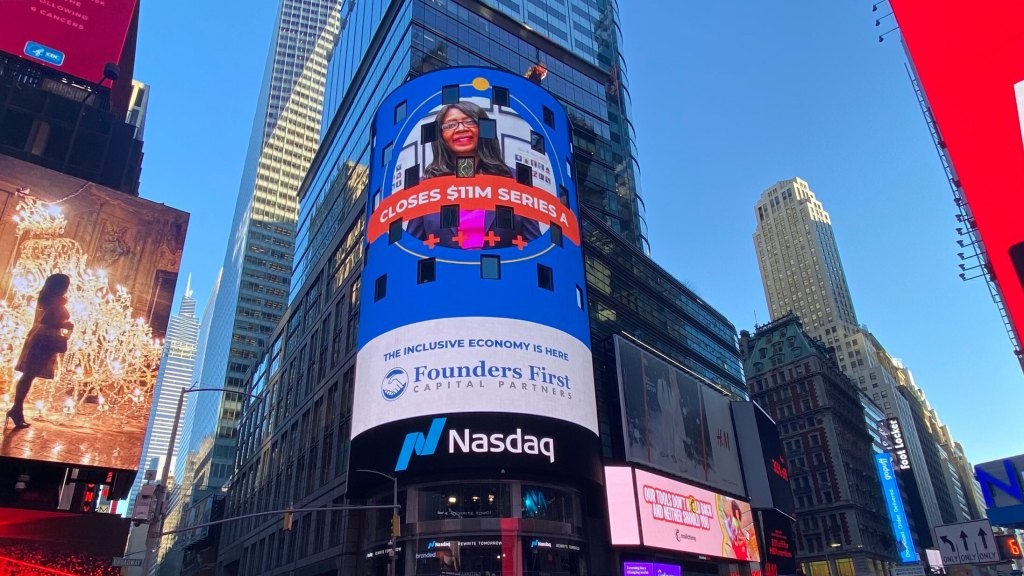
This year, the firm successfully raised a $11 million Series A. A significant $9 million portion came in March from The Rockefeller Foundation and the Surdna Foundation. An additional $2 million followed in November from the W.K. Kellogg Foundation, Pivotal Ventures (affiliated with Melinda French Gates), the Schultz Family Foundation, and Arc Chicago, LLC.
Folsom believes that increased awareness of systemic racism following the death of George Floyd has positively influenced the ability of firms like hers, focused on diversity investing, to secure funding. However, despite being headquartered in San Diego, and all her portfolio companies originating there, no California-based institutional investor participated in the recent funding round.
How the Funding Model Operates
Folsom’s firm focuses on businesses that have moved past the initial concept stage and are already generating revenue, demonstrating potential for further expansion with strategic adjustments to their business model. She emphasizes the importance of founders possessing a suitable level of experience, specialized knowledge, and a strong dedication to growth.
Furthermore, the founding team must demonstrate a willingness to collaborate with and integrate new individuals who can contribute to accelerating that growth trajectory. This collaborative spirit is considered crucial.
Investment evaluations are primarily based on the robustness and predictability of a company’s revenue streams. Importantly, Founders First does not require founders to pledge personal credit or assets as security; the company’s revenue itself serves as collateral.
Repayment Structure
The funded company repays the capital, structured as a “loan,” based on a predetermined maximum amount over a defined period, typically three years. Folsom explains that this cap for Founders First ranges from 1.35 to 2 times the initial investment.
Monthly payments are made using a percentage of the company’s sales revenue, with that percentage negotiated between 2% and 10% of total revenue.
A Case Study: Klarinet Solutions
Klarinet Solutions, a provider of managed services for Microsoft SharePoint and Office 365, serves as a compelling example of this model’s success. Prior to partnering with Founders, the company experienced three years of stagnant mid-six-figure revenue.
Founders First assisted in developing new revenue streams, notably recurring revenue, which resulted in a 2.5x increase in revenue within two years. Simultaneously, the company’s staff size doubled.
Folsom aims to leverage her expertise to facilitate funding access for companies similar to Klarinet, enabling growth and development in sectors often overlooked by traditional tech funding sources.
The Importance of Diverse Funding
She stresses that supporting diverse founders isn't a competitive endeavor, especially given the current abundance of available capital. Drawing on her life experience, Folsom acknowledges that the current emphasis on diversity and inclusion may be temporary.
Folsom has observed past opportunities for increased inclusion emerge and then diminish within a year or two, and she expresses hope that this cycle will be broken. She believes sustained progress is vital.
“These opportunities typically last for a limited time – perhaps a year, 18 months, or two years – before receding,” she notes. “My hope is that when this window reopens, it will benefit not just a select few, but thousands of individuals.”
Long-Term Impact
The proliferation of firms like Founders First, dedicated to increasing investment access for historically underrepresented groups, could play a significant role in sustaining this open window, fostering wealth creation and job opportunities within previously marginalized communities.
Related Posts

Trump Media to Merge with Fusion Power Company TAE Technologies

Radiant Nuclear Secures $300M Funding for 1MW Reactor

Coursera and Udemy Merger: $2.5B Deal Announced

X Updates Terms, Countersues Over 'Twitter' Trademark

Slate EV Truck Reservations Top 150,000 Amidst Declining Interest