Gardin Raises $1.2M to Revolutionize Food Production with AI
Gardin, a technology company specializing in both hardware and software development, has secured $1.2 million in pre-seed funding to advance its optical phenotyping technology and data analysis solutions for improving food production.
LDV Capital spearheaded the funding round, with additional investment from Seedcamp and MMC Ventures. Several private investors also contributed, including Pratima Aiyagari, Gilad Engel, and Abdulaziz Alrashed.
Established in late 2019, Gardin, a U.K.-based company, is dedicated to making high-quality, nutritious food accessible to all, while also prioritizing environmental sustainability – food that is “beneficial for both people and the planet,” according to the company.
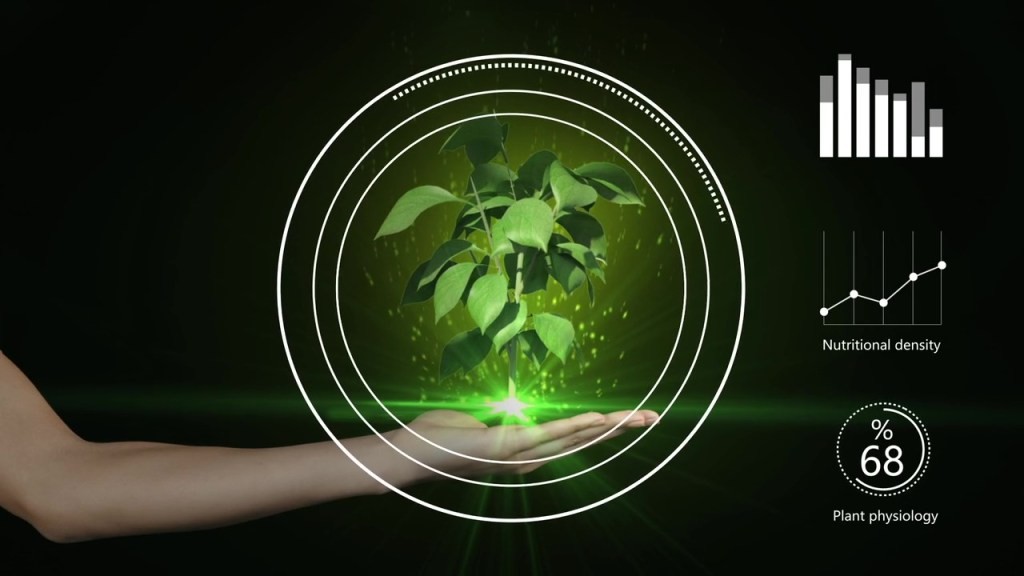
The company is creating technology for agricultural operations centered around its unique “optical phenotyping” hardware and related analytical software. This technology allows food producers to assess and track the nutritional content of food throughout the growing process, “from seed to consumption in a real-world setting,” rather than relying solely on laboratory analysis.
“The implementation of Gardin’s operating system will deliver valuable insights through our analytics, enabling food producers to refine their methods, cultivate more nutritious crops, minimize their environmental impact, and decrease waste,” states Sumanta Talukdar, founder and CEO. “Gardin’s goal is to equip food producers to nourish the world in a responsible, sustainable, and nutritionally sound manner.”
Talukdar explains that he founded the company after recognizing that the conventional food industry currently lacks the ability to accurately and consistently measure food nutrition and quality. This realization led Gardin to collaborate with prominent crop and plant physiologists, phenotyping specialists, and plant scientists to pinpoint the essential biochemical processes within various crops that influence plant physiology.
“By developing hardware specifically designed to detect the indicators of these processes, Gardin can quantify plant physiology and the concentration of key compounds with a high degree of accuracy – a strong signal-to-noise ratio – at a price point comparable to consumer electronics,” he clarifies. To accomplish this, Gardin utilizes a multispectral data fusion technique, employing a combination of remote sensing and computer vision technologies to gather precise data, which is then integrated to power the analytics.
With this in mind, Gardin is designed to support both conventional farming and controlled environment agriculture (CEA), aspiring to become the leading standard for food production.
“Our comprehensive product is engineered to operate and optimize the entire growing environment seamlessly in the background, functioning like an operating system – we address their challenges, helping food producers grow superior food while lowering their expenses and carbon footprint,” Talukdar adds.
“We have also structured our platform to integrate with their current systems. We believe it would be impractical to ask producers in an industry already heavily invested in infrastructure to alter or expand their setup to accommodate our technology.”
Regarding progress, Talukdar reports that Gardin has already established pilot programs scheduled to launch early this year with “significant initial customers,” including supermarket chains, food producers, and vertical farms.
Related Posts

Trump Media to Merge with Fusion Power Company TAE Technologies

Radiant Nuclear Secures $300M Funding for 1MW Reactor

Coursera and Udemy Merger: $2.5B Deal Announced

X Updates Terms, Countersues Over 'Twitter' Trademark

Slate EV Truck Reservations Top 150,000 Amidst Declining Interest