Google's Fusion Power Deal with Commonwealth Fusion Systems
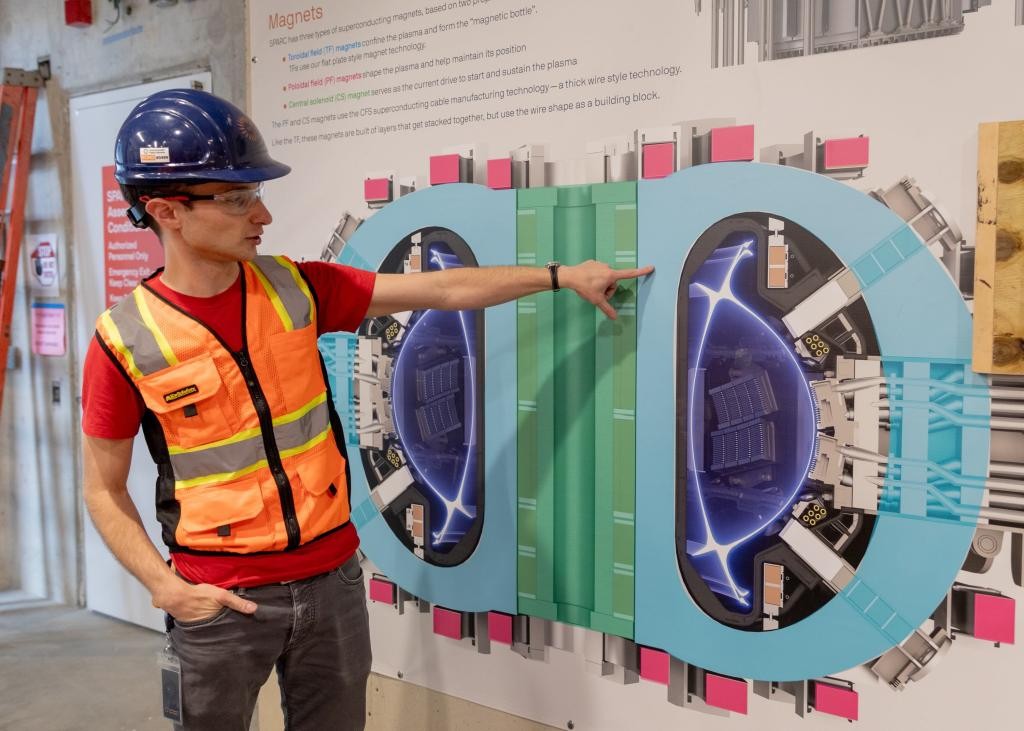
Google Invests in Fusion Power with Commonwealth Fusion Systems
A significant advancement in the pursuit of fusion energy occurred Monday with Google’s announcement of a deal to purchase half the electrical output from Commonwealth Fusion System’s (CFS) inaugural commercial power facility.
Power Purchase Agreement Details
CFS is set to supply Google with 200 megawatts of electricity generated by its Arc power plant. This plant is projected to begin operations in the early 2030s. Concurrently, Google is providing CFS with financial backing through a new, currently undisclosed, investment round.
Funding and Development
The forthcoming funding round is anticipated to be on par with CFS’s previous Series B round. This earlier round, which included participation from Google, successfully raised $1.8 billion in 2021. CFS currently holds the record for the most funding secured by any fusion energy startup.
“This signifies a robust level of market interest,” stated Bob Mumgaard, CFS co-founder and CEO. “The investment will facilitate crucial research and development, accelerating the timeline for Arc’s deployment.”
Reactor Timelines
CFS is currently constructing a demonstration reactor, designated Sparc, located just outside Boston. Completion of the Sparc facility is scheduled for 2026, according to Mumgaard. The Arc commercial power plant will be situated near Richmond, Virginia.
Industry Trend: Power Purchase Agreements
This agreement represents only the second instance of a major corporation committing to purchase power from a fusion startup. Previously, in 2023, Microsoft entered into a similar agreement to procure electricity from Helion’s first commercial power plant, slated for operation in 2028.
Google’s Energy Strategy
Like other major hyperscale cloud providers, Google is actively seeking diverse and novel electricity sources. The rapid expansion of AI and cloud services is fueling a surge in data center construction, consequently increasing electricity demand. Forecasts predict a doubling of data center power requirements by the decade’s end.
“To meet these demands, we recognize the necessity of making substantial investments in the next generation of energy technologies,” explained Michael Terrell, Google’s head of advanced energy.
A Three-Tiered Approach to Energy Investment
Terrell outlined Google’s energy investment strategy, categorized into three time horizons. In the short term, the company is prioritizing solar, wind, and battery storage solutions. Looking further ahead, Google is investing in geothermal energy and small modular nuclear reactors, as demonstrated by its support for Fervo Energy and Kairos Power.
Fusion energy is considered a longer-term prospect, and “this CFS investment definitively falls into that long-term category,” Terrell added.
Renewable Energy Procurement
Google procured 8 gigawatts of renewable power in 2024, a significant increase from the 4 gigawatts purchased in 2023. While solar, wind, and batteries have been the primary focus of Google’s recent portfolio additions, Terrell emphasized the need for alternative power sources to ensure continuous data center operation.
“Regions with strong renewable resources, such as the Midwest with its consistent winds and the Southwest with its clear skies, offer a viable path with wind, solar, and storage,” he stated. However, areas like the Southeastern U.S. and many parts of the Asia-Pacific region may face challenges due to cloud cover or fragmented power grids.
The Economic Benefits of Fusion
Overbuilding renewable capacity to compensate for intermittency can be costly. Technologies like fusion, however, “can actually reduce the cost of achieving high levels of carbon-free energy,” Terrell said. “Integrating these clean, reliable technologies – even if initially more expensive per megawatt-hour – can lower overall portfolio costs.”
Future Outlook
Mumgaard expressed confidence in CFS’s ability to deliver power to Google within the next decade. He anticipates a surge in demand for fusion energy once the technology is proven viable with the operation of a first power plant.
“Fusion is not geographically or weather-dependent, nor does it rely on access to rare materials,” he explained. “It’s a resource capable of providing 24/7 power.” He further stated, “We foresee fusion having a substantial impact, as the successful demonstration of a first power plant will enable global scalability.”
Related Posts

Trump Media to Merge with Fusion Power Company TAE Technologies

Radiant Nuclear Secures $300M Funding for 1MW Reactor

Whole Foods to Implement Smart Waste Bins from Mill | 2027
Last Energy Raises $100M for Steel-Encased Micro Reactor

Everbloom AI Transforms Chicken Feathers into Cashmere