Google Workspace Spaces: Collaboration for Everyone
Google Workspace Enhancements for Hybrid Work
The dynamics of employee work locations are evolving, with a blend of in-office and remote arrangements becoming increasingly common. To accommodate these hybrid working conditions, Google is rolling out updates to its Google Workspace suite, specifically launching spaces within Google Chat for all users.
Integrating Workspace Tools
Spaces are designed to integrate seamlessly with core Workspace applications, such as Calendar, Drive, and Documents. This integration aims to deliver a more cohesive work experience. Users can now access a complete record of conversations, content, and relevant context, irrespective of their physical location.
According to Sanaz Ahari, Google’s senior director of product management, the updates respond to user demand for spaces to function as a “central hub for collaboration,” facilitating both real-time and asynchronous communication. Teams can now efficiently advance projects and discuss topics directly within a space, bypassing the need for lengthy email threads or scheduled video conferences.
New Features in Spaces
Several new features are now available within spaces, enhancing usability and collaboration:
- A unified interface encompassing inbox, chats, spaces, and meetings.
- The ability to make spaces and their content searchable, allowing individuals to easily discover and participate in relevant conversations.
- Improved search functionality within a team’s collective knowledge base.
- Direct reply capabilities to specific messages within a space.
- Strengthened security measures and administrative controls for monitoring communication.
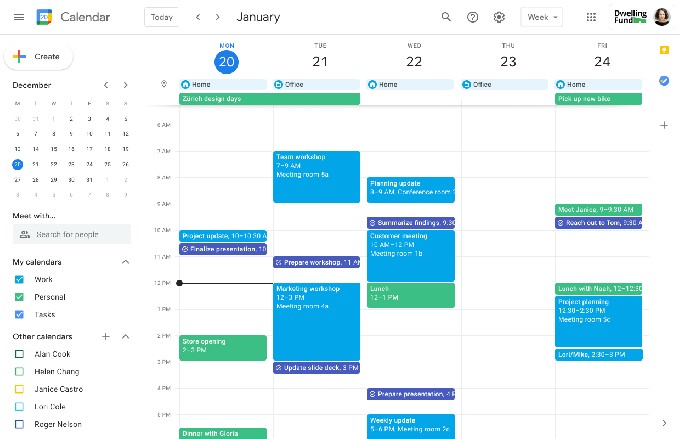
Furthermore, employees can now specify their work location – whether virtual or in-person – within Calendar, setting clear expectations for collaboration. Complementing this, Google Meet now supports calls from both mobile and desktop devices.
 Future Updates and Expanded Hardware
Google plans to make Google Meet’s Companion Mode available to all customers in November. This feature will enable users to join meetings from personal devices while utilizing the audio and video capabilities of in-room systems. Later in the year, live-translated captions will be offered in English to French, German, Portuguese, and Spanish, with additional languages planned for future inclusion.
The Google Meet hardware portfolio is also expanding. Two new all-in-one video conferencing devices are being introduced, alongside support for third-party devices like Logitech’s video bar and Appcessori’s mobile device speaker dock. Interoperability with Webex by Cisco is also being implemented.
Hybrid Work Handbook
To further support the transition to hybrid work models, Google is providing a comprehensive handbook. This resource includes best-practice blueprints for five common types of hybrid meetings, offering guidance for effective collaboration in a distributed environment.
Related Posts
Databricks Raises $4B at $134B Valuation - AI Business Growth
Google Launches Managed MCP Servers for AI Agents
Cashew Research: AI-Powered Market Research | Disrupting the $90B Industry
Boom Supersonic Secures $300M for Natural Gas Turbines with Crusoe Data Centers
Microsoft to Invest $17.5B in India by 2029 - AI Expansion