Hyundai and Boston Dynamics' Spot Robot Enter the Metaverse

Hyundai's Expanding Vision for Robotics and the Metaverse
Hyundai demonstrates significant ambition in the field of robotics development, backing its goals with substantial investment. A key example of this commitment is the acquisition of Boston Dynamics, a leading robotics firm, for a valuation exceeding $1 billion.
Predictably, robotics are a central focus of Hyundai’s presentation at this year’s CES event. Last month, a preview was given with the unveiling of the Mobile Eccentric Droid, a modular mobility platform utilizing four wheels. Today, the company detailed more extensive future plans centered around a new concept called “metamobility.”
The "Metamobility" Concept: Bridging Physical and Virtual Worlds
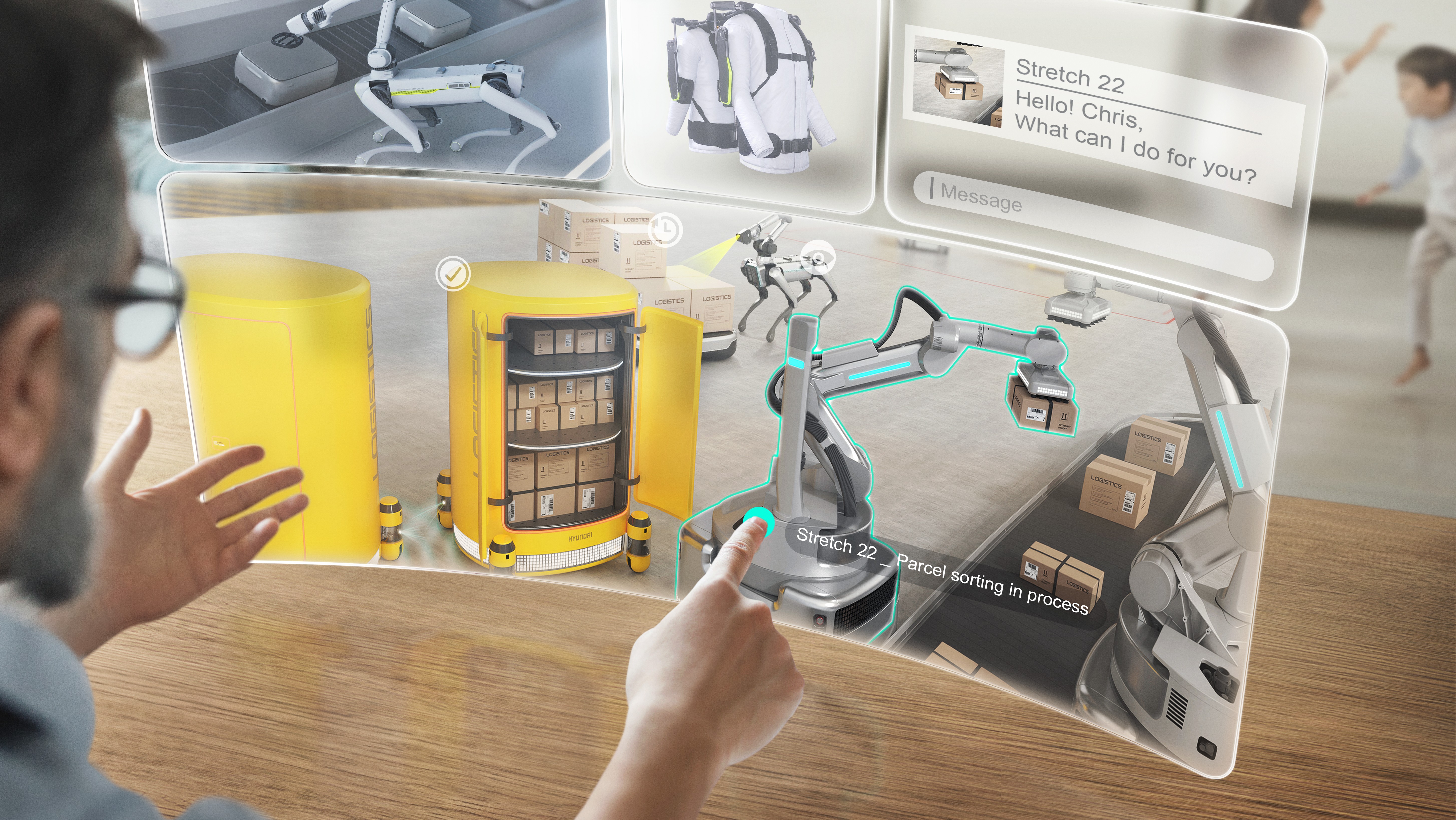
Hyundai intends to reveal further details regarding its strategic direction, and discussions with company executives are planned to gain a clearer understanding of its practical implementation. The overarching idea, presented under the theme of “Expanding Human Reach,” seeks to integrate mobility and robotics within a virtual reality metaverse environment.
Distinguishing between marketing terminology and concrete applications remains challenging at this early stage. However, a core element appears to be leveraging hardware to function as a real-world interface for interactions within VR.
 Currently, many ambitious promises surround the challenge of tangibility, a long-standing issue for VR applications. Hyundai Motor Group President Chang Song articulated the company’s vision as follows:
A readily achievable, short-term application of this technology involves utilizing remote teleoperations to control robots in manufacturing settings. Toyota has been actively researching similar systems, such as the T-HR3. Hyundai notes that Microsoft Cloud for Manufacturing could provide a platform for such remotely controlled operations, and a functional system of this type is easily conceivable.
 Future Applications and Demonstrations
Other potential applications are considerably more distant in their realization. According to a Hyundai press release, “when a user accesses a digital twin of their home in the metaverse while away, they will be able to feed and interact with a pet in Korea through the use of an avatar robot.” This would allow users to experience real-world sensations through VR.
These concepts are largely theoretical at present, although Hyundai is showcasing potential demonstrations in person at CES this week. Considering the significant number of attendees participating virtually in the event (including TechCrunch) due to the recent COVID-19 surge, the utility of remote operations is readily apparent.
Ultimately, Hyundai’s metamobility concept represents a significant step towards integrating robotics and virtual reality, with potential applications ranging from industrial automation to personal experiences.
Transforming Static Objects with Robotics: Hyundai's Vision for Future Transit
During CES, Hyundai demonstrated innovations extending beyond the metaverse. The company unveiled a concept known as “New Mobility of Things,” focused on utilizing robotics to enable autonomous movement of both large and small inanimate objects.
At the core of this “New Mobility of Things” initiative lies a product called Plug & Drive, or PnD. This modular unit integrates intelligent steering, braking systems, an in-wheel electric drive, and suspension components.
Furthermore, the PnD incorporates lidar and camera sensors, facilitating object detection and independent navigation. These modules are engineered for attachment to items like office tables.
Users could then instruct the table to reposition itself, or schedule movements based on office space requirements. “The PnD Module is adaptive and expandable to match human needs,” explained Dong Jin Hyun, Vice President and Head of Hyundai’s robotics lab.
“In the future, your possessions will move around you, rather than you moving them.” He further stated that PnD’s capability to mobilize normally static objects allows for dynamic space reconfiguration on demand.
Hyundai presented several PnD applications, including a personal transport system designed to connect individuals with public transportation. This pod, equipped with four 5.5-inch PnD modules, would autonomously attach to a larger “mother shuttle.”
Image Credits: HyundaiThe envisioned system allows the bus to drop off passengers close to their final destinations. The pod then continues the “last mile” journey independently.
Hyundai’s demonstration, featuring an elderly woman receiving her cane via a single PnD before boarding the pod for transport to a bus, specifically targets an aging demographic. However, the technology could potentially alleviate first- and last-mile transit challenges.
This could be achieved without significantly increasing the number of single-occupancy vehicles on roadways. Hyundai also introduced “Drive & Lift” (DnL), a module designed for object lifting.
The DnL was integrated with the Mobile Eccentric Droid (MobED) robot. Mounting the DnL on each wheel of the MobED allows for vertical adjustment, maintaining a level platform even when navigating uneven surfaces.
This capability ensures stability when traversing obstacles like steps or speed bumps.
Related Posts

ChatGPT Launches App Store for Developers

Pickle Robot Appoints Tesla Veteran as First CFO

Peripheral Labs: Self-Driving Car Sensors Enhance Sports Fan Experience

Luma AI: Generate Videos from Start and End Frames
Alexa+ Adds AI to Ring Doorbells - Amazon's New Feature