Is That Weed Green Enough? - Cannabis Quality
The Pursuit of Sustainability in a Nascent Industry
Across the majority of global industries, sustainability efforts largely involve rectifying past errors – a shift encompassing both operational methodologies and fundamental perspectives.
However, the relatively new cannabis industry presents a unique opportunity. Numerous emerging companies and collaborative organizations are actively working to ensure the industry establishes a sustainable foundation from its inception.
Building a Sustainable Model from the Ground Up
Annie Davis, Vice President of Marketing at Flow Cannabis Co., an outdoor cannabis cultivator, observes that established Fortune 500 companies are focused on enhancing efficiency to lessen the environmental footprint of existing operations.
She poses a compelling question: “Instead of retrofitting, could we proactively construct an entirely different, more sustainable model from the outset?”
This proactive approach represents an ideal scenario. Nevertheless, despite being a legally recognized business for only approximately ten years, the cannabis industry carries a legacy of illicit cultivation.
Historically, this has prioritized evading law enforcement over environmental stewardship. Consequently, cannabis cultivation has not benefited from the significant technological advancements seen in conventional agriculture.
Addressing Historical Disadvantages
Shawn Cooney, co-founder of the Sustainable Cannabis Coalition (SCC), highlights the limited research available regarding cannabis agriculture.
“Agricultural research pertaining to cannabis is largely based on anecdotal evidence, stemming from its past as a prohibited substance,” Cooney explains.
“It hasn’t received the same level of scientific investigation as traditional agricultural commodities.”
The SCC, a coalition comprising 20 cannabis-related companies – including producers like Trulieve and Flow Cannabis – recognizes this disparity.
This historical context has often resulted in the adoption of less efficient technologies within the cannabis cultivation sector.
Key challenges include:
- Limited access to agricultural research.
- A legacy of prioritizing secrecy over sustainability.
- The need to adopt modern, efficient cultivation techniques.
The Environmental Impact of Indoor Cannabis Cultivation
Currently, a significant portion – 40% as of 2020 – of legal cannabis is grown entirely indoors. This practice results in a substantial energy demand and a considerable environmental footprint.
Travis Higginbotham, the vice president of production at Harborside, a cannabis retailer and producer, notes that consumer preference leans towards indoor-grown cannabis. Consequently, it commands a higher price point in the retail market.
Historical Roots of Indoor Growing
The shift to indoor cultivation initially stemmed from the need for secrecy, as cannabis farmers sought to evade law enforcement. Early outdoor grows were often concealed beneath the canopy of large trees to avoid detection from aerial surveillance.
These initial decisions, made during the period of cannabis prohibition, continue to shape both consumer expectations and current business practices within the industry.
Energy Consumption as a Major Concern
The most significant environmental challenge facing the cannabis sector is the high energy consumption associated with indoor growing. This presents both operational and reputational risks.
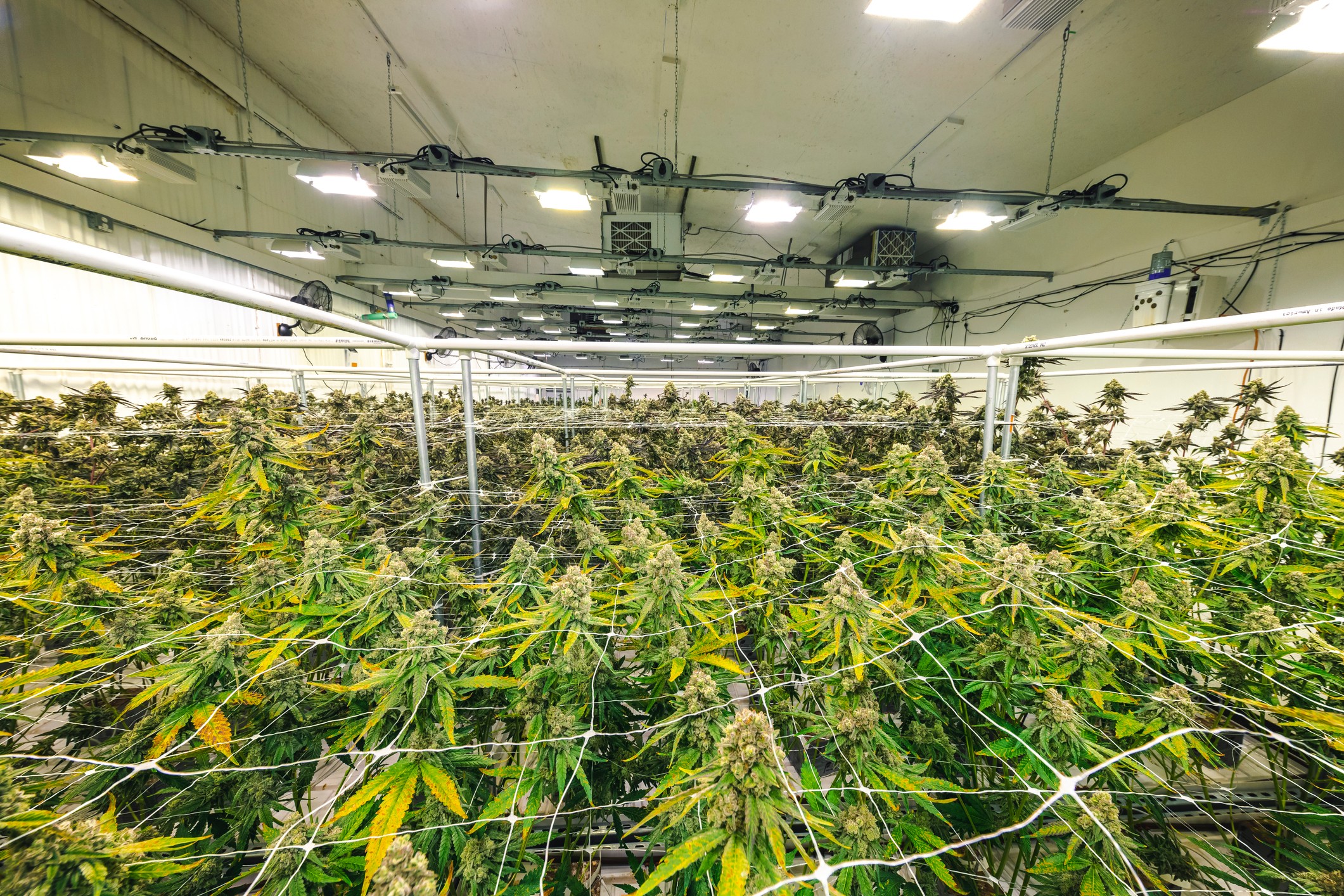
Indoor systems rely on a combination of artificial lights and climate control technologies – including heating, ventilation, and air conditioning (HVAC) – to replicate optimal growing conditions.
Breakdown of Emissions
HVAC systems, CO2 enrichment pumps, and lighting collectively contribute between 11% and 25% of a cannabis cultivation facility’s total greenhouse gas emissions.
Furthermore, the HVAC systems utilized in cannabis grow operations often work at a higher capacity than those found even in operating rooms, due to the substantial heat output from grow lights.
Quantifying the Carbon Footprint
The overall greenhouse gas emissions associated with cannabis production can vary significantly depending on location. Estimates range from 2,283 kg to 5,184 kg of CO2-equivalent for each kilogram of dried flower produced.
This high level of emissions is largely attributable to the extensive energy needed to power lighting, operate CO2 systems, and maintain adequate ventilation within the facilities.
Impact on the U.S. Electrical Grid
As the cannabis industry expands, its energy demands are placing a growing strain on the U.S. electrical grid.
In Colorado, for example, the cannabis industry is responsible for 1.3% of the state’s total annual emissions. This is comparable to the emissions generated by coal mining and waste management.
Towards Sustainable Cannabis Cultivation
Cannabis businesses are increasingly recognizing a potential disconnect between their public image and the environmental impact of their operations. Many customers, drawn to the industry by its association with nature, expect a commitment to sustainability.
The Sustainable Cannabis Coalition (SCC) is spearheading a significant initiative aimed at fostering a more environmentally responsible future for the cannabis industry. They are collaborating with Stephen Doig, a senior research and strategy advisor from Dartmouth’s Arthur L. Irving Institute for Energy and Society, to conduct a comprehensive assessment and redesign of indoor cannabis cultivation facilities.
Doig brings extensive experience in energy efficiency, having previously optimized systems in diverse settings like hospitals, data centers, and even iconic structures such as the Empire State Building, achieving a 40% reduction in energy consumption.
Currently in its initial stages, this project will encompass a detailed examination of various lighting technologies, the integration of solar energy, strategies for minimizing HVAC usage, and the implementation of automation. Crucially, the economic viability of these changes will also be evaluated to ensure practical application for businesses.
A key area of investigation involves the positioning of HVAC systems. Conventional setups often place these systems above the plants, forcing them to counteract the rising heat generated by the lights. Doig is exploring alternative approaches, such as introducing airflow from below and extracting it from the top, thereby reducing the workload on the HVAC systems.
Through a combination of minor adjustments and substantial system overhauls, Doig anticipates energy savings in the “high double-digit” percentage range. The resulting model is expected to be publicly available by mid-2022, with the SCC actively promoting its adoption.
A significant shift is also occurring in lighting technology. While high-pressure sodium lamps were traditionally favored, growers are increasingly adopting LEDs. These are becoming more affordable and produce less heat, lessening the strain on HVAC systems.
Brad Stutzman, executive director of operational excellence for Trulieve, stated, “I think [LEDs] will have a huge impact for the industry.” He emphasized the potential for LEDs to significantly reduce both heat and power consumption.
Trulieve’s initial trials with LEDs demonstrated a 25% reduction in HVAC and dehumidification requirements. Furthermore, the company is currently conducting a pilot program to assess the effectiveness of integrated efficient HVAC and lighting systems in further minimizing their carbon footprint.
 The Question of Outdoor Cultivation
Considering the effort invested in reducing the energy consumption of indoor cannabis cultivation, a natural question arises: why not simply transition all operations outdoors, now that legalization is expanding? The reality is that legal frameworks remain complex, and successful outdoor cannabis cultivation is geographically restricted to suitable climates.
As Cooney explained, local regulations significantly influence industry practices. Many states are, in effect, prioritizing indoor growing. The feasibility of outdoor cultivation is limited across numerous states, thereby restricting access to more sustainable alternatives.
Brian Anderson, Cooney’s partner at SCC, characterized these regulations as counterintuitive to sustainability. He posed a rhetorical question: “Why impose restrictions on cannabis farmers that wouldn’t be applied to traditional agricultural crops like corn or soybeans?”
Davis of Flow Cannabis highlighted a concerning consequence of increasing regulation. The ability to grow cannabis indoors virtually anywhere can incentivize cultivation in regions with the lowest electricity costs. These areas often rely on energy grids with a substantial environmental footprint.
Flow Cannabis, dedicated to exclusively producing sun-grown cannabis, is actively advocating for expanded outdoor cultivation permissions. The company collaborates with 30 independent, small-scale cannabis growers and operates its own farm in Lake County, California.
However, simply relocating outdoors doesn’t automatically guarantee sustainability. Flow Cannabis’ farm is situated on previously unused walnut orchard land. They utilize regenerative agriculture methods, including cover crops like black mustard and buckwheat, to revitalize the soil.
Furthermore, the farm integrates vegetables, clovers, and legumes alongside the cannabis plants. This practice enhances biodiversity and attracts insects, reducing the need for pesticides and herbicides.
“Our primary objective is to showcase that large-scale sun-grown cannabis cultivation can be achieved with a minimal environmental impact,” Davis stated.
Advancing Cannabis Cultivation Through Experience and Technology
Experienced agricultural professionals are increasingly entering the cannabis industry, a sector previously characterized by a lack of traditional horticultural expertise. Higginbotham noted a period of observation before he determined the cannabis market was stable enough for his involvement.
A significant number of participants in the cannabis industry lack backgrounds in conventional agriculture or horticulture. This absence often results in a deficiency of knowledge regarding fundamental environmental impact mitigation strategies.
Consequently, growers haven't consistently implemented established agricultural best practices. Examples include avoiding excessive fertilization to prevent nitrogen runoff, utilizing automated drip irrigation for efficient water use, and employing greenhouse curtains to conserve heat during colder months, thereby reducing energy consumption.
The integration of big data analytics is also gaining traction within the cannabis sector. SCC is collaborating with Sustain.Life to create a tool for cannabis companies to monitor their environmental emissions. Sustain.Life provides emissions-tracking software across various industries and has recently launched a program specifically designed for cannabis businesses to track and optimize energy, water, solvent, and retail waste.
The Challenge of Packaging Waste
Despite these advancements, a substantial obstacle remains: packaging waste. Davis identifies this as a critical weakness within the cannabis industry. Stringent packaging regulations necessitate numerous components, such as multiple labels, authenticity certificates, tamper-evident seals, and child-resistant features.
These regulatory demands hinder the use of compostable packaging materials, leading to a heavy reliance on plastics. Addressing this issue is paramount for improving the industry’s sustainability profile.
“Companies are beginning to explore and develop improved packaging alternatives,” Cooney stated. “However, collective advocacy for revisions to packaging regulations is crucial to enable the adoption of more sustainable materials.”
Several smaller cannabis brands, including Beboe, Calyx Containers, and Dogwalkers, are transitioning to glass or paper packaging. However, retailers still commonly require plastic zip locks for product sales.
Establishing effective collection and reuse systems within retail environments, with strong customer participation, is essential for the long-term viability of such a model.
A Unique Opportunity for Sustainability
The cannabis industry currently occupies a unique position compared to other sectors undergoing sustainability transitions. It has the potential to prioritize sustainable practices from the outset.
“The cannabis industry is experiencing rapid growth,” Doig explained. “Profit margins are generally healthy, and the industry faces a public relations challenge. Establishing sustainable practices now will have a significant positive impact.”
Related Posts

Trump Media to Merge with Fusion Power Company TAE Technologies

Radiant Nuclear Secures $300M Funding for 1MW Reactor

Whole Foods to Implement Smart Waste Bins from Mill | 2027
Last Energy Raises $100M for Steel-Encased Micro Reactor

Everbloom AI Transforms Chicken Feathers into Cashmere