US Labor Shortage & AI: A Turning Point?
The Pandemic's Lasting Impact on the U.S. Labor Market
The profound changes to American culture and society brought about by the pandemic continue to unfold. A particularly noticeable consequence is the current instability within the U.S. labor market.
Despite millions remaining unemployed, numerous businesses – spanning sectors like retail, customer service, and aviation – are struggling to locate sufficient staff. This seemingly contradictory situation, manifesting as increased Uber fares and prolonged wait times due to flight cancellations, isn't merely an inconvenience.
It represents a distinct signal from the American workforce in the wake of the pandemic. A significant number of individuals feel underpaid, undervalued, and unfulfilled in their present roles.
Consequently, they are prepared to explore new career paths or permanently abandon certain types of employment. It is important to recognize that this trend isn't limited to low-wage earners.
The Rise in White-Collar Resignations
Resignations among white-collar professionals have also reached record levels. While extended unemployment benefits enacted during the pandemic may contribute to some workers remaining outside the workforce, employee burnout and general job dissatisfaction are also major factors.
A fundamental issue exists regarding wages and employee contentment. Congress faces a substantial challenge this summer to formulate a viable solution.
However, what actions should companies take in the interim?
AI as a Potential Solution
Businesses currently require an immediate solution, whether it extends until September – when COVID-19 relief and unemployment benefits are scheduled to expire – or a more lasting and robust strategy.
Such a strategy should not only maintain operational capacity but also drive future progress. The integration of Artificial Intelligence (AI) could be the key to achieving both objectives.
The notion that we are entering an era defined by AI is hardly the most surprising development of the year. Yet, even a few years ago, this prospect would have caused considerable anxiety.
From Distant Idea to Tangible Reality
Advances in automation and AI were transitioning from theoretical concepts to concrete realities. Concerns were prevalent – and persist for some – regarding potential job displacement.
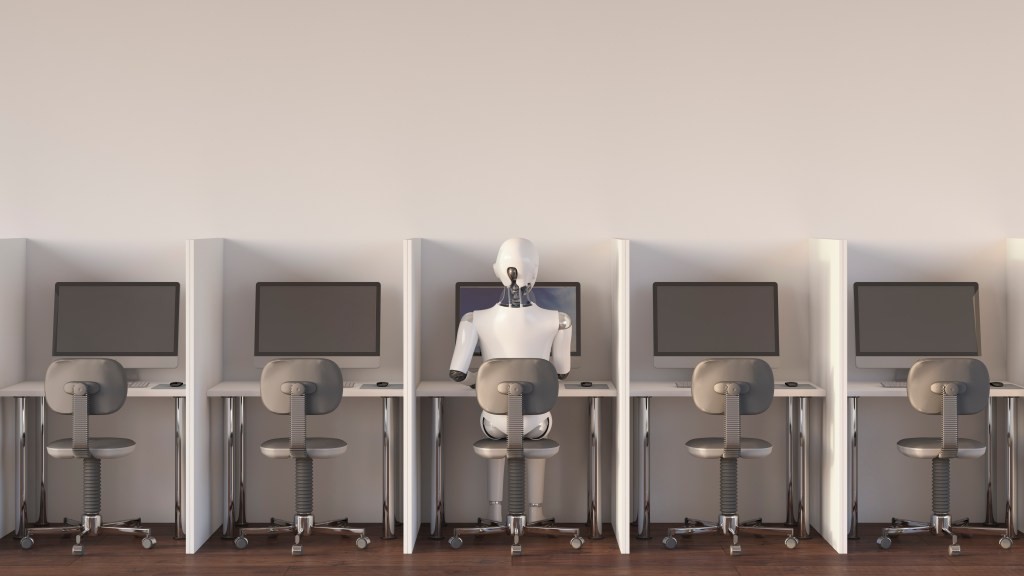
Many feared the loss of their livelihoods, envisioning robots and virtual assistants taking over their roles.
Re-evaluating the "AI Takes Jobs" Narrative
However, does the narrative of “AI replacing jobs” accurately reflect the current cultural and economic landscape?
The current labor shortages may present an opportunity to reframe the discussion around AI, focusing on its potential to augment human capabilities rather than simply replace them.
AI can be implemented to automate repetitive tasks, freeing up employees to focus on more strategic and creative work.
This shift could lead to increased job satisfaction and a more engaged workforce.
Does the Rise of AI Offer Relief from Undesirable Jobs?
The current “labor shortage” may reveal a valuable insight: a real-world assessment of job desirability. Removing financial necessity from the equation of employment is highlighting which tasks individuals find appealing and, crucially, those they do not. Specifically, the manufacturing, retail, and service sectors are experiencing the most significant labor challenges, indicating that repetitive duties, unfulfilling customer interactions, and physically demanding work are prompting potential employees to seek alternatives.
The adoption of AI in manufacturing gained momentum during the pandemic to address supply chain disruptions. Now, it needs to transition from limited testing to comprehensive implementation. Optimal applications of AI within this sector focus on enhancing supply chain optimization, encompassing areas like quality inspection, overall supply chain management, and risk/inventory management.
A key benefit of AI is its ability to forecast potential equipment failures or breakdowns, substantially minimizing costs and downtime. Industry experts contend that AI not only ensures business continuity but also enhances the capabilities and productivity of current staff, rather than replacing them. AI can support employees by providing immediate guidance and training, identifying safety concerns, and assuming repetitive, low-skill tasks, such as detecting flaws in assembly lines.
The manufacturing industry’s struggle to attract workers isn't recent. A long-standing perception problem exists in the U.S., with many young people viewing manufacturers as “low tech” and offering limited earning potential. AI can improve the appeal of existing positions and positively impact profitability, while simultaneously creating new opportunities for companies seeking skilled professionals.
Within the retail and service industries, challenging customer service roles and inadequate compensation are driving employee turnover. Those remaining often feel constrained by their benefits, despite dissatisfaction with their work. Conversational AI – AI capable of human-like interaction through natural language processing and machine learning – can alleviate employees from routine customer service interactions, allowing them to focus on more strategic tasks that elevate retail and service brands.
Many retail and service companies initially deployed scripted chatbots during the pandemic to manage increased online traffic, only to discover their limitations. These chatbots operate on a rigid structure, failing when confronted with unexpected inquiries. More advanced conversational AI technologies, modeled after the human brain, learn and improve over time, offering a solution that frees employees from tedious tasks while simultaneously improving customer satisfaction and revenue.
Long-held hesitations and misunderstandings surrounding AI in the workplace have hindered its widespread adoption. However, companies facing labor shortages should explore how AI can improve employee experiences and streamline operations, ultimately benefiting their financial performance. This could represent a pivotal moment for AI’s broader acceptance.
Related Posts

ChatGPT Launches App Store for Developers

Pickle Robot Appoints Tesla Veteran as First CFO

Peripheral Labs: Self-Driving Car Sensors Enhance Sports Fan Experience

Luma AI: Generate Videos from Start and End Frames

Alexa+ Adds AI to Ring Doorbells - Amazon's New Feature