Lucid Gravity SUV Faces Early Production Challenges
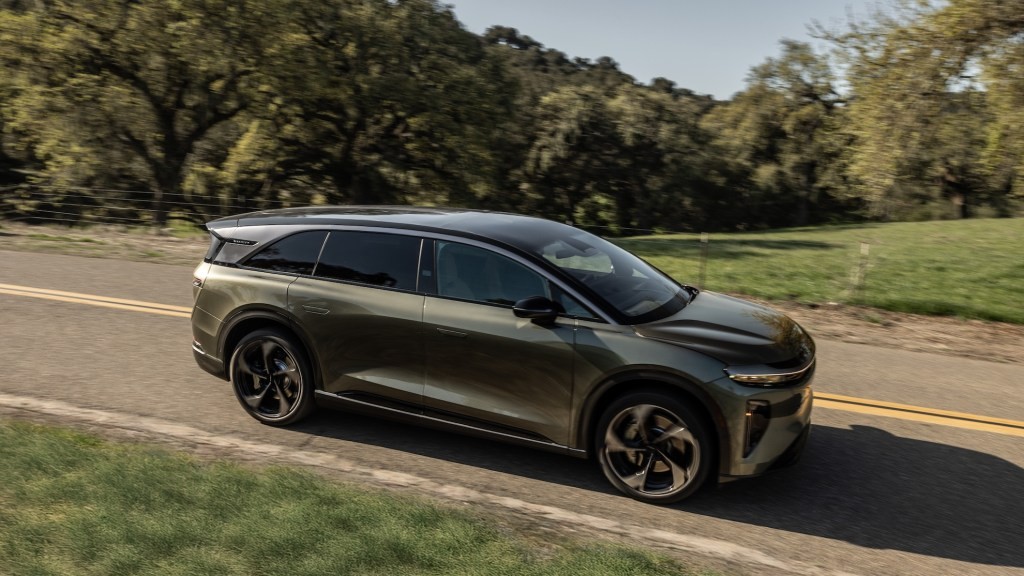
Lucid Motors Addresses Initial Quality Concerns with Gravity SUV
According to interim CEO Marc Winterhoff, Lucid Motors is navigating some initial quality challenges as it commences deliveries of its highly anticipated Gravity electric SUV.
During a conference call on Tuesday, Winterhoff acknowledged the presence of technical difficulties, specifically relating to the vehicle’s software and heads-up display. He stated that these “hiccups” are a typical occurrence during the initial launch phase of any new vehicle.
Supply Chain Impacts on Heads-Up Display
A key issue identified was a disruption in the supply chain for the Gravity’s heads-up display. Consequently, this feature has been temporarily removed as an option while Lucid collaborates with the supplier to enhance production capacity.
These early quality concerns are contributing to a measured rollout of the Gravity to showroom locations, including those intended for customer test drives. The company is prioritizing issue resolution over rapid deployment.
Winterhoff emphasized a commitment to customer satisfaction, stating that a slight delay in delivery is preferable to presenting an incomplete product.
Critical Juncture for Lucid Motors
The arrival of the Gravity SUV represents a pivotal moment for Lucid Motors. The company has yet to achieve its projected sales figures for the Air sedan.
Recent regulatory filings reveal cumulative losses exceeding $13 billion. Furthermore, the company experienced a change in leadership earlier this year with the unexpected departure of its long-term CEO and the subsequent appointment of Winterhoff.
Launch Timeline and Initial Deliveries
Originally slated for a 2023 release, the Gravity’s launch was postponed due to disruptions caused by the COVID-19 pandemic. Limited deliveries to employees and close associates began in late 2024.
Deliveries to the general public commenced in recent weeks, with a starting price of $94,000 and an estimated range of 450 miles. However, production ramp-up has been gradual due to the aforementioned challenges.
Industry-Wide Phenomenon and Future Outlook
Lucid anticipates a significant increase in delivery volume in the latter half of the current year. It’s important to note that encountering quality issues during the initial production run is a common experience for automakers.
Echoing this sentiment, Elon Musk previously advised prospective buyers to wait until Tesla achieves large-scale production before purchasing a new model.
Here's a summary of key points:
- Initial quality issues with software and the heads-up display.
- Temporary removal of the heads-up display option.
- Slow rollout to showrooms due to ongoing issue resolution.
- Lucid prioritizing product quality over speed of delivery.
Lucid's Exploration of Partnership Opportunities
Currently, the vast majority of Lucid’s revenue is generated through vehicle sales. However, the company has consistently expressed its ambition to function as a technology provider for other automotive manufacturers in the electric vehicle (EV) sector. Thus far, a single agreement has been established with Aston Martin, though recent statements suggest further collaborations are under consideration.
During a recent discussion, the interim CEO indicated that “several players” within the industry have initiated contact to investigate possibilities surrounding “joint manufacturing” operations within the United States.
Specifically, the previously leased Nikola factory located in Coolidge, Arizona, is being evaluated as a potential site for these ventures. The CEO highlighted the administration’s commitment to bolstering domestic manufacturing.
Lucid is actively exploring how its existing resources can be utilized to support this objective. Furthermore, the company is reportedly engaged in “advanced discussions” with potential partners.
These partners have identified the Lucid Gravity as the leading AV-capable platform currently available. The Gravity’s sophisticated sensor array, redundant systems for electrical and control functions, and rapid charging capabilities are key factors driving this interest.
Level 4 autonomous driving software and mobility firms are reportedly seeking collaboration with Lucid. These potential supplementary business avenues could generate additional revenue streams for Lucid.
This would also help to strengthen the company’s financial position as it progresses towards the introduction of vehicles based on a more accessible, mid-sized platform, anticipated in late 2026. Lucid currently maintains sufficient financial resources to operate until mid-2026.
The global economic landscape has experienced increased instability during the initial period of President Trump’s second term. This presents potential challenges for companies like Lucid.
In response, Winterhoff stated that Lucid is assessing strategies including “vehicle price changes, tariff risk mitigation, and bifurcating [its] supply chain” to safeguard against this economic uncertainty.
Correction: A previous version of this article incorrectly stated Lucid has sufficient funds to reach the launch of its mid-sized EV platform in late 2026. The company has confirmed liquidity only through mid-2026. This has been amended for accuracy.
Related Posts

Rivian Launches Universal Hands-Free Driving Feature

Rad Power Bikes Files for Bankruptcy, Seeking Sale
Tesla Deceptive Marketing: Autopilot and Full Self-Driving Ruling
Luminar's Volvo Deal and Bankruptcy: A Timeline
Slate EV Truck Reservations Top 150,000 Amidst Declining Interest