Meta's 5GW AI Data Center: Zuckerberg Announces New Project
Meta's Massive Investment in AI Infrastructure
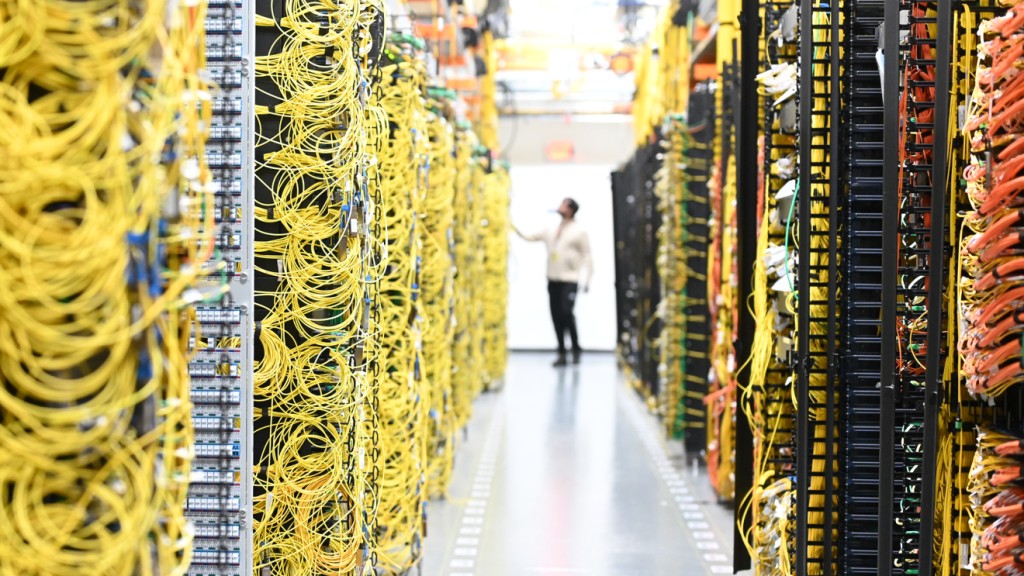
Meta is currently developing a substantial data center, designated Hyperion, intended to provide its new AI laboratory with an impressive five gigawatts (GW) of computational capacity. This information was shared by CEO Mark Zuckerberg in a recent post on Threads.
This development signifies Meta’s ongoing strategy to gain a competitive edge over companies like OpenAI and Google within the rapidly evolving AI landscape.
Securing Talent and Computational Resources
Following the recruitment of leading experts to spearhead the Meta Superintelligence Lab – including Alexandr Wang, formerly of Scale AI, and Daniel Gross, previously with Safe Superintelligence – Meta is now focusing on acquiring the extensive computational resources necessary for training advanced AI models.
Hyperion: Scale and Location
Zuckerberg indicated that the physical size of Hyperion will be considerable, potentially encompassing an area comparable to much of Manhattan.
According to Meta spokesperson Ashley Gabriel, via email correspondence with TechCrunch, Hyperion will be situated in Louisiana, most likely within Richland Parish, the location of Meta’s previously announced $10 billion data center project.
The initial phase of Hyperion is projected to deliver two gigawatts of data center capacity by 2030, with a planned expansion to five gigawatts over the subsequent years.
Prometheus: A Super Cluster in Ohio
Furthermore, Zuckerberg revealed plans to activate a one gigawatt super cluster, named Prometheus, by 2026. This would position Meta among the first technology companies to operate an AI data center of this magnitude.
Gabriel confirmed that Prometheus is located in New Albany, Ohio.
Competitive Advantages and Talent Acquisition
Meta’s substantial investment in AI data centers is expected to enhance its competitiveness against key players such as OpenAI, Google DeepMind, and Anthropic in both the training and deployment of cutting-edge AI models.
This initiative may also prove attractive to skilled professionals seeking to contribute to a company equipped with the necessary computational infrastructure to thrive in the AI race.
Energy Consumption and Community Impact
The combined energy demands of Prometheus and Hyperion are projected to be significant, potentially equivalent to the power consumption of millions of households.
This substantial energy and water usage could place considerable strain on local resources in surrounding communities.
Reports from The New York Times indicate that a Meta data center project in Newton County, Georgia, has already resulted in water shortages for some residents.
Similar Concerns with Other Projects
Comparable issues may arise with other AI data center developments. CoreWeave, an AI hyperscaler, is planning an expansion projected to double the electricity needs of a city near Dallas, Texas, as reported by Bloomberg.
Industry-Wide Expansion and Government Support
Despite these concerns, technology companies remain committed to constructing large-scale data center projects to support their AI ambitions.
Notable examples include OpenAI’s Stargate project, a collaboration with Oracle and SoftBank, and xAI’s Colossus supercomputer.
The Trump administration has consistently expressed support for the tech industry’s AI data center buildout, with President Trump actively promoting projects like OpenAI’s Stargate and advocating for the expansion of America’s AI infrastructure.
Federal Initiatives for Energy Production
U.S. Secretary of Energy Chris Wright, in a recent article published in The Economist, emphasized the need for the U.S. to “lead the next major energy-intensive frontier: artificial intelligence.”
He highlighted AI’s ability to transform electricity into “the most valuable output imaginable: intelligence,” and affirmed the federal government’s commitment to accelerating energy production from sources such as coal, nuclear, geothermal, and natural gas.
Future Energy Demands and Potential Challenges
With backing from federal officials, the AI industry appears set to consume a significant portion of America’s energy in the coming years.
Estimates suggest that data centers could account for 20% of America’s total energy consumption by 2030, a substantial increase from the 2.5% recorded in 2022.
Without a corresponding increase in energy production, this escalating demand could exacerbate existing problems for communities.
Related Posts

ChatGPT Launches App Store for Developers

Pickle Robot Appoints Tesla Veteran as First CFO

Peripheral Labs: Self-Driving Car Sensors Enhance Sports Fan Experience

Luma AI: Generate Videos from Start and End Frames

Alexa+ Adds AI to Ring Doorbells - Amazon's New Feature