Motional & Hyundai Ioniq 5 Robotaxi: Autonomous Vehicle Debut
Motional Unveils its Autonomous Robotaxi
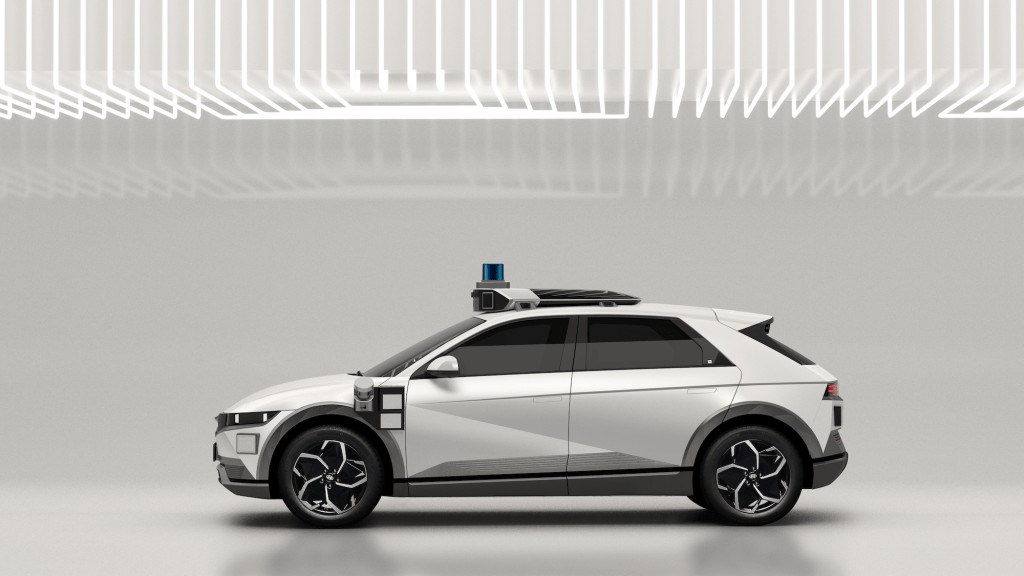
Motional has recently presented the initial visuals of its forthcoming robotaxi, utilizing a fully electric Hyundai Ioniq 5 SUV. This vehicle will serve as the core component of a driverless ride-hailing service.
Vehicle Integration and Sensor Technology
The company intends to make this service accessible to customers starting in 2023 via the Lyft application. The vehicle, assembled by Hyundai, seamlessly integrates Motional’s autonomous technology.
This includes a comprehensive array of over 30 sensors – encompassing lidar, radar, and cameras – strategically positioned both internally and externally. Motional states this sensing system delivers 360-degree visibility and a detection range extending up to 300 meters.
Strategic Sensor Display
Born from a $4 billion joint venture between Aptiv and Hyundai, Motional deliberately highlights the numerous sensors incorporated into the design, according to President and CEO Karl Iagnemma.
Iagnemma explained to TechCrunch that many competitors attempt to conceal these sensor suites within bulky plastic casings. However, he asserts that sensors cannot be effectively hidden, as their placement is crucial for functionality and they represent a vital aspect of the technology.
Therefore, Motional adopted a strategy of celebrating the sensors, adapting the vehicle’s design language to complement the integrated sensor suite.
Launch Locations and Testing
Motional has yet to announce the specific location for the initial launch of its driverless robotaxi service. It is anticipated to be in one of the cities where the company is currently testing and validating its technology.
These cities include Boston, Las Vegas, Los Angeles, and Pittsburgh.
Vehicle Design and Passenger Capacity
The foundation of Motional’s robotaxi is the Hyundai Ioniq 5, an electric vehicle unveiled in February with a consumer release planned for later this year. The consumer version will not include Motional’s autonomous driving capabilities.
Unlike some autonomous vehicle developers, Motional opted for a standard SUV design rather than a shuttle or van for its initial robotaxi.
Iagnemma stated that research indicates the majority of taxi or ride-hailing trips involve two or fewer passengers, making the Ioniq 5 an ideal vehicle size for Motional’s intended application.
E-GMP Platform and Charging Capabilities
The Hyundai Ioniq 5 is built upon the automaker’s dedicated battery electric vehicle platform, known as the Electric Global Modular Platform (E-GMP). Both the consumer and robotaxi versions feature an 800-volt electrical system.
This higher voltage system delivers equivalent power to the more common 400-volt system but with reduced current. First introduced in the Porsche Taycan, the 800-volt system is lighter, more efficient, and enables faster charging.
This rapid charging capability will be a significant advantage for Motional’s robotaxi service.
Assembly and Interior Features
The robotaxi version of the Ioniq 5 will be assembled directly by Hyundai, a key detail highlighted by Iagnemma.
He emphasized that the vehicles will come off the assembly line in the configuration seen in the released images, eliminating the need for extensive retrofitting or component reintegration.
The interior of the robotaxi includes displays allowing passengers to interact with the vehicle during their ride, such as requesting additional stops.
While the robotaxi retains a steering wheel and other conventional vehicle features, passengers will not be permitted to occupy the driver’s seat.
Related Posts

Rivian Launches Universal Hands-Free Driving Feature

Rad Power Bikes Files for Bankruptcy, Seeking Sale
Tesla Deceptive Marketing: Autopilot and Full Self-Driving Ruling
Luminar's Volvo Deal and Bankruptcy: A Timeline
Slate EV Truck Reservations Top 150,000 Amidst Declining Interest