NASA Partners with SpaceX, Rocket Lab & Blue Origin
NASA recently revealed 20 new collaborative agreements with private aerospace companies, featuring work with SpaceX, Blue Origin, and Rocket Lab. Although these partnerships do not involve a financial exchange, NASA will commit substantial personnel resources and support to assist with these companies’ test launches and technology advancements.
These collaborations represent NASA’s 2020 Announcement of Collaboration Opportunity selections. These arrangements differ from programs like SBIR or NIAC, where NASA typically provides funding and then receives periodic progress updates.
Instead, the space agency is providing unrestricted access to its facilities and specialized personnel, representing some of the most cutting-edge capabilities available. This represents a genuine public-private collaboration, and securing project approval remains a competitive undertaking—as evidenced by the inclusion of numerous established companies among the 17 selected.
SpaceX will collaborate with the Langley Flight Research Center to observe and record thermal data from its Starship vehicle and spacecraft during reentry procedures over the Pacific Ocean.
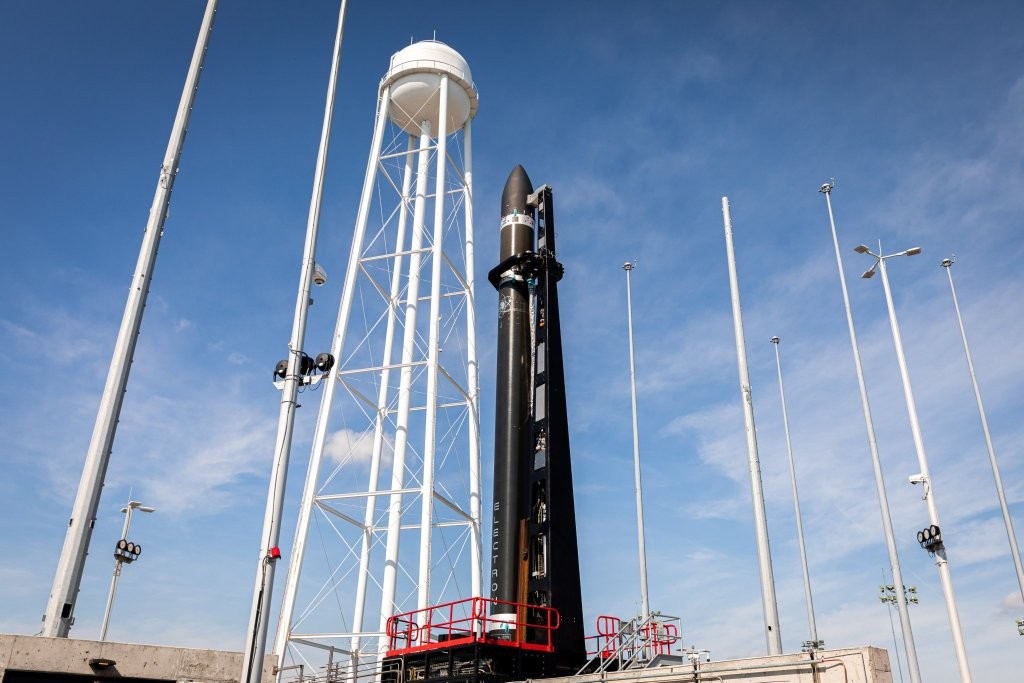
Rocket Lab will also work alongside Langley, Ames, and Armstrong facilities to analyze its Electron launch vehicle as the company progresses towards reusable hardware. The company has recently scheduled an attempt to recover a full booster within the next week, though it is currently unknown if NASA will participate in this specific operation.
Blue Origin has secured two distinct partnerships. One is a collaborative project across multiple NASA centers focused on creating a “space robot operating system.” This initiative likely centers on integrating existing open-source and NASA-developed software frameworks to enhance compatibility and reduce expenses.
The second partnership concerns the application of 3D printing technology to refine engine designs; this may be a response to the founding of Relativity Space by former Blue Origin employee Tim Ellis, who gained experience in this very field at Blue Origin and now the company appears to be working to advance its capabilities.
Details regarding the remaining partnerships, covering areas from simulated lunar soil to radio-frequency propulsion systems, are available on a recent NASA publication.
Related Posts

ChatGPT Launches App Store for Developers

Pickle Robot Appoints Tesla Veteran as First CFO

Peripheral Labs: Self-Driving Car Sensors Enhance Sports Fan Experience

Luma AI: Generate Videos from Start and End Frames
Alexa+ Adds AI to Ring Doorbells - Amazon's New Feature