Autonomous Electric Rail for Freight | Parallel Systems
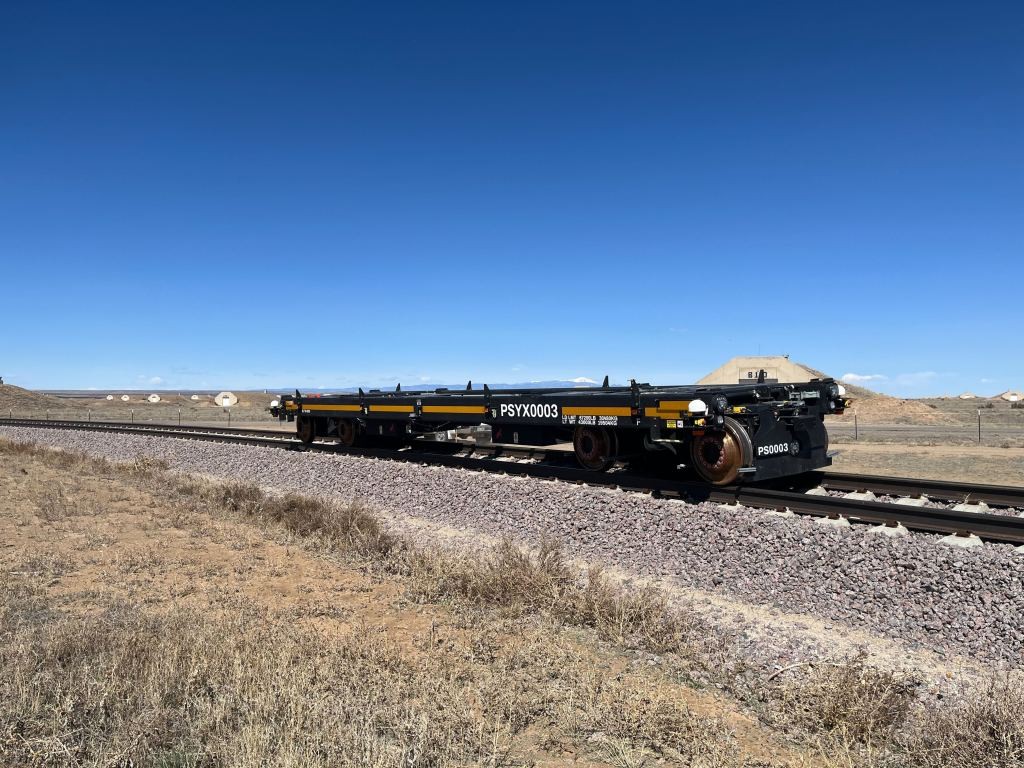
Revolutionizing Freight Transport with Autonomous Electric Rail
Trucks currently dominate the movement of goods within the United States, handling approximately two-thirds of the 20.2 billion tons of annual freight. However, Parallel Systems, founded by CEO Matt Soule, aims to disrupt this paradigm by introducing a contemporary, autonomous, and electric approach to the long-established railroad system.
Developing Autonomous Freight Technology
Based in Los Angeles, Parallel Systems is engineering battery-powered, autonomous freight technology. This system is designed to function seamlessly with existing freight cars and integrate with current train control software.
Soule proposes that Parallel’s technology will make rail transport a more cost-effective option for companies, particularly for short-distance deliveries, compared to traditional trucking.
Addressing the Limitations of Traditional Rail
Historically, rail transport has been underutilized due to the reliance on large, costly locomotives that haul extensive numbers of freight cars over considerable distances. This often leads businesses to favor trucks for shorter hauls.
Parallel Systems has created a system enabling autonomous coupling and uncoupling of train cars. This innovation allows companies to utilize the technology for varying delivery sizes, eliminating the need for manual connection and disconnection – a process known to be hazardous.
Furthermore, Parallel’s technology facilitates significantly faster braking capabilities for freight cars compared to conventional trains, as Soule highlighted.
A Scalable and Compatible System
“Our approach centers on a distinct physical architecture to achieve economic competitiveness with trucking at a smaller scale, rather than focusing on large-scale operations,” Soule explained. “The vehicle is fully compatible with existing rail infrastructure and is being demonstrated to operate in conjunction with traditional rail services. We are not seeking to replace existing freight trains.”
Pilot Program and Funding
Parallel Systems has recently received approval from the Federal Railroad Administration to initiate a pilot program in Georgia.
This program will allow for testing of the technology-enabled trains along a 160-mile route connecting the Port of Savannah with various distribution centers throughout the state.
The company has also secured $38 million in Series B funding, led by Anthos Capital, with contributions from Collaborative Fund, Congruent Ventures, and Riot Ventures. This brings Parallel’s total funding to over $100 million.
These funds will be allocated towards commercialization, with an anticipated initial commercial launch in 2026.
Investor Perspective
Sophie Bakalar, a partner at Collaborative Fund, noted that while Parallel Systems doesn’t perfectly align with their typical consumer-focused investment strategy, the firm was drawn to the company after a recommendation from a founder within their portfolio.
Bakalar emphasized that shipping and goods movement significantly impact the consumer companies Collaborative Fund typically supports, and that a promising opportunity was too valuable to overlook.
A Unique Team for a Complex Challenge
“I believe this team is exceptionally well-positioned to address this challenge,” Bakalar stated. “Few others possess the capability to do so. They demonstrate a strong founder-product fit, operating within a substantial market and facing a significant undertaking.”
Founder’s Background and Vision
While Soule doesn’t have a direct background in rail, he possesses extensive experience in regulated transportation.
He dedicated 20 years to the aerospace industry, including 13 years at SpaceX, where he focused on developing new technologies.
“We were consistently developing innovative technologies,” Soule said. “My work in avionics – the electronics and software controlling rockets – sparked my curiosity about applying these technologies to other industries that may have experienced less innovation.”
From Inception to Commercialization
Soule launched the company in 2020, and over the past five years, Parallel Systems has developed its technology and is now concentrating on commercialization efforts.
Despite the potential challenges of shifting companies’ shipping and distribution strategies, Soule reports significant interest from various regions, with initial focus on the U.S. and Australia.
Potential Impact of Tariffs
This development coincides with ongoing uncertainty surrounding U.S. tariffs. Bakalar suggests that the implementation of tariffs could further increase demand for companies like Parallel Systems, as businesses seek cost-reduction strategies.
“This represents a generational leap in freight technology, a sector that rarely sees substantial change,” Soule concluded. “However, it addresses critical needs and offers compelling advantages.”
Related Posts

Peripheral Labs: Self-Driving Car Sensors Enhance Sports Fan Experience

Radiant Nuclear Secures $300M Funding for 1MW Reactor
Last Energy Raises $100M for Steel-Encased Micro Reactor

First Voyage Raises $2.5M for AI Habit Companion

on me Raises $6M to Disrupt Gift Card Industry