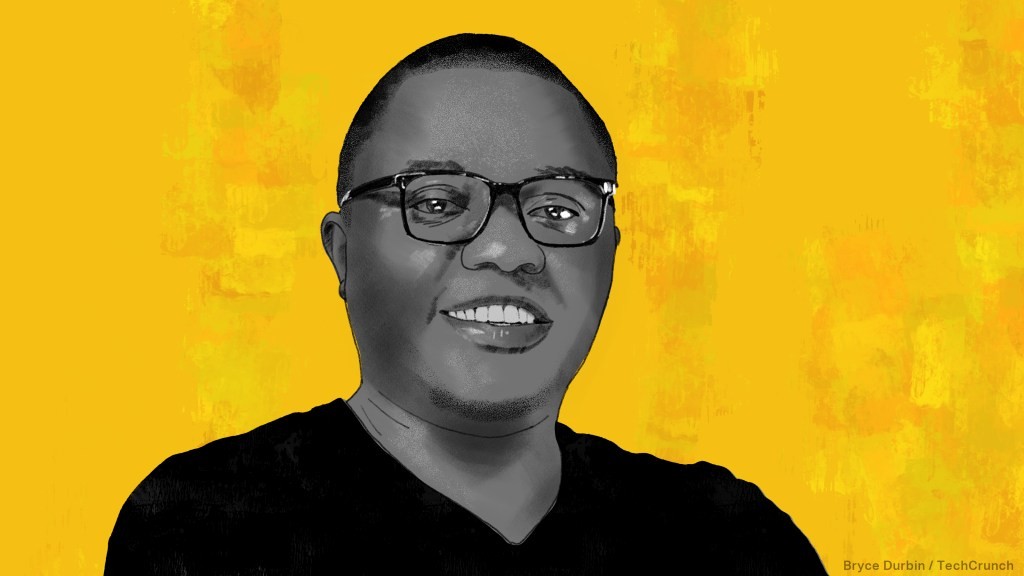
Onyeka Akumah of Plentywaka on African Startups & Global Growth
Plentywaka's Vision for Transforming African Transportation
Plentywaka is dedicated to revolutionizing mobility across Africa, beginning with one of the continent’s most bustling metropolises.
The startup, functioning as both a ride-share and bus-booking platform, is strategically located in Lagos, Nigeria – a city home to 20 million inhabitants and 45% of the nation’s skilled labor force. The existing public transportation network is heavily burdened by its 14 million daily commuters.
Challenges with Existing Public Transport
Reliance on public buses isn’t merely unpredictable; it can also present safety concerns, as stated by Onyeka Akumah, Plentywaka’s co-founder and CEO. These buses are frequently outdated, poorly maintained, and dangerously overcrowded. Furthermore, severe traffic congestion transforms potentially 30-minute commutes into exhausting three-hour journeys.
Founded in 2019, Plentywaka – a portmanteau of English and Nigerian signifying “plenty movement” – possesses ambitious plans to enhance public transport infrastructure throughout Africa and beyond. (Note: Since the original publication of this interview, Plentywaka has undergone a rebranding to Treepz.)
Plentywaka’s Operational Models
Plentywaka operates through two distinct models. “Daily Waka” provides riders within a city with fixed, daily routes connecting bus stops. Users can access bus schedules, check seat availability, and reserve seats through the app.
The app monitors the location of SUVs, minivans, vans, and buses operated by independent contractors, referred to as “heroes.” Upon arrival, riders check in using a QR code, and the app automatically processes payment through a digital wallet system.
“Travel Waka” represents a newer offering focused on interstate travel. It functions as a booking platform for other bus companies providing city-to-city services.
Expansion and Funding
In March of this year, Plentywaka gained acceptance into the Techstars Toronto accelerator program, securing vital funding to support its expansion across Africa and into Canada. The company recently announced plans to extend its reach into Ghana through the acquisition of Star Bus.
Akumah discusses the significance of the TechStars funding, the African startup environment, and guidance for African startups seeking investment.
The following interview, part of a continuing series featuring founders in the transportation sector, has been condensed for brevity and clarity.
From Farmcrowdy to Plentywaka: A Serial Entrepreneur's Journey
Prior to Plentywaka, you served as CEO of Farmcrowdy, a platform connecting investors with farmers. What motivated the launch of a second venture? Do you identify as a serial entrepreneur, or do you intend to focus on this current endeavor?
I concluded my tenure as CEO of Farmcrowdy at the end of May, having transitioned leadership to my co-founder, who now holds the position. My full attention is now dedicated to Plentywaka, which we initiated in January 2019. I was returning to Lagos from an event in Qatar, arriving around 8:15 a.m., with a 10 a.m. meeting. Navigating Lagos traffic is notoriously difficult.
I was compelled to abandon my car and utilize two motorcycles to reach the meeting on time. Subsequently, to attend another appointment, I took a boat across the lagoon. I shared my experience on Twitter, remarking on the diverse modes of transport required for a typical day as an entrepreneur in Lagos.
Unexpectedly, colleagues suggested I try the bus. Having avoided public buses for approximately 15 years, I reluctantly embarked on a journey that induced a panic attack. I was shocked by the dilapidated condition of the 30-year-old bus, with torn seats and malfunctioning components. I even had to physically hold a door to prevent it from falling off. This experience sparked the concept for Plentywaka.
Addressing a Critical Need
Millions of people rely on public transportation daily, often as their sole means of commuting. While Uber serves around 1% of the Nigerian population with approximately 18,000 drivers, we aimed to provide a more reliable and comfortable commuting experience. We envisioned a system offering predictability, guaranteed seating, well-maintained vehicles, and a safe environment conducive to work.
Securing Funding and Future Plans
You secured pre-seed funding approximately a year ago and recently closed a $1.2 million seed round. How will these funds be allocated?
We have established a set of key performance indicators (KPIs). We aim to achieve 500,000 app downloads, facilitate 1 million rides, acquire 200,000 active app users, and onboard 2,500 “heroes,” or drivers. We are also planning expansion into Uganda and Ghana through the acquisition of Star Bus.
You also intend to launch Plentywaka in Canada. Did you anticipate such rapid global expansion so soon after the company’s inception?
We have received approval to obtain the necessary licenses to operate in the Toronto area. However, due to COVID-19 restrictions, we are unable to establish a team on-site. We anticipate launching operations in 2023.
Currently, our primary focus is Africa and accelerating our expansion into other African markets. Our goal is to become the largest shared mobility startup on the continent. We plan to prioritize West Africa, followed by Ghana and Gambia. In East Africa, we are considering Ethiopia, Uganda, Tanzania, Rwanda, and Kenya. South Africa and potentially Algeria, Morocco, and Egypt in North Africa will follow.
The Value of TechStars Investment
What benefits has the TechStars investment provided? How has it contributed to the advancement of your business?
TechStars has facilitated a re-evaluation of our business model and broadened our perspective on growth opportunities. They encouraged us to concentrate on our core products, Daily Waka and Travel Waka, and the potential they offer.
The program also provided access to experienced mentors who have navigated similar challenges in mobility, transportation, and technology. Their guidance has been invaluable in refining our business strategy. The Managing Director of TechStars Toronto, Neal Sales-Griffin, was a strong advocate for Plentywaka, and his endorsement proved highly beneficial.
Furthermore, TechStars provided a condensed, intensive entrepreneurial education over three months, offering significant value beyond investor access and networking opportunities.
Sustainability and Environmental Impact
Given the positive impact of increased carpooling on CO2 emissions, is Plentywaka considering the implementation of zero-emission vehicles?
The introduction of an all-electric bus fleet by one operator is encouraging. It will be important to assess the value it creates. We also partnered last year with a Nigerian manufacturer focused on developing electric vehicles for transportation. There is growing attention being paid to this area. While energy challenges persist in Africa, innovative solutions are emerging. We anticipate seeing experimental successes within the next two to three years, potentially leading to larger-scale adoption within five to ten years.
A Unique African Approach to Problem Solving
It appears that different regions foster startups with distinct approaches to problem-solving. Lagos likely views transportation differently than Silicon Valley. How do you believe Nigerian, or even African, startups differ in their approach to the commuting challenge?
Successful entrepreneurs have discovered solutions to African problems by adapting Western concepts to the local context, rather than simply replicating them. Instead of directly transplanting a U.S.-based solution, they customize it to fit the African environment, incorporating an understanding of local nuances.
The level of trust prevalent in the U.S. is not necessarily mirrored in Africa. The infrastructure required for Amazon’s success would likely fail if replicated here. Therefore, smarter entrepreneurs are adapting technology to resonate with the African narrative and educate consumers on its value, leading to adoption rates comparable to those in the U.S.
Over time, entrepreneurs with experience from working in established companies have emerged and launched their own ventures. This third generation of entrepreneurs, like myself, benefits from greater experience and a more mature ecosystem. We are seeing improvements in areas such as stock option pools, contracts, and investment negotiations, leading to more favorable funding terms.
Investment Landscape in Africa
Do the majority of investors in African companies originate from Africa or abroad? Or is it a combination?
It’s a combination. However, securing investment from an African- or Nigerian-based investor first can provide valuable validation. When raising funds in the U.S., I am frequently asked: Who in Africa has already invested? Investors seek reassurance and a local point of reference for due diligence.
Therefore, a combination of both local and international investors is ideal, with founders potentially securing local investment before seeking funding from U.S. or European sources.
Looking Ahead: Plentywaka’s Vision for the Future
Where do you envision Plentywaka being a year from now?
In one year, Plentywaka will be operational in three West African countries and piloting in one or two East African nations. We will have achieved our KPIs – 1 million rides, 2,500 heroes on the platform, and potentially hundreds of thousands of app downloads.
Plentywaka will become a recognized name in Nigeria, synonymous with shared mobility. We aspire to be known not only as the largest shared mobility platform but as the leading provider due to the positive impact we have on the lives of millions of users.
The pandemic’s trajectory remains uncertain, but assuming stable conditions, we aim to revisit discussions regarding our Series A funding round in March or April of next year, continuing to drive the growth of our business into new markets. I am enthusiastic about the opportunities ahead and the positive impact our heroes are making, both financially and through the value they provide. That is where my satisfaction lies, and it will be our primary focus in the coming year.
Note: Plentywaka announced a rebrand to Treepz on Thursday following the publication of this article.
Related Posts

Rivian Launches Universal Hands-Free Driving Feature

Rad Power Bikes Files for Bankruptcy, Seeking Sale
Tesla Deceptive Marketing: Autopilot and Full Self-Driving Ruling

Luminar's Volvo Deal and Bankruptcy: A Timeline

Slate EV Truck Reservations Top 150,000 Amidst Declining Interest