Proov Raises $9.7M Series A for At-Home Ovulation Testing

MFB Fertility Secures $9.7 Million in Series A Funding
MFB Fertility, the company responsible for developing a range of at-home hormone tests focused on pregnancy, has announced the completion of a $9.7 million Series A funding round this week. This achievement follows significant company milestones, notably receiving FDA premarket approval for a progesterone urine test and the subsequent launch of a dedicated mobile application.
Company Origins and Focus
MFB Fertility is widely recognized under the brand name Proov – the name of the test created by the company’s founder and CEO, Amy Beckley. Proov was established in 2018, stemming from Beckley’s personal experiences with infertility and miscarriage.
Beckley herself was initially diagnosed with “unexplained infertility.” While a specific prescription ultimately resolved her personal challenges, the Proov tests were conceived to assist women facing similar ambiguous diagnoses.
Addressing the "Unexplained" Infertility Challenge
Studies indicate that approximately 15-30% of infertility cases globally are categorized as “unexplained.” Beckley expressed her frustration with this label to TechCrunch, describing it as an insufficient response for patients.
“To undergo comprehensive testing only to be told you’re ‘unexplained infertile’ is deeply unsatisfying,” Beckley stated.
Investment Details
This funding round was spearheaded by Hambrecht Ducera Growth Ventures, with participation from SteelSky Ventures, WCC Partners, Lightship Capital, GingerBread Capital, Established Ventures, and Portfolia FemTech II Fund.
How Proov Tests Work
Unexplained infertility can arise from a multitude of factors affecting both male and female reproductive systems. Proov’s primary test is designed to assess two crucial aspects: confirmation of ovulation – the process of egg maturation and release – and evaluation of uterine receptivity.
Traditionally, doctors utilize blood tests to measure progesterone, a hormone vital for preparing the uterus for pregnancy, which increases following ovulation. Proov has pioneered an at-home urine test to measure PdG, a metabolite of progesterone.
Scientific Validation of PdG
Research supports the validity of PdG as an indicator of ovulation. A 2017 review article highlighted the accuracy of measuring urine PdG levels over a three-day period to confirm ovulation, noting a lack of available point-of-care tests utilizing this method at the time.
“We have developed the first and only FDA-cleared method for at-home measurement of PdG through urine, allowing us to assess ‘ovulation quality’ – determining if the uterus is optimally prepared for conception,” Beckley explained. “This technology was entirely our creation; I was the first to develop it.”
FDA Clearance and Clinical Trials
Proov successfully navigated the FDA evaluation and approval process, receiving 510(k) clearance in February 2020. This clearance was granted due to the substantial similarity of its results to existing progesterone tests (though not direct-to-consumer).
Proov’s internal clinical trials suggest that progesterone (and PdG) levels may also serve as indicators of other pregnancy outcomes. Preliminary data from a trial involving 54 pregnant women indicates that those with two or more days of negative PdG tests during a critical timeframe experienced higher rates of miscarriage. This data is currently available in a change.org petition initiated by the company.
Advocacy for Progesterone Therapy
The petition responds to guidelines from the American College of Obstetrics and Gynecology, which recommend progesterone therapy only for women with a history of miscarriage. Proov argues that certain tests could also justify the use of progesterone therapy.
Expanding Product Line and Mobile App
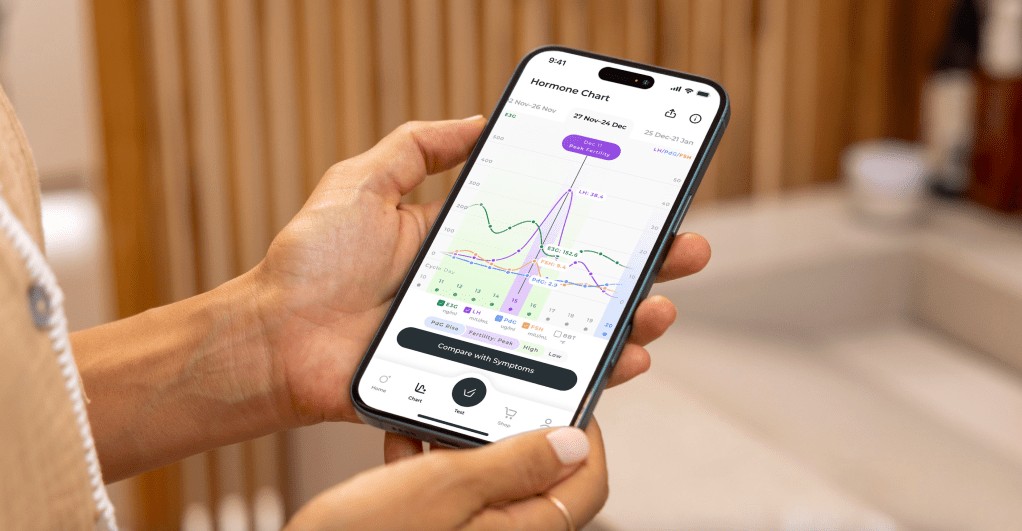
Beyond PdG tests, Proov offers a “complete” testing product encompassing tests for PdG, Luteinizing Hormone (LH), follicle stimulating hormone (FSH), and an estrogen marker. A mobile application has also been launched to aid users in interpreting these test results.
The app serves as a gateway to more detailed information. Users can upload images of test strips, receiving numerical scores that reflect hormone levels. These scores are generated through “machine-learning and back-end algorithms,” according to Beckley.
The app will soon provide an ovulation score. However, Beckley emphasizes that the app’s value extends beyond simply providing a number.
Addressing User Frustration
Beckley noted that offering a test or score alone led to user frustration. “Users expressed dissatisfaction, stating they didn’t know what to do with a negative result,” she explained.
To address this, the app allows patients to share results with their physicians, connect with experts, and receive personalized lifestyle recommendations (regarding exercise and nutrition) aimed at improving progesterone levels. The company is also developing an integrated supplement platform.
The Importance of Comprehensive Support
Beckley believes that testing alone is insufficient. “It’s crucial to provide information alongside actionable solutions,” she stated.
Industry Trends
Several trends are contributing to Proov’s success. The increasing popularity of at-home medical testing is a significant factor.
Major diagnostics companies are expanding beyond at-home COVID tests into other areas. Quest Labs projects that the at-home consumer testing market will reach $2 billion by 2025. Abbott Labs CEO Robert Ford has suggested that at-home COVID tests are “seeding” the acceptance of at-home testing generally.
Beckley has also observed interest from diagnostic companies in Proov’s technology. “Larger diagnostic companies are particularly interested in our approach, as they lack direct consumer marketing expertise,” she said.
Fertility testing, for both men and women, has seen a surge in startup activity and investment since 2019. Crunchbase data reveals an 89% increase in funding for fertility startups between 2020 and 2021, indicating a continuing upward trend.
*This story has been updated to include mention of Established Ventures
Related Posts

LatAm Doctor Communication: Ex-Uber Eats Exec Raises $14M Seed

Chai Discovery Raises $130M Series B - AI Biotech Funding
Inito AI Antibodies: Expanding At-Home Fertility Testing

Brain Fitbit: Startup Tackles Chronic Stress with Wearable Tech

Max Hodak's New Venture: Beyond Neuralink