QED Invests $11M in Nigerian Fintech Raenest
The Rise of Remote Work and Payment Challenges in Africa
The African technology landscape is experiencing significant growth, resulting in an increasing number of individuals securing remote positions with major technology companies and international startups.
However, receiving payment presents a considerable hurdle for many of these remote workers and freelancers.
Difficulties include opening bank accounts capable of accepting U.S. dollars, navigating lengthy invoicing and payment procedures, and encountering incompatibilities with the payment systems utilized by their overseas employers.
Raenest: A Fintech Solution for African Remote Workers
Raenest, a fintech company headquartered in Lagos, has emerged as a key player in resolving these payment issues.
Through its consumer-facing product, Geegpay, Raenest empowers freelancers with virtual accounts denominated in USD, GBP, and EUR.
These accounts facilitate payment reception, multi-currency wallet management, and currency conversion.
Furthermore, the platform provides both virtual and physical debit cards that support transactions in various currencies, including U.S. dollars.
Expanding Services and Securing Funding
In March of the previous year, the company broadened its services to include businesses, aiming to simplify international money transfers with a dedicated brand, Raenest for Business.
The startup has now successfully secured $11 million in Series A funding.
This funding round was spearheaded by QED Investors and will be utilized to extend Raenest’s operational footprint throughout the African continent.
The investment will enable the company to reach a wider audience and further address the financial needs of remote workers and businesses operating in Africa’s burgeoning tech sector.
Expanding Services Beyond Freelancers
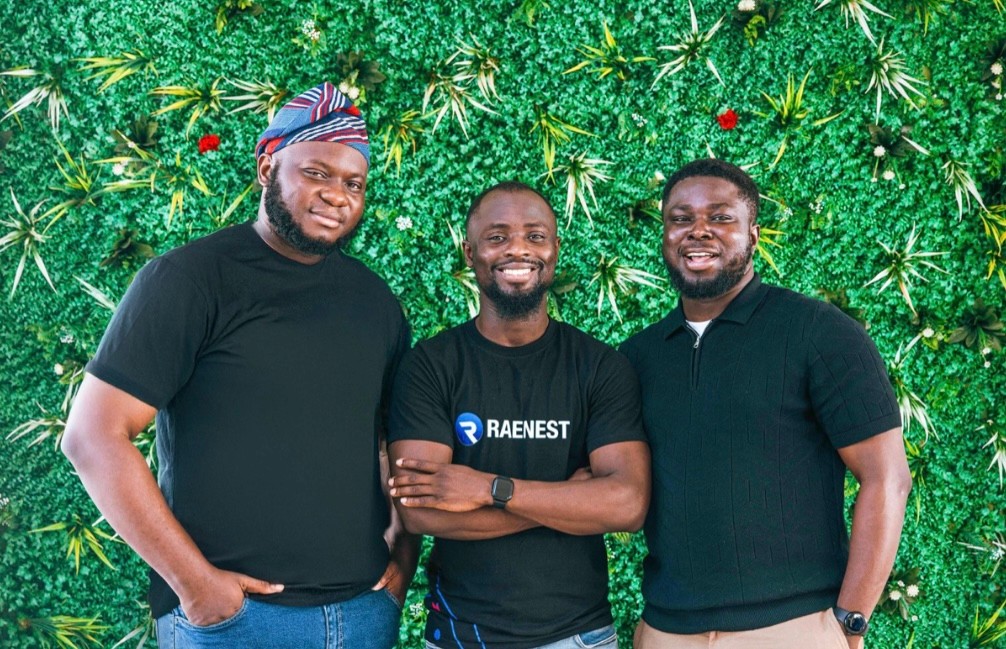
Initially, Raenest was not conceived with freelancers as its primary focus. The company was founded in 2022 by Victor Alade, alongside Sodruldeen Mustapha and Richard Oyome, as an Employer of Record (EOR).
Their initial service involved assisting international companies with compliant payroll processing for their African-based staff. However, after a few months, the founders identified a more pressing issue: the difficulties faced by individuals in receiving these payments.
“While a delay of five days might be acceptable to a U.S.-based company, it represents a significant challenge for individuals in countries like Nigeria or Kenya,” explained Alade, previously a software engineer at Jumia and Andela. “The added complexity of currency conversion further exacerbates this problem.”
Leveraging his own experiences with remote work, Alade and his co-founders—who possess backgrounds in African fintech companies such as LemFi and FairMoney—shifted their focus to resolve this specific issue.
Geegpay rapidly became popular among freelancers, but the company also observed a growing demand from businesses. African companies expressed a need for foreign accounts to facilitate smoother international transactions.
“Companies began requesting dedicated bank accounts to simplify their payment processes,” Alade stated. “This led us to evaluate the potential scale of this opportunity and identify other companies serving the African market.”
The introduction of business banking services by Raenest proved timely. Simultaneously, U.S. fintech Mercury began limiting business accounts in several African nations.
Furthermore, the EOR market was becoming increasingly competitive, with prominent companies like Deel exploring expansion into the African continent.
These developments motivated Raenest to concentrate on providing African businesses with a reliable solution for both receiving and sending international payments.
Demonstrating Successful Strategy
The company’s initial strategy appears to be proving effective. Since its inception in 2022, Raenest has facilitated transactions exceeding $1 billion – representing a 160% growth over the last two years – for both freelancers and businesses throughout the continent.
Currently, the platform supports over 700,000 users who utilize it to receive funds from international marketplaces such as Upwork, Fiverr, and Gusto. It is also employed for online purchases and recurring subscription services.
Raenest also serves the needs of larger organizations. More than 300 companies depend on Raenest for collecting payments from international clients, securing investment capital, and executing international fund transfers.
Among its clientele are rapidly growing startups like Moniepoint, Helium Health, Fez Delivery, and Matta.
Competitive Landscape
Raenest operates within a competitive market alongside other fintech companies providing multi-currency accounts to African customers. These include Afriex, Cleva, Fincra, Grey, Verto, and Leatherback.
However, Alade posits that Raenest distinguishes itself by serving both individual users and businesses, a contrast to many competitors who focus on a single customer segment.
Future Expansion
The company’s vision extends beyond simply facilitating cross-border payments. “Our goal is to establish a secure and streamlined financial environment for Africans,” Alade explained, “empowering them to earn, invest, and build wealth regardless of their location.”
He further indicated that new product offerings are currently in development, suggesting a broader scope of financial services is on the horizon.
Raenest’s Strategic Expansion
Raenest presently conducts business in Nigeria, operating with a valid money transfer license. Future growth strategies involve strengthening its position within Nigeria and obtaining the necessary licenses to operate in Egypt, Ghana, Kenya, and the United States.
The company maintains established banking collaborations in both the U.S. and the U.K. Further expansion will necessitate securing additional partnerships in these key regions.
Consolidation and Profitability
Raenest, which reports being a profitable entity, is focused on attracting skilled professionals to facilitate its expansion initiatives. This growth will involve unifying Geegpay and Raenest for Business under a single, consolidated brand: Raenest.
The recently completed Series A funding round follows previous investments of $700,000 in a pre-seed round and $2.6 million in a seed round.
This latest investment brings the total funding secured by Raenest to $14.3 million.
QED Investors’ Increased African Investment
QED, a leading global venture capital firm specializing in fintech, has been actively expanding its investment presence in Africa since 2022.
To date, QED has provided funding to five fintech startups operating across the African continent, including Moniepoint, Remedial Health, Precium (previously Revio), Cedar Money, and now Raenest.
Gbenga Ajayi, Partner and Head of Africa and the Middle East at QED Investors, stated, “We are confident that Raenest’s efforts to connect local and international markets will create new avenues for African entrepreneurs, freelancers, and businesses, ultimately fostering increased economic empowerment throughout the continent.”
Round Participants
Additional investors participating in this funding round included several prominent Pan-African venture capital firms. These include Norrsken22, Ventures Platform, P1 Ventures, and Seedstars.
Related Posts

21-Year-Old Dropouts Raise $2M for Givefront, a Nonprofit Fintech
Monzo CEO Anil Pushed Out by Board Over IPO Timing

Mesa Shutters Mortgage-Rewarding Credit Card

Coinbase Resumes Onboarding in India, Fiat On-Ramp Planned for 2024
PhonePe Pincode App Shut Down: Walmart's E-commerce Strategy