Redwood Materials and Proterra Partner for Sustainable EV Battery Materials
Growing Efforts to Recycle Electric Vehicle Batteries
Over recent years, an increasing number of firms have been established with the specific goal of minimizing waste within the electric vehicle (EV) battery sector. Redwood Materials, a recycling company founded in 2017 by Tesla co-founder JB Straubel, stands out as a leader in this movement. It has rapidly grown to become North America’s largest lithium-ion battery recycler.
Now, the company is collaborating with Proterra, an electric commercial vehicle manufacturer, in a strategic alliance designed to strengthen the domestic battery supply chain.
First Automotive Partnership for Redwood Materials
This collaboration marks the first publicly disclosed partnership between Redwood and an automotive manufacturer.
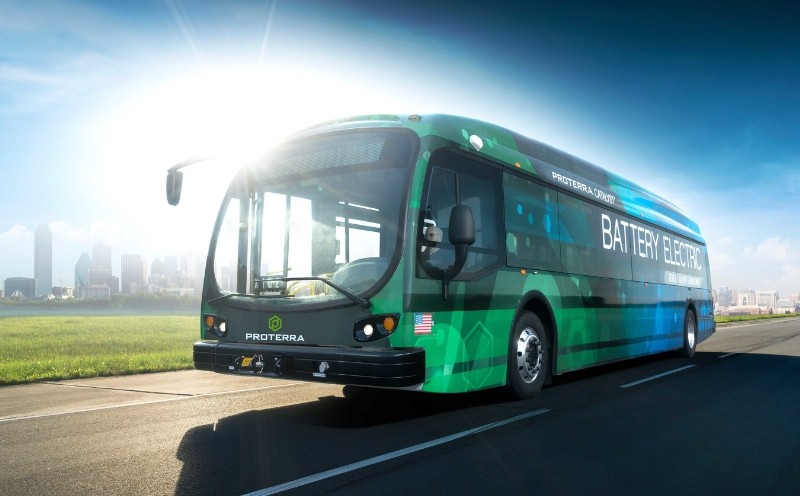
The terms of the agreement stipulate that all batteries from Proterra vehicles will be dispatched to Redwood’s recycling facility located in Carson City, Nevada. Discussions between the two companies began last summer, with Proterra initiating contact to gain a deeper understanding of Redwood’s recycling methodologies.
Subsequently, a visit to Redwood’s Nevada facilities was arranged to assess the recycler’s capability to handle Proterra’s battery packs.
Positive Assessment and Agreement Finalization
“The assessment yielded very positive results,” stated Dustin Grace, CTO of Proterra, in an interview with TechCrunch. Grace previously worked alongside Straubel at Tesla for approximately nine years. “We were greatly impressed by their operations, which prompted us to begin developing our master supply agreement.”
To date, Proterra has sent around 26,000 pounds of battery material to Nevada for recycling, although this volume does not yet reflect the anticipated rate of future deliveries. Redwood currently processes approximately 60 tons of batteries daily, totaling 20,000 tons annually.
Second-Life Applications and Battery Lifespan
Proterra’s batteries are engineered for the entire service life of the vehicle. However, the company also provides a battery leasing program that guarantees replacement after six years. This ensures that a substantial amount of usable life remains within the battery – potentially 80-90% of its original charging capacity.
To maximize the value of this remaining capacity, Proterra intends to repurpose the batteries in second-life applications, such as stationary energy storage systems integrated with Proterra charging infrastructure, before sending them to Redwood for recycling.
Grading and Repurposing Process
“An initial assessment of the battery’s condition will be conducted by Proterra’s remanufacturing engineering team,” explained Grace. “If the battery is deemed suitable for a second-life application, it will be deployed accordingly; otherwise, it will be recycled.”
Only after all potential useful life has been exhausted will the batteries be transferred to Redwood for reprocessing into valuable raw materials. With the projected growth of the transit EV market – expected to reach 50% of all annual sales by 2025 – the demand for battery reprocessing will significantly increase.
Expanding Partnerships and Circular Supply Chain
This announcement follows Redwood’s recent collaboration with e-bike manufacturer Specialized for battery recycling. Redwood already has established agreements to process scrap materials from Panasonic’s battery cell production at the Tesla Gigafactory in Nevada, and with Amazon for recycling EV batteries and other waste streams.
Through these business-to-business partnerships, Redwood aims to create a circular battery supply chain, returning the recovered raw materials to manufacturers. The company also accepts batteries and electronics directly from consumers, offering a mail-in recycling program via an address listed on its website.
Long-Term Vision and Sustainable Materials
The partnership signifies a commitment to large-scale, long-term planning from both companies. A Redwood spokesperson communicated to TechCrunch that the recycler is focused on “developing a comprehensive solution for closed-loop recycling of EV batteries.”
This involves securing sustainable, long-term sources of critical materials like cobalt, lithium, and copper, ultimately reducing reliance on traditional terrestrial mining. Straubel has consistently expressed his ambition to establish Redwood as a leading global battery materials company.
Future Domestic Battery Cell Manufacturing
As the availability of battery-grade raw materials increases within the United States, Proterra anticipates the possibility of expanding into domestic battery cell manufacturing.
“While still in the early stages, we are positioning ourselves for the future scale of this market,” Grace stated. “This partnership is fundamentally about preparing for that future. We believe domestic cell production is a crucial component of our roadmap, and increasing the supply of battery-grade raw materials within North America directly supports the expansion of battery manufacturing within the U.S. This collaboration will undoubtedly aid our plans for domestic cell manufacturing in the coming years.”
Related Posts

Trump Media to Merge with Fusion Power Company TAE Technologies

Radiant Nuclear Secures $300M Funding for 1MW Reactor
Whole Foods to Implement Smart Waste Bins from Mill | 2027
Last Energy Raises $100M for Steel-Encased Micro Reactor
Everbloom AI Transforms Chicken Feathers into Cashmere