Relativity Space Secures $500M to Industrialize Mars
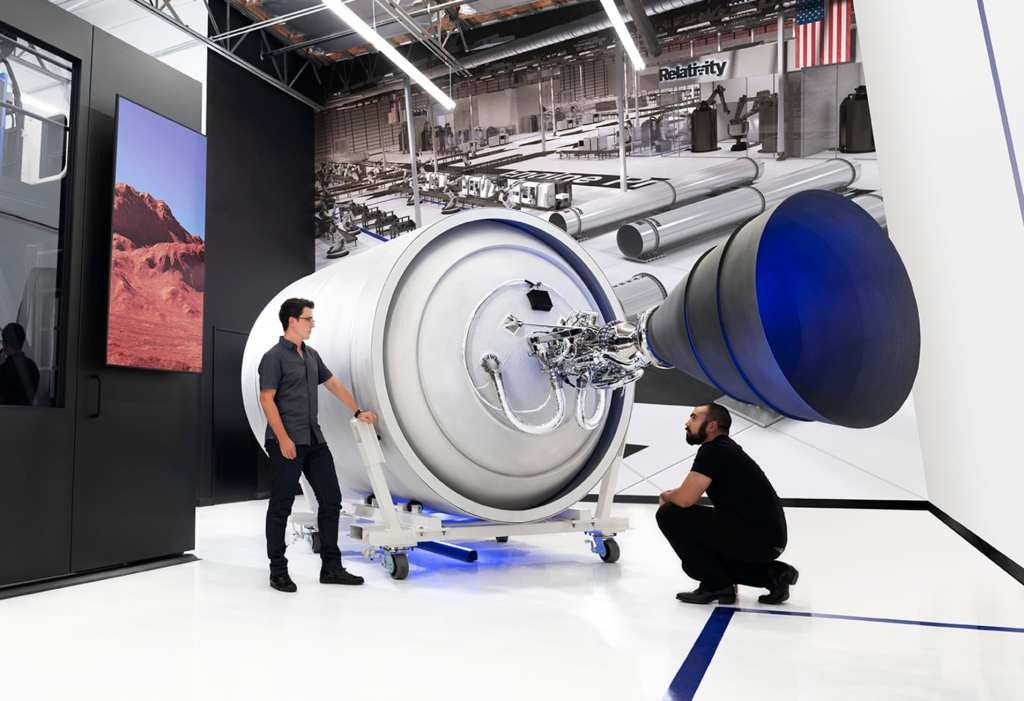
Relativity Space, the innovative company pioneering 3D-printed rockets, has successfully secured $500 million in Series D funding, confirming previously reported figures, the company revealed today. Tiger Global Management spearheaded this investment, with significant contributions from new investors such as Fidelity Management & Research Company, Baillie Gifford, Iconiq Capital, General Catalyst, and others. This latest round elevates the company’s total funding to almost $700 million, as it prepares for the inaugural launch of its completely 3D-printed orbital rocket in the coming year.
Based in Los Angeles, Relativity experienced substantial progress in 2020, finalizing construction of a new 120,000-square-foot manufacturing facility located in Long Beach. The company’s rocket-building technology, built around the development and operation of the world’s largest metal 3D printers, experienced minimal disruption from COVID-19 related closures and work suspensions due to the limited number of personnel required on the factory floor to oversee the 3D printing process, which is largely managed by automated robotic systems and proprietary software.
Relativity also secured its first official government contract this year, agreeing to launch an innovative cryogenic fluid management system for client Lockheed Martin, as part of NASA’s Tipping Point program designed to support the advancement of novel space exploration technologies. Furthermore, the company deployed its third-generation Stargate 3D metal printers – currently the largest of their kind globally.
Given the company’s ambitious goals, this substantial new funding round is expected to accelerate its growth throughout 2021. Several new projects are currently in development, spanning both terrestrial and space-based applications, with CEO and founder Tim Ellis specifically mentioning Mars and the possibility of establishing sustainable operations on the red planet as a potential long-term use for Relativity’s technology.
In previous discussions, Ellis has highlighted the broad potential of Relativity’s printers for large-scale metal manufacturing, observing that while rocketry currently represents the most cost-effective application, the technology could readily be adapted to other sectors as it continues to evolve. Whether the focus is on Mars or Earth, large-scale 3D printing holds considerable promise, and Relativity appears to be favorably positioned to capitalize on this opportunity.
We will be speaking with Ellis at our upcoming TC Sessions: Space event, where we plan to discuss this funding round and the company’s future objectives in greater detail.
Related Posts

ChatGPT Launches App Store for Developers

Pickle Robot Appoints Tesla Veteran as First CFO

Peripheral Labs: Self-Driving Car Sensors Enhance Sports Fan Experience

Luma AI: Generate Videos from Start and End Frames

Alexa+ Adds AI to Ring Doorbells - Amazon's New Feature