Robinhood CEO Testifies Before Congress - Latest Updates
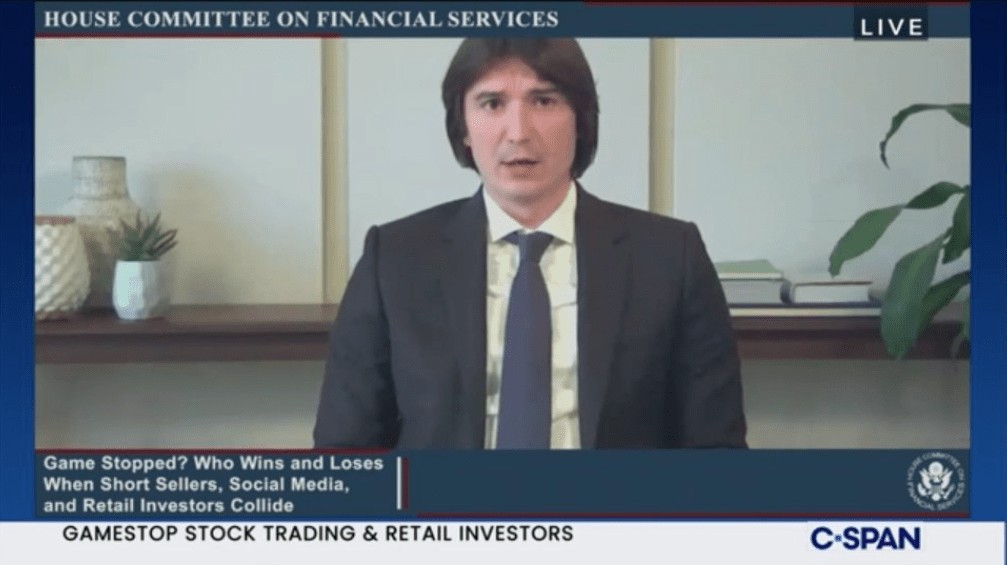
Recent Developments in the GameStop Saga
Important Update: A follow-up session to the initial hearing has been scheduled. This development is noteworthy.
Second Update: The congressional hearing has been ongoing, even as this report is being prepared. A significant revelation emerged: Robinhood CEO Vlad Tenev disclosed that payment for order flow (PFOF) accounts for at least 50% of his company’s revenue.
Considering Robinhood’s PFOF income of approximately $220 million in the last quarter, a maximum revenue cap of $440 million can be estimated for Q4 2020. However, a more realistic figure likely falls within the $300 million range.
Congressional Testimony and Key Participants
The House Financial Services Committee convened a virtual hearing featuring several key figures. These included the CEO of Reddit, a policy analyst from the Cato Institute, the social media personality known as DeepFuckingValue, Citadel CEO Kenneth Griffin, and Robinhood CEO Vlad Tenev.
The dynamic between these individuals was particularly interesting, as DeepFuckingValue’s actions led to financial losses for Kenneth Griffin’s Citadel, and subsequently impacted Robinhood’s capital requirements, contributing to broader market instability.
Ineffectiveness of the Hearing
The hearing proved largely unproductive. Technical difficulties, such as Zoom malfunctions and improper muting, frequently interrupted proceedings.
Members of Congress often used their allotted time to engage in self-promotion rather than posing substantive questions. The questioning format hindered meaningful dialogue.
Many inquiries were either overly lengthy and poorly focused, or too vague to elicit useful responses. It is difficult to identify a single concrete takeaway from the session.
It was noted that Robinhood’s CEO appeared uncertain regarding the specifics of his company’s user arbitration agreement. Some insight was gained into the number of users engaging in options trading. Additionally, Reddit’s CEO was observed wearing a well-tailored suit.
Criticism and Observations
Some lawmakers characterized the hearing as mere political theater, prompting a reprimand from Maxine Waters, chair of the House Financial Services Committee.
While some members approached potentially relevant lines of questioning, the overall methodology was flawed, and responses were often pre-prepared, yielding little new information.
Alternative Approaches
A more effective approach would have involved inviting a smaller number of guests alongside genuine experts. Focused questioning regarding the ethics of payment for order flow, the mechanics of the Robinhood application, and the accessibility of complex trading instruments could have yielded valuable insights.
Instead, the hearing included unproductive exchanges, such as inquiries into the origin of Robinhood’s name – a question with an easily discernible answer.
Ultimately, the proceedings were a misallocation of time. Critical questions remain unanswered, and the hearing failed to provide meaningful clarity.
Despite the lack of substantive progress, the event generated numerous memes and humorous commentary, offering a lighter perspective on the situation.
Related Posts

Trump Media to Merge with Fusion Power Company TAE Technologies

Radiant Nuclear Secures $300M Funding for 1MW Reactor
Coursera and Udemy Merger: $2.5B Deal Announced
X Updates Terms, Countersues Over 'Twitter' Trademark

Slate EV Truck Reservations Top 150,000 Amidst Declining Interest