Space Perspective Raises $40M to Revolutionize Space Tourism
A New Frontier in Space Tourism: Space Perspective's Stratospheric Approach
The recent successful commercial operations of companies like Blue Origin, SpaceX, and Virgin Galactic have marked the beginning of a new age in space tourism. However, Space Perspective, a relatively new startup established two years ago, is pursuing a distinctly different strategy compared to these established players.
Rides to the Stratosphere via Balloon
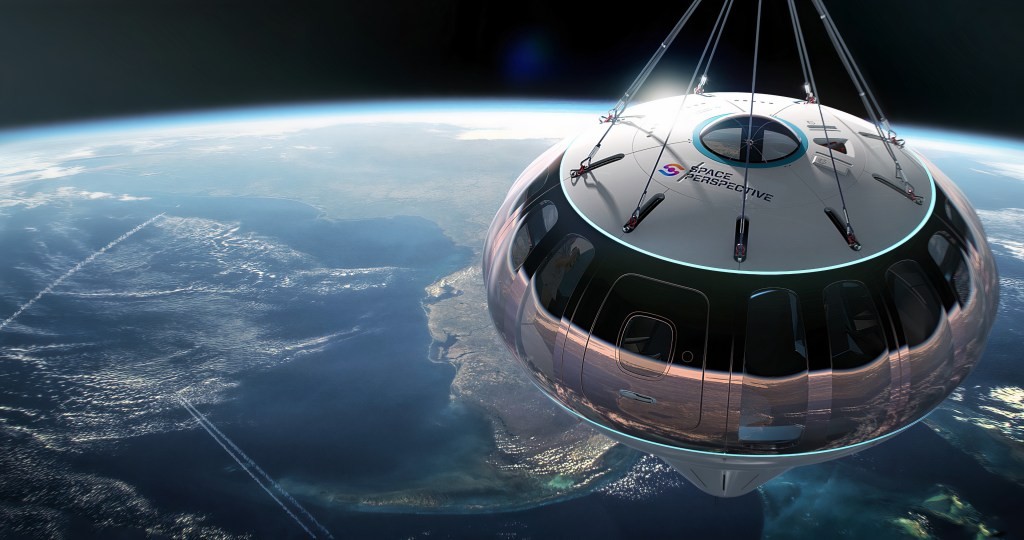
While other companies are focused on utilizing rockets or spaceplanes to reach space, Space Perspective intends to provide journeys to the stratosphere using a capsule suspended from a substantial balloon. This innovative approach has garnered significant investor interest, as evidenced by the company’s announcement on Thursday of a $40 million Series A funding round to support operations leading up to its initial commercial flights anticipated in late 2024.
Reservations and Costs
Currently, Space Perspective has secured 475 reservations. Each reservation is confirmed with a deposit ranging from $10,000 to $25,000, contingent upon the desired flight timeframe. The complete cost for a single seat is $125,000.
Trade-offs of the Balloon Route
Choosing a balloon-based system presents certain advantages and disadvantages. Although considerably less expensive than rocket development, and potentially more appealing to those with a lower risk tolerance, this method won’t achieve the same altitude or offer the sensation of weightlessness.
Instead of reaching or exceeding the Kármán line – the internationally recognized boundary of space at 50 miles above sea level – the stratospheric balloon will ascend to approximately 20 miles above Earth. (This altitude remains significantly higher than typical commercial airline flights, which generally operate around 7 miles above sea level.)
The Journey and Views
Space Perspective anticipates a six-hour journey offering breathtaking views, particularly of Earth’s curvature and the darkness of space. The balloon will ascend gradually over two hours at a speed of 12 miles per hour.
At its highest point, the capsule will glide for two hours before beginning a slow descent over the remaining flight duration. Upon landing in the ocean, a recovery ship will retrieve the eight passengers and one pilot, mirroring the procedures used by NASA and SpaceX for their crewed capsule returns.
A Comfortable Experience
Opting for a lower altitude also allows for a more comfortable passenger experience. The Space Perspective ride is envisioned to resemble a premium commercial flight, complete with amenities like Wi-Fi and a bar.
Furthermore, no specialized training will be necessary; the pre-flight safety briefing will be comparable to those currently provided by airline flight attendants, according to a company representative.
Testing and Milestones
The company has already achieved a key milestone with the successful launch of a full-sized, unpressurized capsule simulator from the Space Coast Spaceport in Florida in June, reaching the targeted altitude. Future test flights will also be uncrewed, culminating in the first piloted test flight scheduled for 2023.
The Founders' Background
Space Perspective was founded by Jane Poynter and Taber MacCallum, who serve as co-CEOs. Both were previously crew members of Biosphere 2, a pioneering project aimed at replicating Earth’s ecosystems within a closed environment.
They subsequently established Paragon Space Development Corporation, specializing in life-support systems for astronauts, and World View Enterprises, a company focused on stratospheric balloons for remote sensing. Notably, World View also announced plans to offer stratospheric balloon rides by 2024, priced at $50,000.
Investment Details
The Series A funding round was spearheaded by Prime Movers Lab, with contributions from LightShed Ventures, the Explorer 1 Fund, and Yamauchi no.10 Family Office. Additional investors include Tony Robbins, venture capital firms E2MC and SpaceFund, Kirenaga Partners, Base Ventures, and 1517 Fund.
Related Posts
Jared Isaacman Named Next NASA Administrator

Space-Based Solar Power: Beaming Energy to Earth

OSHA Investigates SpaceX Starbase Crane Accident
SpaceX IPO: Reportedly Planning 2026 Launch with $1.5T Valuation
SpaceX Valuation: Reportedly in Talks for $800B Sale