Stitch: Google's AI App Design Tool
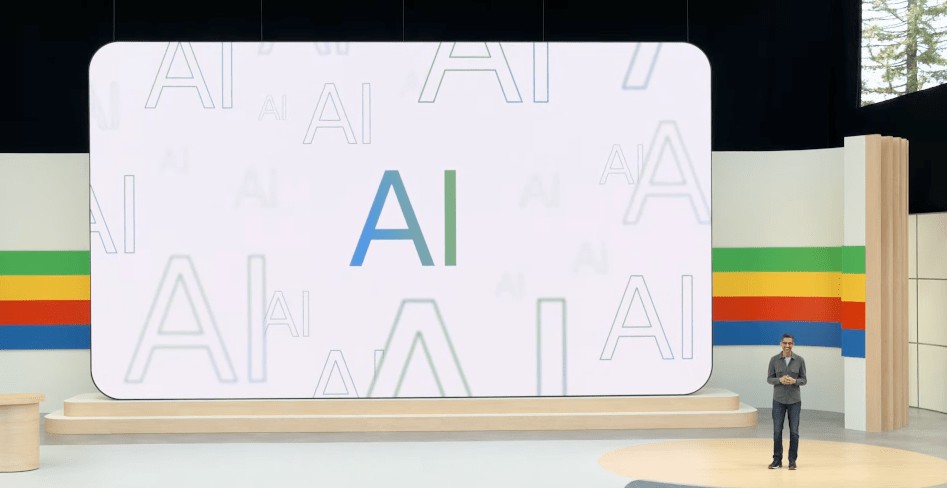
Google Unveils Stitch: An AI Tool for UI Design
During the Google I/O 2025 developer conference, Google introduced Stitch, a novel AI-driven application designed to streamline the creation of front ends for both web and mobile applications.
This innovative tool empowers designers by automatically generating the necessary UI elements and associated code.
How Stitch Operates
Stitch can be initiated with simple textual prompts or even visual references, such as images. It then produces HTML and CSS markup corresponding to the desired designs.
Users have the flexibility to select between Google’s Gemini 2.5 Pro and Gemini 2.5 Flash AI models to power the code and interface generation processes.
The Rise of Vibe Coding and Stitch’s Position
The launch of Stitch coincides with the increasing popularity of “vibe coding,” a programming approach leveraging code-generating AI models.
Several tech startups are actively competing in this emerging market, including Anysphere (creator of Cursor), Cognition, and Windsurf.
Recently, OpenAI released Codex, a new coding assistance service, and Microsoft unveiled updates to its GitHub Copilot coding assistant during its Build 2025 event.
Stitch’s Capabilities and Customization
While Stitch may have a slightly narrower scope compared to some other vibe coding solutions, it offers a substantial degree of customization.
The tool facilitates direct export to Figma and allows access to the generated code for refinement within an Integrated Development Environment (IDE).
Furthermore, Stitch enables users to fine-tune individual app design elements.
Demonstrated Applications of Stitch
Google product manager Kathy Korevec showcased two projects created with Stitch in a demonstration for TechCrunch.
These included a responsive mobile UI for a book-focused application and a web dashboard tailored for beekeeping management.
“Stitch is designed to help users quickly achieve an initial iteration, which they can then further develop,” Korevec explained.
“Our goal is to make advanced design thinking and software development more accessible and straightforward.”
Future Enhancements for Stitch
Google intends to integrate a feature allowing users to modify UI designs by submitting screenshots of the elements they wish to alter, accompanied by annotations detailing the desired changes.
Korevec clarified that, despite its capabilities, Stitch is not intended to replace comprehensive design platforms like Figma or Adobe XD.
Jules: Google’s AI Agent for Code Debugging
In addition to Stitch, Google has broadened access to Jules, its AI agent focused on assisting developers in identifying and resolving code bugs.
Now available in public beta, Jules aids developers in understanding complex codebases, generating pull requests on GitHub, and managing backlog items and programming tasks.
Jules in Action: Upgrading Node.js
During a separate demonstration, Korevec illustrated Jules upgrading a website from the outdated Node.js version 16 to the more current Node.js 22.
Jules cloned the website’s code into a virtual machine and presented a detailed upgrade plan for approval.
Upon completion, Korevec requested Jules to verify the website’s functionality, which it successfully confirmed.
Currently, Jules utilizes Gemini 2.5 Pro, but Korevec indicated that users will have the option to select from different models in the future.
Related Posts

ChatGPT Launches App Store for Developers

Pickle Robot Appoints Tesla Veteran as First CFO

Peripheral Labs: Self-Driving Car Sensors Enhance Sports Fan Experience

Luma AI: Generate Videos from Start and End Frames
Alexa+ Adds AI to Ring Doorbells - Amazon's New Feature