The Googler Who Came to Monetize Space
Axiom Space Appoints First Chief Revenue Officer
Axiom Space, the company developing the next-generation International Space Station, has recently achieved a valuation exceeding one billion dollars. Following this milestone, they have appointed Tejpaul Bhatia, formerly of Google, as their inaugural Chief Revenue Officer.
Bhatia’s responsibilities will center around fostering growth and establishing monetization strategies within the burgeoning space ecosystem.
Early Investment and Leadership Role
Bhatia was initially introduced to Axiom Space in 2017 during his tenure as an executive in residence at Citi Ventures. Recognizing the company’s potential, he made an angel investment in 2020 after Axiom secured a $140 million contract with NASA.
Subsequently, he formally joined the leadership team in July of this year.
The Race to Establish a Presence in Sky City
Axiom Space is not alone in its pursuit of commercial space ventures. With $400 million in NASA contracts available, a competitive rush is underway for companies aiming to establish operations in what is being referred to as Sky City.
Currently, over a dozen contractors are vying for these opportunities.
Competing Space Station Proposals
Two significant proposals were submitted recently. On October 22nd, Lockheed Martin, in collaboration with Voyager Space and Nanoracks, presented a bid for their Starlab space station, targeting a launch date of 2027.
Shortly after, on October 25th, Jeff Bezos’s Blue Origin announced a partnership with Sierra Space and Boeing to develop the Orbital Reef space station, with a projected launch window between 2025 and 2030.
Axiom Station’s Phased Development
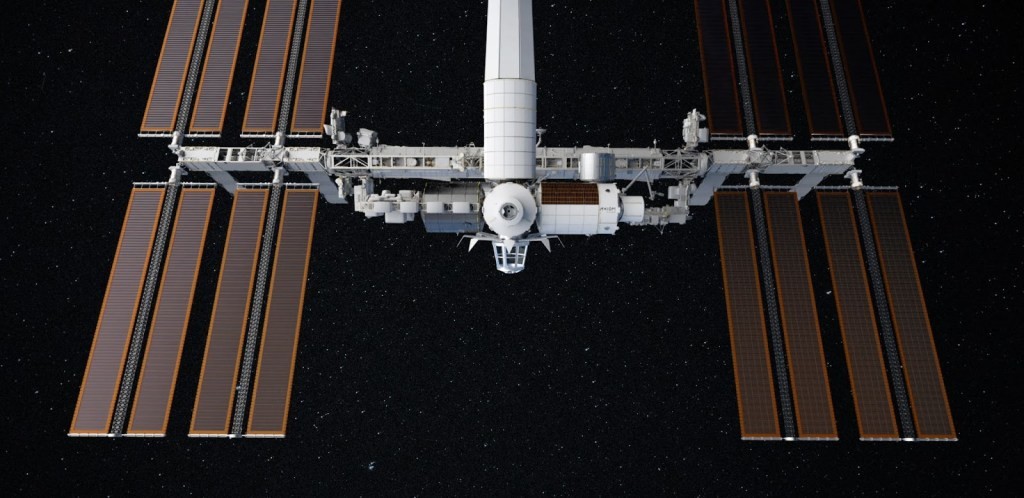
NASA has approved Axiom Station’s construction in stages, directly attached to the existing International Space Station (ISS). This approach ensures a smooth transition as the ISS is decommissioned in 2028.
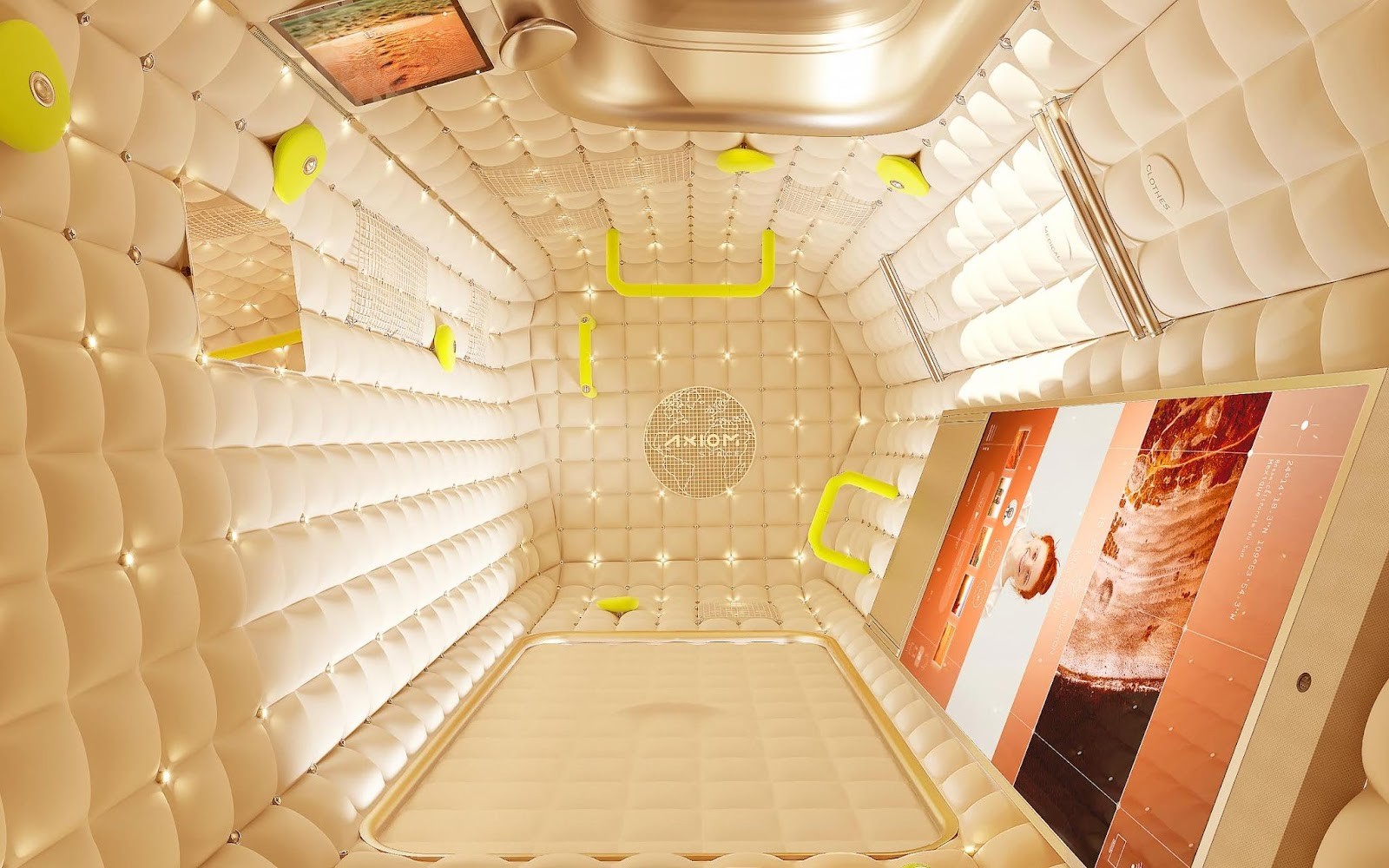
The initial module, Hub 1, is scheduled to dock in 2024. It will feature research facilities and living accommodations for a crew of four, including a touchscreen communications panel and a panoramic window.
Hub 2, offering similar amenities, is planned for 2025. A dedicated microgravity lab will follow in 2026.
In 2027, a Power Tower equipped with solar arrays will connect to the three modules, completing the Axiom Station and effectively doubling the capacity of the current ISS.
Finally, in 2028, Axiom Station will detach and commence independent orbital operations.
Vision for a Low Earth Orbit Industrial Complex
In an interview with TechCrunch, Bhatia outlined his ambitions to construct a substantial industrial complex in low Earth orbit over the next seven to ten years.
This complex is envisioned to function as a collaborative workspace for off-planet activities, a research center for various organizations, and a platform enabling smaller nations to initiate their own space programs.
Monetizing Space: A Google-Inspired Approach
Drawing inspiration from strategies employed at Google, Bhatia intends to leverage these concepts to monetize the opportunities presented by the final frontier.
This approach aims to unlock the economic potential of space and establish a sustainable business model for Axiom Space.
Planning Your Dream Escape
Axiom Space was established in 2016 through the efforts of Michael Suffredini, a former manager of the International Space Station, and Kam Ghaffarian, co-founder of Intuitive Machines. To date, the company has secured $150 million in funding, culminating in a $130 million Series B round finalized in February, spearheaded by C5 Capital. Rob Meyerson, previously president of Blue Origin and a leading investor, now holds a position on the board of directors. The company employs over 300 individuals, with its headquarters located in Houston.
Axiom primarily generates revenue by functioning as a comprehensive mission provider for short-term stays aboard the ISS. This encompasses complete astronaut training and round-trip transportation via SpaceX, including essential provisions like food, water, oxygen, communications, data, power, and more. These all-inclusive stays, lasting between seven and ten days, are then offered to private individuals. Furthermore, the company facilitates research missions, enabling experiments within the ISS’s microgravity environment, and actively pursues content and media sponsorship opportunities.
Two missions are currently scheduled for the coming year. The inaugural mission, Ax1, is slated for February 21st and will be led by retired NASA astronaut and Axiom VP, Michael López-Alegria. The crew will consist of investors Larry Connor, Mark Pathy, and Eytan Stibbe. Reports from The Washington Post indicate a cost of $55 million per passenger for this journey.
The second mission, Ax2, is planned for later in 2022. It will feature Peggy Whitson, a retired NASA astronaut who holds the American record for the longest time spent in space, alongside John Shoffner, an American investor, racing car driver, and pilot. While two seats remain available, Axiom has not confirmed rumors regarding the participation of Tom Cruise, who is reportedly collaborating with Elon Musk on a $200 million Universal film and has been mentioned by NASA as a potential passenger.
Planning is also underway for Axiom’s third and fourth missions, scheduled for 2023. One of these missions will include the winner of the Discovery Channel’s reality TV competition, “Who Wants To Be An Astronaut?”
Axiom’s competition in this emerging sector includes Space Adventures, founded in 1998 by Peter Diamandis of BOLD Capital. This company has previously transported seven private citizens, including Guy Laliberté, co-founder of Cirque du Soleil, to the ISS through arrangements with the Russian space agency, Roscosmos. A spacewalk is planned for their second scheduled ISS mission in 2023. An orbital trip planned with SpaceX for later this year was cancelled, reportedly due to insufficient demand, as noted by SpaceNews.
Despite recent media attention surrounding spaceflights undertaken by billionaires such as Richard Branson, Jeff Bezos, and Elon Musk, which included passengers like William Shatner of Star Trek, the market for these experiences is constrained by the substantial ticket prices.
Axiom, however, is strategically focused on a different demographic than simply billionaires.
A New Era for Space Exploration: Sky City
While not resembling the futuristic depictions of “The Jetsons” with flying vehicles and illuminated structures, significant advancements are anticipated in 2024. This is when Axiom plans to connect its initial habitat module to the International Space Station (ISS).
According to Bhatia, the addition of expanded living quarters and laboratory facilities will empower Axiom to facilitate a greater number of missions. This is due to the removal of limitations imposed by the ISS’s existing capacity.
Axiom remains flexible and is prepared to collaborate with various launch providers, such as SpaceX and Boeing’s Starliner – pending certification – based on evolving demand.
Bhatia identifies 2024 as a pivotal moment for substantial revenue expansion.
“With the Axiom station operational, we will introduce a combined approach, offering customized physical and digital space solutions to companies, governmental bodies, and research institutions through purchase, lease, or bespoke construction,” he explained.
A unique aspect of Axiom’s physical infrastructure is the modular design. These modules – functioning as labs, data centers, or habitats – can detach, maneuver independently, and reconnect, much like building blocks.
However, Bhatia dismissed the notion of characterizing Axiom station as a space hotel offering rooms for reservation via an application. He envisions it as a large-scale industrial complex, catering to a diverse clientele. This includes governments establishing space programs and organizations requiring microgravity labs or manufacturing facilities.
“We provide comprehensive physical infrastructure, encompassing essential resources like food, water, oxygen, life support, bandwidth, data analysis, edge computing, and power – all vital for orbital operations and necessary for any business, institution, or government,” he stated.
“Furthermore, we are developing a digital platform, offered as infrastructure-as-a-service, enabling developers to leverage onboard sensors and instrumentation to create innovative businesses, mirroring the app development ecosystem of smartphones.”
 The potential creation of a software development kit for third-party development on the Axiom Station operating system is still under consideration. Bhatia did suggest that the station’s sensors could be effectively utilized for monitoring space debris and assessing Earth’s climate.
Bhatia defines the total addressable market as encompassing nations with established space program budgets, as well as those currently lacking the financial resources to initiate one.
“Our objective is to guarantee a seamless transition – ensuring a fully operational private station is available to all when the ISS reaches the end of its lifespan,” he said. “We can tailor solutions to meet the needs of countries with budgets ranging from billions of dollars to smaller fractions thereof.”
Bhatia anticipates that NASA, ESA, JAXA, the Canadian Space Agency, and Roscosmos will redirect their combined $2 billion to $3 billion annual expenditure to Axiom Station as the successor to the ISS. He projects Axiom will ultimately serve a market valued in the multiple billions, citing a Morgan Stanley report estimating the commercial space sector at $350 billion in 2020 and $1 trillion by 2040.
A Google Veteran's Approach to Space Commercialization
Michael Bhatia, a seasoned entrepreneur, investor, and former tech leader instrumental in developing Google Cloud’s startup ecosystem, asserts that the burgeoning space economy requires the principles of venture capital.
Bhatia, currently serving as chief revenue officer, outlined his core objective: to establish a high-growth business framework. This platform is intended to facilitate rapid scaling for businesses, industries, and markets over the coming decade.
He emphasized a shift in approach. “This represents a departure from the traditional space industry model, which has historically relied on government funding and taxpayer investment.” Bhatia believes the private sector is demonstrably more capable of driving the necessary advancements.
Regarding competitive pressures from projects like Starlab and Orbital Reef, Bhatia expressed a welcoming stance. He maintains a strong conviction that Axiom Space currently possesses a significant lead in development.
“Having been in this role for just over 100 days, it’s clear this isn’t merely conceptual,” Bhatia stated. “Tangible progress is being made – hardware is being fabricated, crewed missions are underway, and agreements are being finalized.”
He highlighted the concrete nature of Axiom’s progress. “Our initial module is already in production at the Thales Alenia facility in Italy. This is a realization of a vision, not a futuristic concept.”
Currently, immediate profitability is not a primary concern for the company.
“Securing funding is crucial, and we are mirroring the strategies of the world’s most successful companies – Facebook, Apple, Amazon, Microsoft, and Google.” Bhatia explained. “These organizations initially prioritized growth over profits, reinvesting capital to build foundational infrastructure, accelerate innovation, and maintain a steadfast commitment to safety.”
Key Strategies for Growth
- Focus on building essential infrastructure.
- Prioritize rapid innovation.
- Maintain an unwavering focus on safety protocols.
- Emulate the growth models of tech giants.
Related Posts
Jared Isaacman Named Next NASA Administrator

Space-Based Solar Power: Beaming Energy to Earth

OSHA Investigates SpaceX Starbase Crane Accident
SpaceX IPO: Reportedly Planning 2026 Launch with $1.5T Valuation
SpaceX Valuation: Reportedly in Talks for $800B Sale