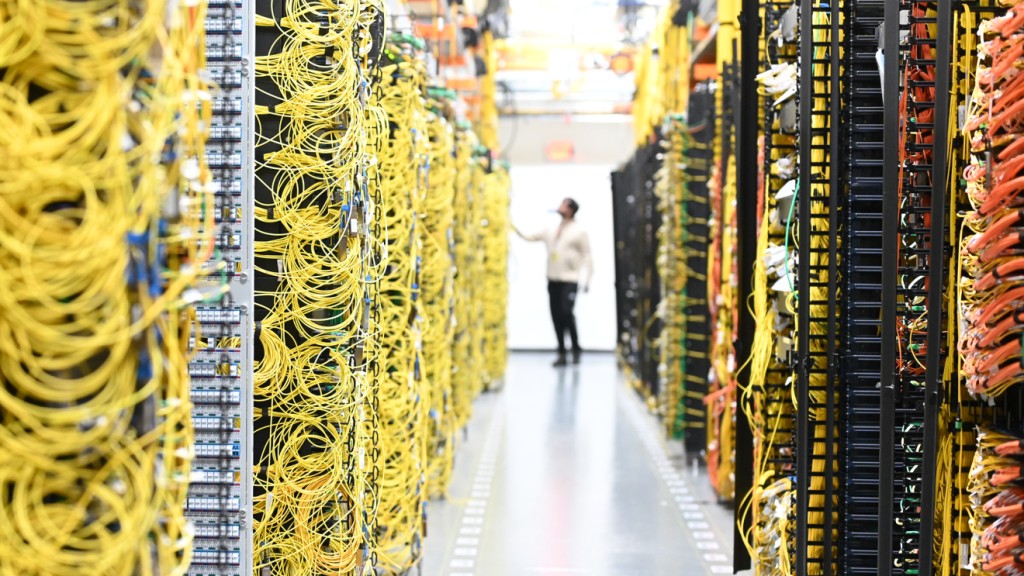
XPeng 2021 Tech Day Highlights: Innovation & Future Tech
XPeng Unveils Innovations for Future Mobility
XPeng, a leading Chinese smart electric vehicle manufacturer, recently revealed a range of advancements designed to shape the future of transportation.
According to He Xiaopeng, chairman and CEO of XPeng, the company’s focus extends beyond simply producing smart EVs.
He stated that developing efficient, safe, and carbon-neutral mobility solutions is fundamental to their sustained competitive edge.
Advancements in Key Technologies
During XPeng’s 2021 Tech Day, held in Beijing on Sunday, Xiaopeng elaborated on several key areas of development.
These included updates to the company’s advanced driver assistance system (ADAS), expansion plans for their supercharger infrastructure, and progress on ambitious projects.
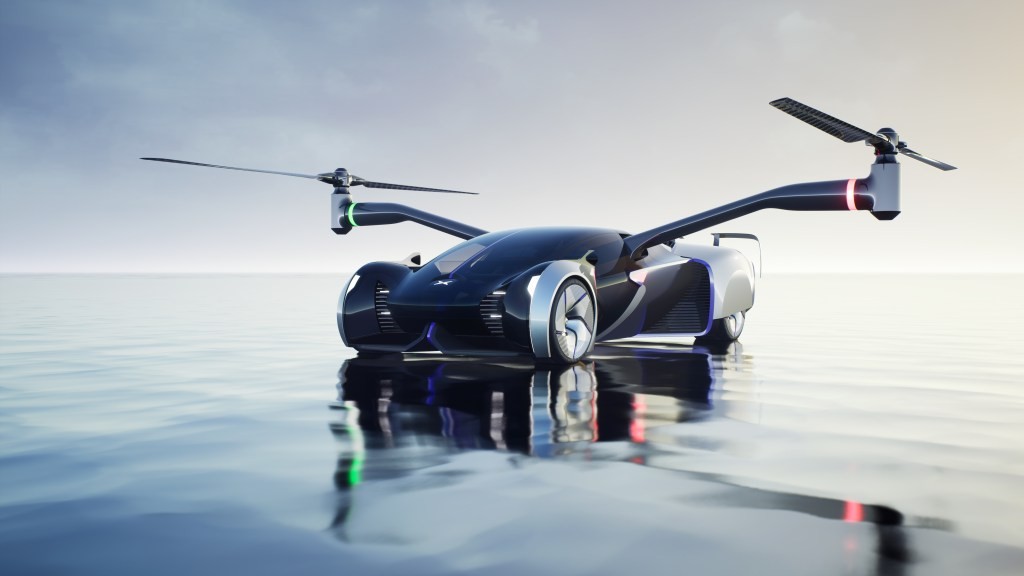
The company showcased a next-generation flying car, developed in collaboration with HT Aero.
Expanding the XPeng Ecosystem
Beyond vehicles, XPeng is also innovating in related areas.
They presented their robotic unicorn, a playful and engaging product designed for children.
XPeng aims to integrate these cutting-edge technologies into their mass-produced vehicle models, ultimately benefiting their customer base.
The company’s strategy centers on delivering advanced mobility solutions to a wider audience.
This commitment to innovation positions XPeng as a significant player in the evolving landscape of future mobility.
Xpilot 3.5: Designed for Urban Driving Environments
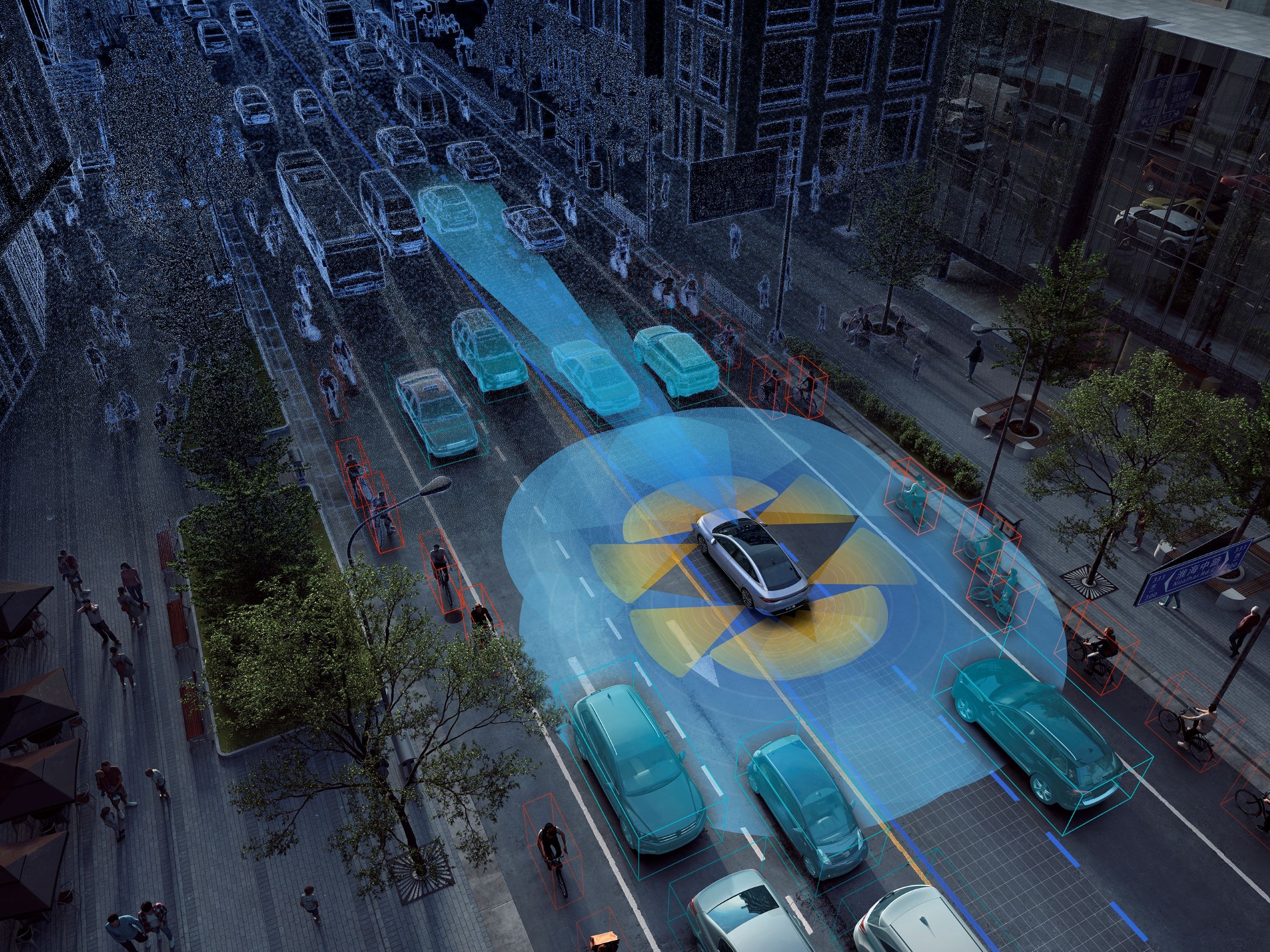 XPeng intends to launch the subsequent iteration of its Advanced Driver-Assistance Systems (ADAS), designated Xpilot, to drivers within designated urban areas during the initial six months of 2022. This new version, Xpilot 3.5, will incorporate “City Navigation Guided Pilot (NGP).”
Availability will be limited to owners of XPeng’s P5 sedan model. This vehicle can be equipped with lidar technology, millimeter-wave radar, and a sophisticated 3D visual perception system. This system is capable of identifying, categorizing, and pinpointing the location of multiple objects, a crucial element for NGP functionality within city limits.
The preceding Xpilot version, 3.0, catered to drivers of the XPeng P7 sedan, providing highway-level NGP capabilities. Through this, XPeng accumulated approximately 12 million kilometers, equivalent to 7.5 million miles, of valuable driving data.
Xpilot 3.5 will integrate a strategic planning module, boasting enhanced predictive abilities. It will utilize a combined approach of rule-based and data-driven artificial intelligence to navigate complex urban scenarios. This includes obstacle avoidance, recognition of vulnerable road users, and seamless lane changes at any speed, as detailed by XPeng.
XPeng’s strategy for achieving complete vehicle autonomy mirrors that of Tesla. The company aims to progress through Level 2 autonomy – encompassing ADAS systems – as a stepping stone towards Level 5. (SAE International defines Level 2 as systems offering support features like adaptive cruise control and brake assistance, while Level 5 represents full autonomy under all conditions.)
Recently, Tesla released a software update enabling customers to request access to its Full Self-Driving Beta (FSD Beta) software. FSD includes features such as automated lane changes, parking assistance, and autosteering. However, autosteering is currently not operational on city streets. Tesla has not yet announced a timeline for extending this capability to urban environments, but it will rely solely on vision and neural network processing.
XinZhou Wu, VP of autonomous driving at XPeng, stated during the event that “Human-machine co-pilot functions will continue to be essential for the foreseeable future.” He further emphasized that “Our objective is to gradually transition from advanced driver assistance to complete autonomous driving, with a defined path to fully integrate all driving scenarios. Our in-house closed-loop data operations, software refinement, and mass production capabilities position us favorably to substantially enhance safety and address the industry’s persistent challenges.”
Similar to Tesla’s pricing model for its FSD software, XPeng also charges for access to its Xpilot features. While the cost of version 3.5 has not been disclosed, version 3.0 is currently priced around $3,200 (RMB 20,000). This can be purchased as a one-time fee or through an annual subscription, according to an XPeng representative who spoke with TechCrunch.
XPeng's Xpilot 4.0: A Leap Towards Full ADAS Capabilities
Scheduled for release in the first half of 2023, XPeng’s Xpilot 4.0 is poised to significantly advance the company’s progress towards achieving full driving autonomy. The core objective is to be the first manufacturer to offer comprehensive assisted smart driving functionality, encompassing all stages from vehicle start-up to parking.
Enhanced Hardware for Advanced Processing
Implementing this advanced iteration of Xpilot necessitates substantial computational resources. Consequently, XPeng is developing a hardware upgrade specifically for version 4.0. This upgrade will feature a processing capability of 508 TOPS, powered by dual Orin-X autonomous driving system-on-a-chip (SOC) units.
The system will also incorporate an 8-million-pixel binocular front-view camera, alongside 2.9-million-pixel side-view cameras providing coverage of the vehicle’s front, rear, left, and right surroundings. A highly integrated and scalable domain controller will complete the hardware suite.
New Vehicle Platform for Xpilot 4.0
According to a TechCrunch report, an XPeng representative confirmed that Xpilot 4.0 will not be retrofitted into existing vehicle models. Instead, it will debut on a currently unannounced vehicle. Speculation suggests this new model will likely be an SUV, though XPeng has not yet publicly disclosed any details.
Ambitious Testing and Deployment Goals
As XPeng prepares for the market launch of Xpilot 4.0 by the end of next year, the company has set ambitious testing and deployment targets. These include accumulating 75 million miles of highway NGP driving data and 22 million miles of city NGP driving data.
Furthermore, XPeng aims for a 90% adoption rate of its memory parking feature, Valet Parking Assist (VPA), among its user base.
Focus on Safety and User Experience
XPeng emphasizes the paramount importance of safety in the development of its ADAS technologies. Beyond smart driving features, the company is also enhancing the user experience through upgrades to its interface and operating system.
Xmart OS 4.0 promises a detailed visualization of the vehicle’s surroundings, rendered in 3D. This operating system is slated for release in new vehicle models next year, as stated by Xiaopeng. A second-generation voice assistant is also being introduced, capable of simultaneous listening, processing, and execution to improve driver convenience.
Driver Monitoring and Safety Scoring
Mirroring Tesla’s approach with its FSD Beta software, XPeng is implementing a safety test to help drivers understand the limitations of Xpilot before activation. Drivers will receive a smart driving score, and continued irresponsible driving behavior, as detected by the driver monitoring system, will result in point deductions and potential revocation of Xpilot access.
Next-Generation Superchargers from XPeng Offer Rapid Range Extension
To facilitate the development of a comprehensive smart mobility ecosystem, XPeng is focusing on advanced charging solutions. Currently operating a network of 1,648 complimentary charging stations and 439 branded supercharging locations across China, the company unveiled its forthcoming “X-Power” superchargers during its recent Tech Day.
These next-generation chargers will utilize an 800V high-voltage Silicon Carbide platform for mass production. XPeng states that the X-Power chargers will be capable of adding up to 200 kilometers (approximately 125 miles) of range to electric vehicles in a mere five minutes.
Key Features of XPeng’s X-Power Superchargers
- A single supercharger can concurrently serve an average of 30 vehicles.
- Lightweight 480 kW high-voltage supercharging piles are being developed for inclusion with XPeng vehicles.
- The company intends to deploy power storage solutions within both the charging piles and mobile charging vehicles.
This expansion of charging infrastructure is designed to support the growing demand for electric vehicle charging. XPeng is actively working to bolster its network with these innovative technologies.
The specific timeline for the market release of this new charging technology remains undisclosed by XPeng. Further announcements regarding availability are anticipated.
A Dual-Mode Vehicle: Flying and Driving
During a recent presentation, XPeng articulated its ambition to become a leading manufacturer of low-altitude manned aerial vehicles. This goal is largely driven by the development of its sixth generation flying car. Notably, this vehicle is designed with a unique capability – it will also be street legal and operable as a conventional automobile.
A demonstration video showcased a sleek vehicle design, even more visually appealing than the XPeng P7. The car transitions between driving and flight modes utilizing a foldable rotor system. XPeng anticipates the initial weight of the flying vehicle will be approximately 50% less than the P7, with a length of around 18 feet, though future iterations are planned to be more compact.
Advanced Safety Features
The new vehicle will incorporate a sophisticated environmental perception system. This system will comprehensively assess the surrounding conditions and prevailing weather to perform thorough safety checks prior to any takeoff attempt.
Data gathered by the system will be evaluated against the intended flight path to guarantee secure liftoff and landing procedures. Furthermore, during flight, an advanced perception algorithm coupled with flight control mechanisms will actively work to avoid potential obstacles.
Production and Cost Targets
XPeng intends to initiate mass production of this innovative vehicle, developed by its UAM affiliate HT Aero, as early as 2024. The final design, as stated by the CEO, will be more conservative than the current renderings and is expected to be finalized next year.
A key objective is to keep the vehicle’s price point below $157,000 (RMB 1 million). This affordability is a crucial aspect of XPeng’s market strategy.
Investment and Use Cases
XPeng recently spearheaded a $500 million Series A funding round for HT Aero. HT Aero has previously developed UAM vehicles for XPeng, including the XPeng X2, the company’s fifth-generation flying car with a two-person capacity.
According to a TechCrunch report, the sixth-generation flying car is envisioned for similar urban applications. These include short-distance commutes, such as traveling between offices and airports, with flight times anticipated to be under 30 minutes. XPeng plans a direct-to-consumer sales model.
- The company’s strategy will require navigating evolving low-altitude air regulations.
- XPeng aims to collaborate with regulatory bodies.
The CEO expressed hope for a regulatory environment that permits the legal mass production of flying cars for personal use by 2024, though specific details remain forthcoming.
Advancing Smart Mobility with a Robotic Quadruped
Last month, XPeng initially showcased a pony-shaped robot designed for children to ride and engage with. This four-legged machine is envisioned to possess advanced perceptive capabilities, including the ability to interpret human emotional states. At its recent Tech Day, XPeng elaborated on its vision of such intelligent robots, like this pony, functioning as a sophisticated platform for an integrated smart mobility ecosystem, capable of tackling more intricate autonomy challenges than those found in vehicles.
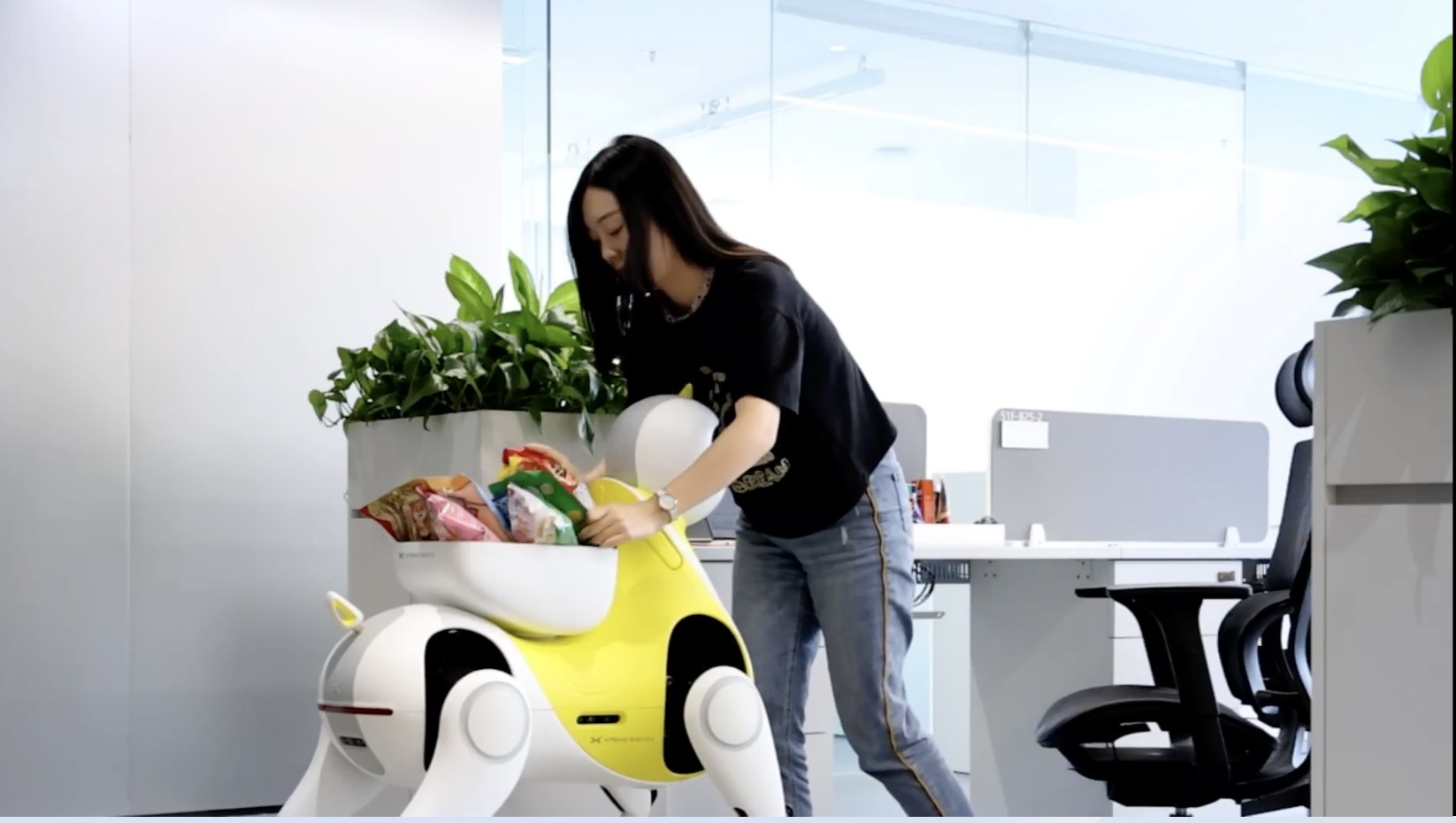 The applications extend beyond recreational use for children. XPeng presented a video illustrating the robotic pony’s potential for delivering refreshments and packages within an office environment. This highlights the historical role of horses in transportation and object conveyance. (The same video also hinted at another robotic animal, resembling Xiaomi’s robotic canine, present in the depicted office setting.)
According to Xiaopeng, XPeng is prioritizing the development of a quadrupedal design, akin to a pony, over a bipedal robot due to the inherent stability offered by four legs. This contrasts with Tesla’s announcement during its AI Day, which focused on creating a bipedal humanoid robot intended to perform tasks such as grocery shopping.
The robot will be trained to understand its surroundings and identify multiple objects using 3D route planning. Facial recognition, body language analysis, and voiceprint identification will enable user recognition, as stated by XPeng. Furthermore, the company is exploring technologies like dynamic acoustic mapping, biomimetic hearing, and a simulated sense of smell.
XPeng is also investigating bionic tactile experiences through plantar and fingerprint touch, as well as skin sensing. The robots will incorporate a 360-degree camera module and a lidar sensing system, alongside object recognition and sound field sensory technology. This comprehensive sensor suite aims to create a highly accurate environmental model for interaction.
During the event, Xiaopeng indicated that significant advancements, encompassing two major iterations, will dramatically alter the robotic pony’s appearance by next year, diverging from the current renderings. A representative from XPeng informed TechCrunch that there is currently no defined timeline for bringing the robotic pony to market, though a prototype remains under development.
Considering the substantial AI and hardware hurdles involved in creating a fully autonomous robot, and the associated costs, it is reasonable to anticipate a considerable timeframe before this technology reaches commercial viability.
“By integrating improved target recognition and precise interaction, alongside 3D route planning for navigating complex terrains and enhanced bionic senses, XPeng aims to broaden the scope of applications, supporting more extensive mobility, advanced autonomous planning, and more effective human-machine interaction for the future of intelligent transportation,” the company declared.
This story is ongoing. Further updates will be provided as they become available.
Related Posts

ChatGPT Launches App Store for Developers

Pickle Robot Appoints Tesla Veteran as First CFO

Peripheral Labs: Self-Driving Car Sensors Enhance Sports Fan Experience

Luma AI: Generate Videos from Start and End Frames
Alexa+ Adds AI to Ring Doorbells - Amazon's New Feature