Starlab: Voyager, Nanoracks & Lockheed Lead the LEO Economy
The Dawn of Commercial Space Stations
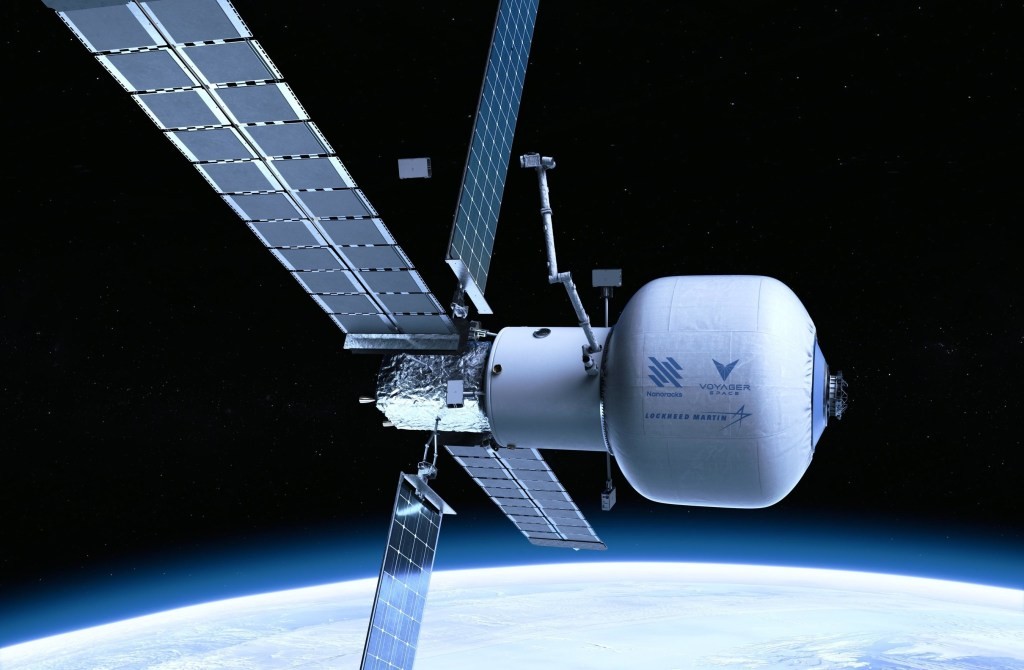
A new chapter in space exploration has begun with Nanoracks, Voyager Space, and Lockheed Martin announcing their collaborative effort to launch a commercially operated space station by 2027. This development represents a natural progression in the evolution of the space economy, according to the involved companies.
A Shift in Focus: From Access to Destinations
Voyager CEO Dylan Taylor articulated a key industry perspective, stating that the past decade has been characterized by increasing access to space. He predicts the coming decade will be defined by the availability of destinations in space.
Introducing Starlab
The forthcoming space station, named “Starlab” as a tribute to the historic Skylab – the third U.S. space station – will feature a modular design. This will include an inflatable habitat, a central docking hub, and a versatile robotic arm.
Science as the Core Mission
The companies foresee significant interest from both governmental and private sectors. However, Nanoracks CEO Jeffrey Manber underscored that scientific research will be the primary focus of Starlab’s operations.
Beyond Space Tourism
While acknowledging the potential for hosting space tourists, Manber clarified that Starlab is not primarily a tourism venture. A sustainable business model, he explained, necessitates expanding beyond reliance on tourism revenue.
NASA’s Role and Funding
Starlab has been submitted to NASA as part of the Commercial Low Earth Orbit Destinations (CLOD) program. This initiative offers up to $400 million in contracts to companies developing private space stations. Taylor emphasized that NASA’s financial commitment serves as a crucial signal of the agency’s dedication to maintaining a continuous U.S. presence in low Earth orbit, especially considering the planned decommissioning of the International Space Station.
Preventing a Gap in Space Station Access
Manber reinforced the importance of uninterrupted access to a space station. He stated that a period without a U.S.-operated station in low Earth orbit is unacceptable to the industry and the broader space community.
Voyager’s Financial Oversight
Voyager Space, having recently acquired a majority stake in Nanoracks, will assume responsibility for overseeing the project’s financing and capital allocation. This positions Voyager as a key player in securing the necessary funding.
The Need for Commercial Investment
Manber acknowledged the limitations of relying solely on congressional funding. He asserted that Starlab is fundamentally a commercial project, requiring substantial private investment to succeed.
Addressing Standardization and Competition
Several challenges remain regarding the future of the low Earth orbit (LEO) economy. These include balancing the need for standardization in design with the desire to maintain a competitive landscape. Taylor proposed a consortium-based approach to establish standards for critical technologies. Lisa Callahan, Lockheed Martin’s VP of commercial civil space, suggested that NASA investment could also promote commonality in habitation systems.
Building on NASA’s Success
Manber highlighted NASA’s pivotal role in fostering innovation in space transportation. He expressed confidence that, mirroring the successes achieved with commercial cargo and crew programs, the emergence of private space stations will further stimulate growth and opportunity in the space sector.
Related Posts

Jared Isaacman Named Next NASA Administrator

Space-Based Solar Power: Beaming Energy to Earth

OSHA Investigates SpaceX Starbase Crane Accident
SpaceX IPO: Reportedly Planning 2026 Launch with $1.5T Valuation
SpaceX Valuation: Reportedly in Talks for $800B Sale