Walmart & Cruise Test Autonomous Grocery Delivery in Arizona
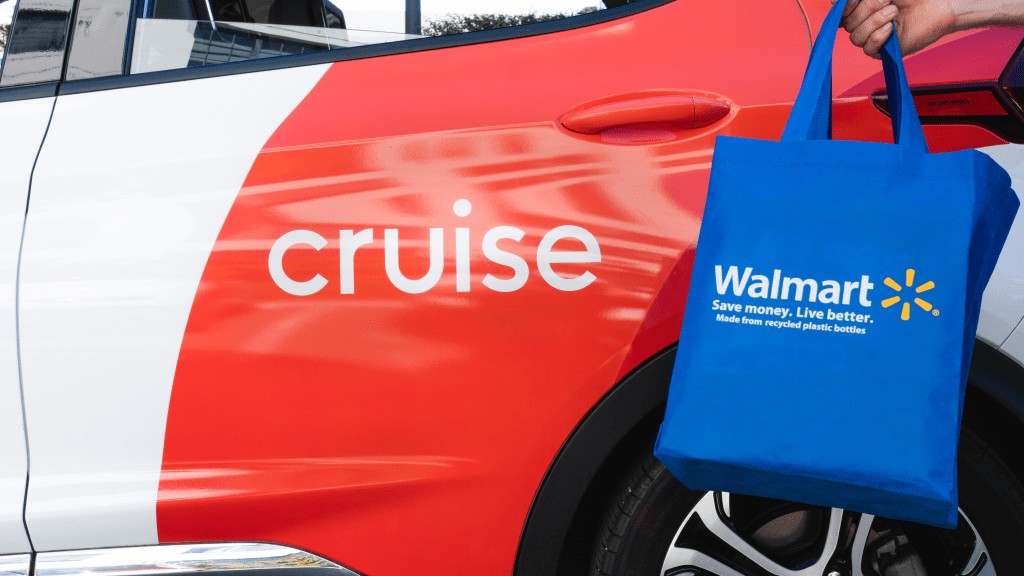
Major U.S. retailer Walmart is collaborating with autonomous vehicle firm Cruise to conduct testing of grocery delivery services in Scottsdale, Arizona.
As part of this trial initiative, customers will have the option to place orders with their local Walmart store and receive them through Cruise’s self-driving, all-electric Chevrolet Bolt vehicles. Although these vehicles will function autonomously, a trained human safety driver will consistently be present in the driver’s seat.
The companies have not yet disclosed the number of vehicles involved or the specific geographic area that will be covered, other than confirming operations will take place within Scottsdale, a Phoenix suburb. The pilot program is anticipated to commence in the early stages of the coming year.
“We are keen to explore technologies with the potential to conserve both customer time and money, while also benefiting the environment,” stated Tom Ward, Walmart’s Senior Vice President of Customer Product for the U.S., in a release on Tuesday. Ward further explained that this pilot program aligns with the retailer’s objective of achieving zero emissions by the year 2040.
Image Credits: WalmartThis program, revealed on Tuesday, represents the latest effort by Walmart to broaden its pickup and delivery capabilities. In April, Walmart introduced “Express,” a service offering orders within two hours or less for an extra $10 fee in addition to standard delivery charges. Initially tested at 100 stores, Express has since been expanded to over 2,800 locations.
Walmart has also established partnerships with several autonomous vehicle developers, including Waymo, to investigate potential large-scale commercial applications of this technology. The retailer entered into an agreement with startup Udelv in 2019 to evaluate the use of autonomous vans for delivering online grocery orders to customers in Surprise, Arizona. Autonomous delivery company Nuro initiated a pilot program with Walmart in Houston in 2020. Furthermore, the retail giant participated in a trial with Postmates and Ford in the Miami-Dade region and, last year, engaged AV startup Gatik to transport customer online grocery orders from Walmart’s central warehouse to its local stores in Bentonville, Arkansas.
While Cruise is widely recognized for its plans to launch a driverless robotaxi service in San Francisco, the company has also explored delivery applications.
Cruise and DoorDash successfully completed a delivery pilot program in San Francisco in 2019. At the time, CEO Dan Ammann commented that the partnership with DoorDash would yield “valuable insights as we advance our mission to develop technology that enhances people’s lives and provides greater convenience.”
This appears to have been the case. When the COVID-19 pandemic reached North America, leading to government-imposed lockdowns, Cruise temporarily suspended its testing in San Francisco. The company then shifted its focus to delivering prepared meals to two local food banks. Cruise has since completed nearly 125,000 deliveries through this initiative. However, Cruise’s decision was met with some criticism, with some viewing it as a way to circumvent the shutdown and continue testing.
The duration of Cruise’s pilot program with Walmart, and whether it will be expanded, remains uncertain. Cruise has maintained a limited fleet of its self-driving Chevy Bolt EVs in Scottsdale, where it has been mapping the area and refining its technology since at least 2016.
Related Posts

Rivian Launches Universal Hands-Free Driving Feature

Rad Power Bikes Files for Bankruptcy, Seeking Sale
Tesla Deceptive Marketing: Autopilot and Full Self-Driving Ruling
Luminar's Volvo Deal and Bankruptcy: A Timeline
Slate EV Truck Reservations Top 150,000 Amidst Declining Interest