Yandex & Grubhub Partner for Robotic Delivery on College Campuses
Yandex and Grubhub Partner for Robotic Delivery on College Campuses
A collaboration has been established between Yandex Self-Driving Group, a division of the Russian technology company Yandex, and Grubhub, a prominent food delivery service. This partnership will see Yandex serve as Grubhub’s robotic delivery provider for multiple years, initially focusing on college campuses throughout the United States.
Yandex anticipates expanding its reach to over 250 campuses through this initiative, with the rollout beginning this fall with the deployment of numerous robots. This information was conveyed in a statement released by Dmitry Polishchuk, CEO of Yandex Self-Driving.
Recent Developments for Yandex’s Autonomous Systems
Yandex’s self-driving division became independent last September following the dissolution of a joint venture with Uber. Furthermore, the company reported in May of this year that its autonomous vehicles had accumulated a total of 7 million miles driven – exceeding Waymo’s mileage at that time.
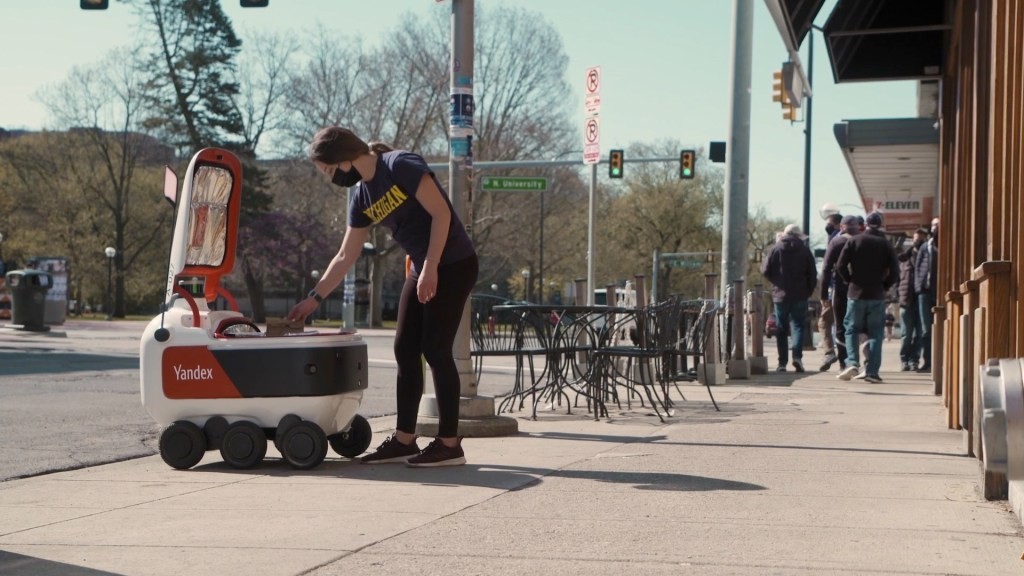
Since 2017, Yandex has been actively developing full-scale autonomous vehicle technology. Testing has been conducted in locations including Tel Aviv, Israel, Ann Arbor, Michigan, and Innopolis, Russia, utilizing a robotaxi fleet. Public deliveries were first initiated last April in Skolkovo, Russia, employing the Yandex.Rover, a six-wheeled robot weighing 150 pounds, and leveraging the same self-driving technology as the company’s autonomous cars.
The Future of Autonomous Technology
According to a company spokesperson, while the technology is complex, it has progressed to a stage where deployment is feasible, either through delivery robots or robotaxi services in smaller towns or designated areas within larger cities.
The expectation is that within three to four years, the technology will achieve a level of safety and efficiency comparable to that of an experienced human driver navigating peak traffic conditions in major metropolitan areas like Moscow or New York.
A Unique Commercialization Strategy
Yandex is adopting a distinctive approach to commercialization within the autonomous technology sector. Unlike many competitors focused on passenger vehicles, Yandex is prioritizing the introduction of its robots to the market, which the spokesperson described as a “pretty efficient way to do it.”
The development of a delivery robot, from initial concept in June 2018 to securing a substantial commercial agreement, took approximately two years.
Operational Capabilities of the Yandex.Rover
The robots have already been successfully utilized commercially in Russia through Yandex.Eats, a food delivery platform, and Yandex.Lavka, an express grocery delivery service. Yandex.Rovers, capable of traveling at speeds of three to five miles per hour, are designed to navigate sidewalks, pedestrian zones, and crosswalks.
These robots are particularly well-suited for campus environments inaccessible to traditional vehicles, and the service is now fully integrated within the Grubhub application. Upon arrival at the destination, customers receive a notification prompting them to retrieve their order by opening the robot’s hatch via the app.
Yandex asserts that its delivery robots can function reliably in various conditions, including day and night, and in all weather, even at uncontrolled pedestrian crossings. While generally operating autonomously, the rovers can request remote assistance if encountering challenging situations, such as interference from individuals.
Deployment and Partnership Details
The company has indicated that the robots will not yet feature Grubhub branding, but aims to deploy dozens of units this fall.
Brian Madigan, Vice President of Corporate and Campus Partners at Grubhub, stated, “Together with Yandex, we’re changing the way college students experience food delivery.” He further emphasized the cost-effectiveness, scalability, and speed of the new food ordering and delivery capabilities offered to colleges and universities.
He highlighted the challenges of vehicle navigation on college campuses, particularly for food delivery, and how Yandex robots overcome these obstacles by accessing areas inaccessible to cars.
Potential Challenges and Future Plans
A concern has been raised regarding the potential for misuse or vandalism of the robots by students, particularly in the context of post-Covid fall semester activities.
Yandex also intends to continue the development of its robotaxi service while expanding the commercial applications of its autonomous vehicle technology across a broader range of scenarios.
Related Posts

Rivian Launches Universal Hands-Free Driving Feature

Rad Power Bikes Files for Bankruptcy, Seeking Sale
Tesla Deceptive Marketing: Autopilot and Full Self-Driving Ruling
Luminar's Volvo Deal and Bankruptcy: A Timeline
Slate EV Truck Reservations Top 150,000 Amidst Declining Interest